Where a lost ring ends up in the Ibiza calas
Lost a ring in an Ibiza cala? How sand and rock at Cala Comte and Cala Bassa change where it settles, and what a local search there looks like.
Ibiza and Formentera
Ibiza and Formentera share one natural park and the Posidonia seagrass meadows that lie between them. Playa d'en Bossa, Ses Salines, Talamanca and Es Pujols are sandy beaches with shallow water, and the Mediterranean here has very little tide, so a ring dropped there is often still in place days later. What decides a search is how closely you can mark the spot.
Ring Seekers is a lost ring and jewellery recovery service that works with experienced local metal detectorists to search for a ring, wedding band, watch or phone lost in Ibiza or Formentera. We have searched in Spain before.
Tell us what happened and where. We choose an experienced detectorist who knows that island, brief them with your map and photos, and tell you honestly if the odds are poor.
Mark the place before you leave it. Drop a pin on your phone and take two photos, one towards the land and one towards the sea, with a lifeguard post, a beach bar or a sunbed row in the frame. Record the time, and whether the item landed on dry sand, at the edge or in the sea. On a boat, ask the skipper for the GPS position and the depth. Then send us the island, the beach and a picture of the item on WhatsApp, and keep the pin. A search does not need you on the island.
We choose an experienced detectorist who knows your island, and your pin and photos go to them before the search.
A city bay, the long southern beaches, the coves of the west, the family resorts of the east and north, and Formentera across the strait.
Talamanca lies 1.5 kilometres from the centre of Ibiza Town, in the bay next to the port. The Balearic tourism site gives it as about 900 metres of fine sand with shallow water. Figueretes (Ses Figueretes), about 1 kilometre from the centre on the other side, is roughly 400 metres of fine sand below a promenade.
Playa d'en Bossa is a long sandy beach with shallow water, lined with restaurants, shops and beach clubs. Ibiza Town and Sant Josep share it. A phone or a watch left by a sunbed can sink under the sand, and a ring can slip off in the sea with sun cream on your hands. Ses Salines, about 11 kilometres from Ibiza Town, is 1,500 metres of very fine sand backed by dunes. Es Cavallet is 1,100 metres of fine golden sand on a very flat shore. Boardwalks and marked paths cross the dunes behind both, so a ring dropped on the way down to the sand can be on a path rather than the beach.
Cala Jondal is 480 metres long and 40 metres wide, a bank of sand and pebbles with a beach bar at each end. Cala d'Hort is 150 metres of sand and stones facing the rock of Es Vedrà, and the tourism site calls the bay a perfect berth for boats. Cala Vadella (also spelt Vedella) is sheltered from wind and waves, with small fishing jetties along one side.
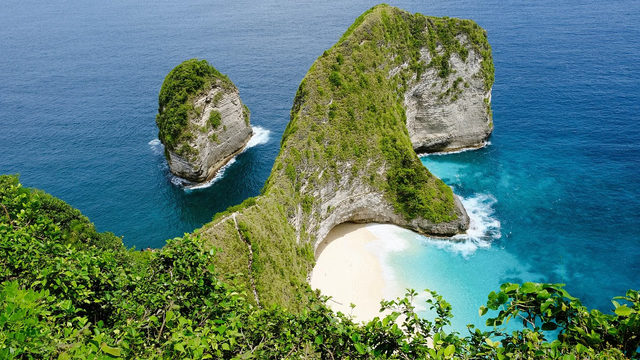
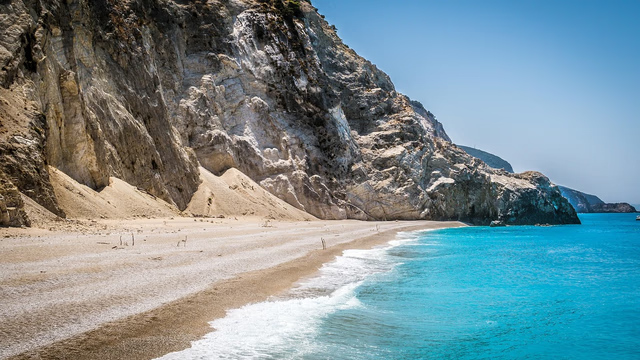
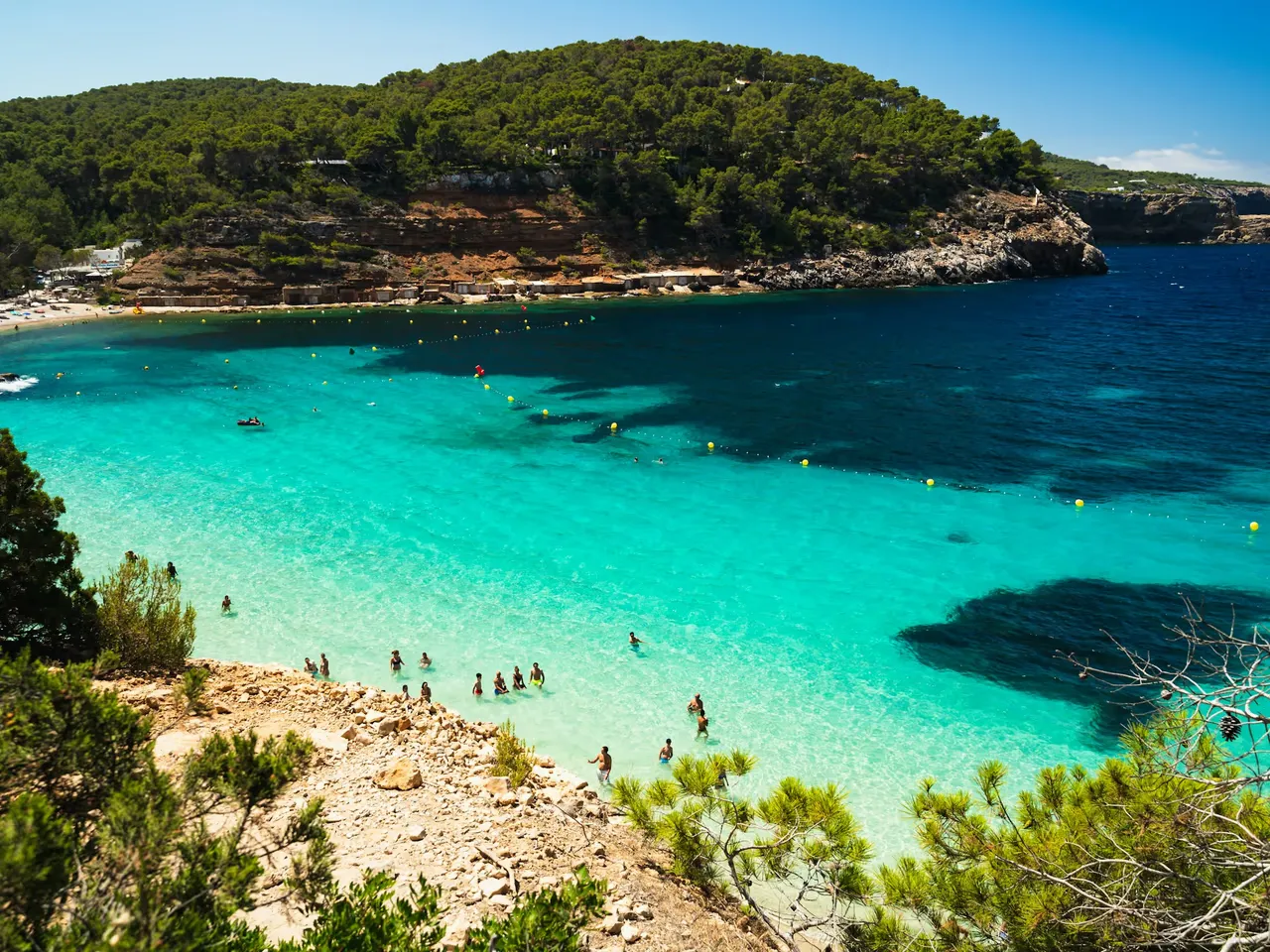
S'Arenal is the town beach of Sant Antoni (San Antonio), fine sand in the middle of the bay. Cala Bassa, 10 minutes away by car, has fine white sand. Cala Comte (Platges de Comte on the signs, often written Cala Conta) is a run of small bays with fine sand and shallow water. Cala Tarida is 260 metres long and 40 metres wide, split by small rock formations. In summer, boats run from Sant Antoni port to Cala Comte and Cala Tarida.
Santa Eulària (Santa Eulalia) has three beaches joined by a promenade, starting at the marina, all fine dark golden sand with shallow water. Es Canar, 4.5 kilometres further on, is 350 metres long with a small fishing port beside it. Cala Llonga is 200 metres of fine sand, 100 metres wide. In the north, Portinatx is a family resort with a seabed of sand and rock, and Benirràs is about 132 metres of coarse sand.
Ferries from Ibiza arrive at La Savina, the island's only port. Ses Illetes, about 4 kilometres away on the Es Trucadors peninsula, is a long beach of fine white sand, and Llevant runs for 1,459 metres down the other side of the same sand spit. Both are inside the natural park, as is the islet of Espalmador beyond them. Es Pujols is 700 metres of fine golden sand with shallow water. Migjorn is a crescent 3.5 kilometres long, broken by rocks into named sections. Cala Saona is a small cove under the cliffs of Punta Rosa.
You explain it once. The same person replies from your first message to the last, including after you are back home.
Your pin, your two photos and a picture of the item go to the detectorist before the search, so it begins on the right few metres of sand.
A ring dropped from a boat over a Posidonia meadow, or somewhere along the 3.5 kilometres of Migjorn with no pin, is unlikely to be found. We say so in the first reply.
With very little tide a marked spot keeps its value, but the Sant Josep beaches are sieved in the cleaning, so report early.
We explain the costs before any search is booked.
What the beaches are made of and how the sea behaves.
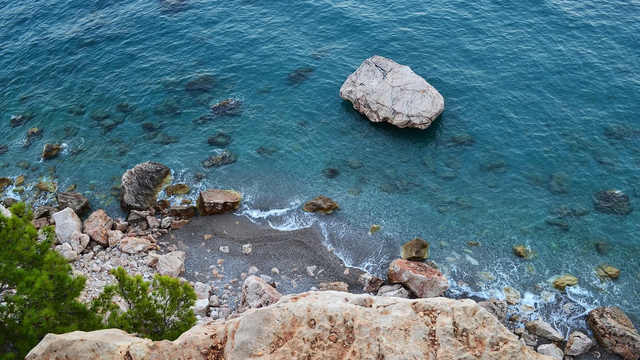
The Balearic tourism site describes most of the named beaches as fine sand, many with shallow water, which suits a detector. Cala Jondal is sand with pebbles and Cala d'Hort sand with stones, where a small item can settle between them. At Es Cavallet, Portinatx and Llevant the seabed is partly rock, and there a ring is found by eye with a mask.
The Mediterranean here has very little tide, so nobody waits for low water. Beach cleaning matters more, and work in the water waits for a flat sea.
The Posidonia meadows between Ibiza and Formentera are part of the World Heritage listing of 1999, and the tourism site notes the seagrass on the seabed at Illetes, Llevant, Migjorn and Es Cavallet. Dead leaves pile into banks on the shore, and on urban beaches the banks are not cleared between 31 October and 15 March. A detector can be swept around a bank without moving it, and a diver can work the open sand between the meadows.
Want a first idea of your chances? Try the lost ring recovery calculator.
Pin the spot and tell the staff which sunbed you had. Ibiza Town has about 700 metres of Playa d'en Bossa and Sant Josep the rest, so say which end you were at. On the Sant Josep beaches the cleaning works include sieving and raking the sand, so report a lost wedding ring before the next clean. Then send us the beach and a photo of the ring on WhatsApp, and keep the pin.
Drop a pin and note the nearest beach bar for yourself, and tell us which beach it was. If it came off on a boardwalk or path through the dunes behind, say which one. Ses Salines is 1,500 metres long and Es Cavallet 1,100 metres, which is why the pin matters.
That is work for a diver. Much of the seabed between Ibiza and Formentera is Posidonia meadow, part of the World Heritage listing. A ring or a watch lying on open sand can sometimes be recovered. Ask the skipper for the GPS position and the depth.
Often yes, if you can place the spot. A lost Oura ring or a watch gives a detector a clear signal, and all three have fine sand. Cala Tarida is only 260 metres long. Rocks divide the sand there, and between rocks a ring is found by eye with a mask.
On the sand at S'Arenal, a phone or sunglasses with metal frames gives a detector a strong signal. Anything dropped from a quay at La Savina, Formentera's only port, lies in harbour water. That needs a diver.
The area is smaller, which helps. Benirràs is about 132 metres long and Cala d'Hort 150 metres. The ground is harder, coarse sand at Benirràs and sand with stones at Cala d'Hort. Cala d'Hort faces the rock of Es Vedrà, so a photo with the rock in it places you well.
Yes, if the spot is well marked. You do not need to be on the island. Illetes and Llevant are inside the natural park. In 2026 the Consell de Formentera controls vehicle access to Ses Illetes from 10 May to 15 October, and people on foot and on bicycles can still go in. Migjorn is 3.5 kilometres long, so tell us which section you were on, for example Es Ca Marí or Es Arenals.
Ibiza and Formentera
Drop the pin for yourself, tell the lifeguards or the beach club, and send us the island and the beach on WhatsApp.
If you need a ring finder nearby, we find you an experienced local detectorist who knows the area and brings a metal detector to the spot you marked.
Lost it just now? Do this first Who to tell where you lost it
From our blog: what to do after losing a ring here, and how a search works.
Lost a ring in an Ibiza cala? How sand and rock at Cala Comte and Cala Bassa change where it settles, and what a local search there looks like.
For detectorists. How to search rock ledges, boulders and gullies for one lost ring, where it settles, and how to use a pinpointer in tight gaps.
Yes, metal detectors work underwater if they are built for salt water. How deep the water can be, and how far into the seabed they can find a ring.
Lost a ring at Cala Macarella, Son Bou or another Menorca beach? Why the coves and the long south coast sand behave differently, and what to do first.
For detectorists. How to use a sand scoop in knee to waist deep water when you are looking for one lost ring, and the habits that stop it slipping away.
A lost Pandora bracelet is a harder search than a ring. Here is how a silver chain and loose charms read on a metal detector, and what helps find them.