Lost a ring on the Gold Coast or at Noosa? The first hour
Lost a ring at Surfers Paradise, Burleigh or Noosa? What rips and surf do to a lost ring, and what to do in the first hour before the tide turns.
Gold Coast and Byron Bay, Surfers Paradise, Broadbeach and Byron
A ring lost on a Gold Coast or Byron Bay beach can be found if you can place the spot and act before the tide, the surf or a sand pumping run moves the sand. What decides it is how exactly you can mark the spot and whether it went into dry sand, the wet strip or the water.
Ring Seekers is a lost ring and jewellery recovery service that works with experienced local metal detectorists to search for a ring, wedding band, watch or phone lost on the Gold Coast or around Byron Bay, two of the places we cover in Australia. A searcher goes out; we do the planning and the talking. We source a detectorist for that stretch, pass on everything you sent, and are honest if a find looks unlikely.
If you are looking at metal detector hire on the Gold Coast, a hired machine is a fair option for a fresh loss on dry sand. Once the ring went into wet sand or the surf, or the item is small like an earring, a detectorist gets more from the same hour.
In the first hour, fix the spot. Line yourself up with two things that do not move, such as a lifeguard tower and a set of beach stairs, and take a photo in each direction. Drop a pin and note the time and whether the tide was coming in or going out, all on your own phone. Then WhatsApp us the beach, the time and a photo of the ring, and keep the pin until we ask for it in private.
We find a detectorist who can get there and send them your marked map with the Gold Coast Seaway tide times.
The sand, the water and the crowds differ from beach to beach, and so do the losses.
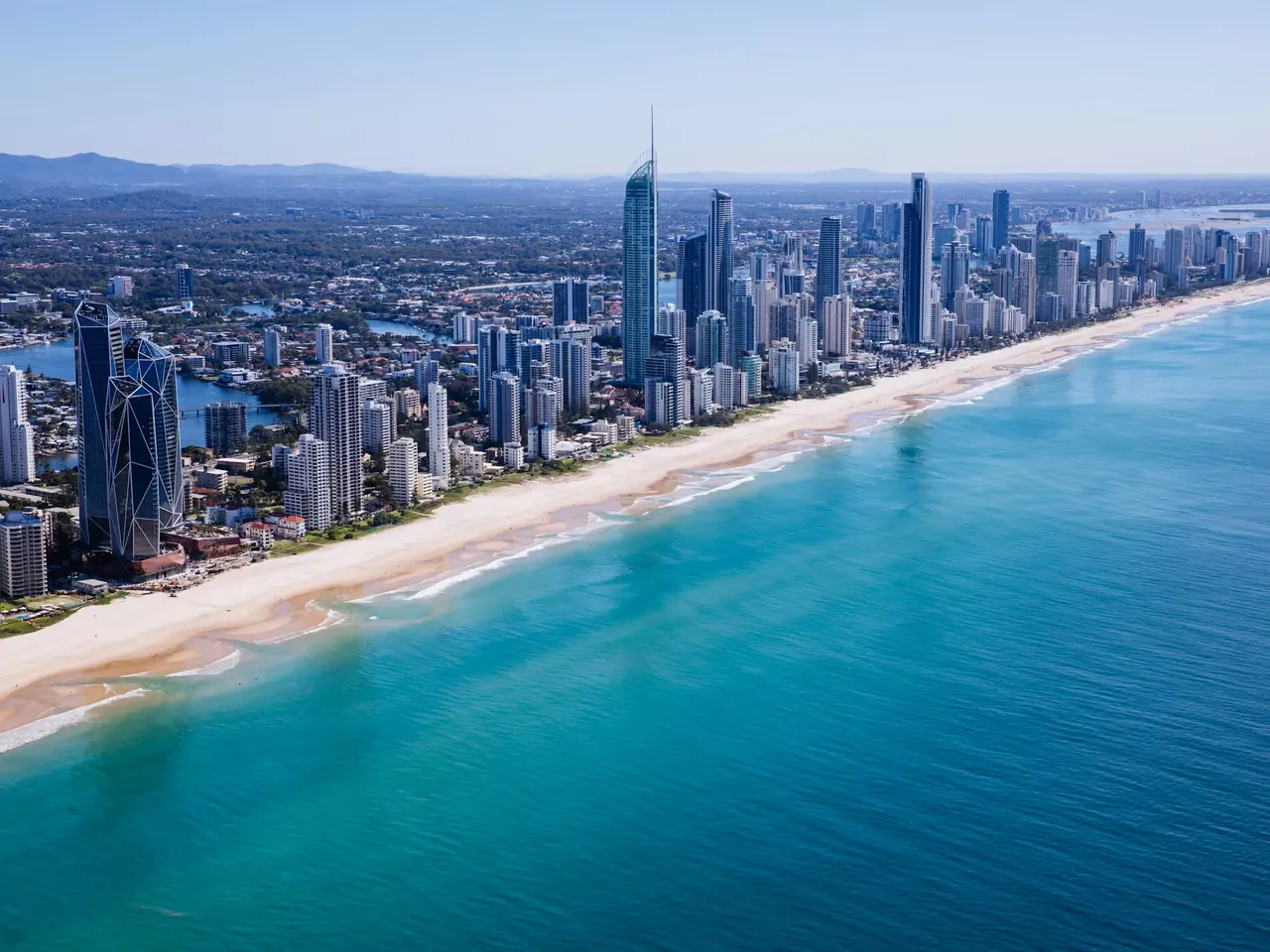
The City of Gold Coast looks after 54 kilometres of beach with 41 surveillance towers, and its lifeguards patrol 28 beaches all year and 42 in peak season and school holidays. At Surfers Paradise the towers and the stairs from the Esplanade are the fixed points to mark a spot against. To the north the council names Main Beach for fishing and has an off lead dog area at The Spit.
Broadbeach Surf Life Saving Club volunteers patrol weekends and public holidays from September to May, 8 am to 5 pm, and 7 am to 6 pm over the Christmas holidays. A wedding band lost in front of the clubhouse on a patrolled day has the flags and the tower as markers. On a weekday afternoon there is only the tower, so take the photos before you leave the sand.
In late May 2026 the ABC reported swells of up to 5 metres, with erosion and scarping at Burleigh Heads while the council was still restoring beaches 14 months on from Cyclone Alfred. A sand pumping barge was due to pump 800,000 cubic metres of sand between May and September. At the park entrance on Tallebudgera Creek, Echo Beach is a picnic spot by the creek below tumbled basalt columns. The council names Snapper Rocks at Coolangatta as the place to surf with the pros, and Oura rings and watches come off in the surf there.
Main Beach is a long sweep of golden sand with gentle waves, and Byron Shire Council lifeguards are there five days a week all year. Clarkes, at its eastern end towards The Pass, has low waves and rock pools and is patrolled in school holidays and peak season. Belongil runs 2.5 kilometres north to the mouth of Belongil Creek, is very exposed and dog friendly, with The Wreck as its offshore break.
The Pass is a right hand point break that faces north and can give rides of half a kilometre when the swell is up. Wategos is a powdery curve of white sand in sheltered water, and Little Wategos, only 150 metres long, is the most easterly beach on the mainland. Above them the lawn by the Cape Byron lighthouse is open from 8 am to sunset, and an earring lost there while watching for whales stays in the grass.
Tallow Beach is a 3.2 kilometre stretch facing straight out to the Pacific, rough with big waves and strong currents. Council lifeguards cover it seven days in holiday and autumn school periods, and Suffolk Park and Broken Head from 20 December 2025 to 26 January 2026, with emergency response beacons on the unpatrolled beaches. Torakina Beach at Brunswick Heads has calm water for families.
You explain it once. The person you message is the person who arranges the search and reports back.
The detectorist gets your marked spot, your photos and the time of the loss before setting foot on the sand.
A ring lost in the surf at Tallow with no fixed point, or off a boat on the Broadwater, is a poor bet. We would rather say so now than after a wasted trip.
We explain the costs before any search is booked.
What the searcher is up against here.
Transport and Main Roads publishes the 2026 tide predictions for the Gold Coast Seaway gauge. The highest predicted high water of the year is 2.04 metres, on 15 and 16 June, and the lowest low is 0.03 metres, on 26 and 27 October. The biggest fall from one high to the next low is 1.88 metres and the average is about 1.05 metres. We give the detectorist the low water time, because that is when the wet strip is widest.
The open beaches move, as the May 2026 erosion at Burleigh Heads showed. Tallow is rough with strong currents and Belongil is very exposed. A ring in dry sand tends to stay near the surface. One in the surf zone goes deeper with each tide, and a rip can carry it along the beach. Both councils say to stay between the red and yellow flags, and on the Gold Coast, no flags means no swim.
Want a first idea of your chances? Try the lost ring recovery calculator.
Often yes, if it happened within the last tide or two and you can place it. Stand where you came out of the water, line yourself up with a lifeguard tower and a set of stairs, then photograph the line. At Broadbeach the surf club patrols weekends and public holidays from September to May, so on those days the flags are another fixed point. A ring in the surf zone works deeper with each tide.
A lost Oura ring and a watch both contain metal, so both show on a detector. The question is where they went. Snapper Rocks and Burleigh are point breaks off rocky points, and The Pass can run for half a kilometre when the swell is up, so an item lost at the take off ends up far from one lost on the inside. Tell us which section of the wave you were on and how deep the water was.
Wategos is a powdery curve of white sand in sheltered water, and the lighthouse lawn is open from 8 am to sunset, so an earring or a ring lost on either is a fair case if you can place it. Line yourself up with two fixed points, take a photo each way and note the time. At The Pass, tell us which section of the wave you were on, because a ride there can run for half a kilometre.
Main Beach and Clarkes are Byron Shire Council beaches, and the council lists The Wreck, on Belongil, among the beaches it manages. Main Beach has council lifeguards five days a week all year, 9 am to 5 pm on service days, and the tower and the stairs give you fixed points. Clarkes has low waves and rock pools at the eastern end of Main Beach, round towards The Pass. Belongil runs 2.5 kilometres north to Belongil Creek and is very exposed, so a pin alone is not enough there.
Keys and phones show on a detector. In a May 2026 ABC report on the Gold Coast erosion, a detectorist described finding a set of car keys at Currumbin Alley and handing them back to the owner. On dry sand at The Spit, where the council has an off lead dog area, a phone or a bunch of keys is a normal search. In the water off the Broadwater the item sinks and the bottom is out of reach at anything but low tide. Plastic sunglasses do not show on a detector and are found by eye or by a diver.
Some are not found. If the spot is vague, the loss was days ago in the surf, or a swell has moved the sand since, we tell you before anyone travels. We explain the costs before any search is booked.
Gold Coast and Byron Bay, Surfers Paradise, Broadbeach and Byron
The next high tide covers the wet strip and the next swell can shift the bank. Line up the pin and two photos with something solid and keep them, then WhatsApp us the beach and the time.
A ring finder, in practice, is an experienced detectorist with a metal detector. We choose one who knows this area.
Lost it just now? Do this first Who to tell where you lost it
From our blog: what to do after losing a ring here, and how a search works.
Lost a ring at Surfers Paradise, Burleigh or Noosa? What rips and surf do to a lost ring, and what to do in the first hour before the tide turns.
Lost a ring in the surf at Bondi, Manly or Byron Bay? How surf beaches move sand, where a ring ends up, and what to do in the first few hours.