
Oahu, Honolulu and Waikiki
Lost a ring or necklace on Oahu?
From the Waikīkī walls and Ala Moana round to Lanikai, the Ko Olina lagoons and the North Shore.
A necklace that comes off in the water goes straight down, because a chain has nothing to float it, and on an Oʻahu beach it usually ends up on sand within a few yards of where you were swimming. Gold and silver both read well on a detector. What decides the odds is how exactly you can mark the spot, whether it went into dry sand or the water, and what the swell has done since.
Ring Seekers is a lost ring and jewelry recovery service that works with experienced local metal detectorists to search for a ring, wedding band, watch or phone lost in Oahu, Honolulu and Waikiki. You deal with one person, who organises the search properly. Tell us what happened and where. We choose an experienced detectorist who knows the beach, brief them with your map and photos, and tell you honestly if the odds are poor.
This page covers the Oʻahu side of Hawaii: Waikīkī and Honolulu, Hanauma Bay, Kailua and Lanikai, the North Shore and the Ko Olina lagoons.
How a search on an Oʻahu beach works
In the first hour, fix the spot. Line up two things that do not move, such as a lifeguard tower and a hotel or wall, and photograph each way. Drop a pin and note the time. If it came off while snorkelling, stand only on sand, never on coral. Then WhatsApp us that with a picture of what you lost.
We line up a searcher for that beach and hand over your pin. Dry sand, the shallows and deeper water past the reef are three different jobs here, and what you can tell us about where you stood decides which one it is.
Places we cover in Oahu, Honolulu and Waikiki
- Oʻahu (Oahu), island wide
- Honolulu
- Waikīkī Beach (Waikiki Beach)
- Kūhiō Beach Park and the Waikīkī Wall
- Queen's Beach and Kapiʻolani Regional Park
- Kaimana Beach (Sans Souci)
- Fort DeRussy Beach
- Ala Moana Regional Park and Magic Island
- Diamond Head State Monument (Lēʻahi)
- Hanauma Bay Nature Preserve, Hawaiʻi Kai
- Kailua Beach Park
- Lanikai Beach
- Waimea Bay Beach Park, North Shore
- Sunset Beach
- ʻEhukai Beach and the Banzai Pipeline
- Ko Olina lagoons, Kapolei
Oʻahu beaches where rings and phones go missing
Each shore of the island loses jewelry in its own way.
Waikīkī, from Fort DeRussy to Kaimana Beach
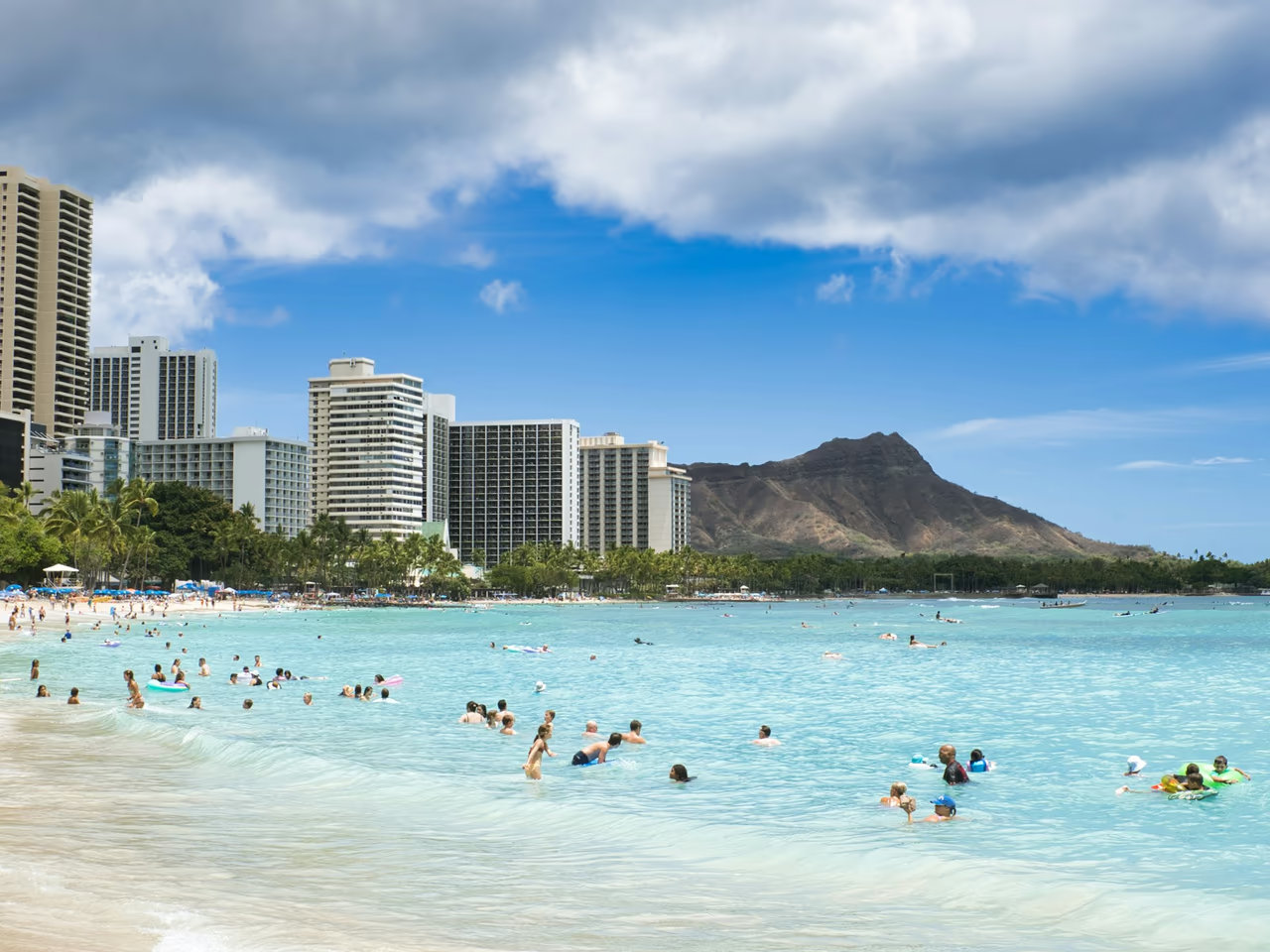
Waikīkī is a run of small beaches that join into one. Fort DeRussy Beach sits at the west end by the Hale Koa Hotel. Kūhiō Beach, by the Duke Kahanamoku statue, has two concrete walls that make a calm swimming enclosure, and Queen's Beach is a quieter spot popular for volleyball. Kaimana Beach is shallow and sandy. Rings and wedding bands come off while swimming and bodyboarding. In 2021 about 20,000 cubic yards of offshore sand were placed between the Royal Hawaiian and the Moana, and soft new sand takes a small item down fast.
Ala Moana Regional Park and Magic Island
Ala Moana is a half-mile beach protected by a fringing reef, which keeps the water calm and the bottom sandy. Magic Island is a man-made peninsula with a shallow lagoon at the eastern end. On half a mile of sand the towel line and the nearest tower are what narrow a search down.
Hanauma Bay Nature Preserve
Hanauma Bay, near Hawaiʻi Kai, is a sheltered bay of sand and coral where most people snorkel over the shallow inside section. Rings come off in the water here rather than on the sand, so the entry point, the direction you swam and how long you were in are what place a loss.
Kailua Beach Park and Lanikai
Kailua Beach Park covers 35 acres of soft white sand, with lifeguards at the south end by the boat ramp. Next door, Lanikai is about half a mile long, reached only by walkways between houses, with no public car park and no lifeguards. Seawalls have eroded it, so the sand strip is narrow at high tide, and an earring or Oura ring dropped near the waterline is soon under water.
Waimea Bay, Sunset Beach and Pipeline
Waimea Bay is a wide sandy bay with lifeguards and a well-known jump rock. In summer the water can be as calm as a lake, while from November to February waves can reach 20 feet (6 metres) and more. Sunset Beach is a two-mile stretch of sand, with ʻEhukai Beach and the Banzai Pipeline at its western end. Watches and rings come off in the shorebreak, and sunglasses lost in winter surf are rarely seen again.
Ko Olina lagoons
Ko Olina on the leeward coast has four man-made lagoons named Koholā, Honu, Naiʻa and Ulua, with public access and public parking, first come first served. There are no lifeguards. The water is shallow, sheltered and sandy, about the best ground a detector gets here.
What you get from Ring Seekers on Oʻahu
One person on WhatsApp
You explain it once, and that person stays with it, even after you have flown home.
Your map and photos go to the detectorist
The detectorist has your marked spot, photos and time of loss before stepping onto the sand.
Dry sand, the shallows and the reef are three jobs
A necklace in dry sand at Kailua, a band in the calm water at Ala Moana and something out past the break are three different searches, and only the first two are quick.
Plain about poor odds
A chain lost in winter surf at Sunset Beach, after days of swell, is a long shot, and you would hear that from us first.
Cost settled before anyone drives out
What a search would come to is put to you plainly at the start, whether you are still on the island or back home.
Tide, surf and water around Oʻahu
What a detectorist works with on this island.
Tides
NOAA station Honolulu (1612340): mean range 1.28 feet (0.39 metres), and 1.9 feet (0.58 metres) between the higher high and the lower low. In 2026 predictions run from about minus 0.4 to plus 2.7 feet. On narrow beaches such as Lanikai even this small rise covers most of the sand.
Surf, north shore and south shore
The National Weather Service in Honolulu counts 15 feet as high surf on Oʻahu north shores and 25 feet as the next step up, measured on the full wave face, with west shores at 12 and 20 feet and south and east shores at 10 and 15 feet. A search in the water waits for a calm day.
Warm water and living reef
The NOAA Honolulu gauge averaged 77.9 F (25.5 C) in February 2025 and 82.7 F (28.2 C) in August 2025. Coral is alive, so a searcher works over sand rather than standing on reef or turning it over.
Sand that moves
Waikīkī has had offshore sand placed on it, and a chain sinks faster in soft new sand than in packed sand. Lanikai has narrowed from seawall erosion, so at high tide there is little dry sand left to search. On the North Shore the winter swell moves a great deal of sand.
Want a first idea of your chances? Try the lost ring recovery calculator.
Questions about Oahu, Honolulu and Waikiki
My necklace came off in the water at Waikīkī. Is it findable?
Often, because a chain sinks straight down and stays where it lands unless the surf is working. Waikīkī is a run of small beaches, so name yours: Kūhiō Beach by the Duke Kahanamoku statue, Queen's Beach, Kaimana Beach or the Fort DeRussy stretch. Give the nearest lifeguard tower or hotel and the time. Parts of Waikīkī have had fresh sand added, and soft new sand takes a chain down quickly.
My wedding band came off swimming at Ala Moana. Where do I start?
With your towel line. Ala Moana is a half-mile beach behind a fringing reef, so the water is calm and a band settles close to where it slipped off. Line the spot up against the nearest tower or the Magic Island end, say how deep you were, and note the time.
I lost my ring snorkelling at Hanauma Bay. What should I do?
Tell the lifeguards and the staff the same day, then write down where you entered the water and how far out you got before you noticed. A ring dropped in the shallow inside section lies on sand between coral, so the entry point, the direction you swam and the time are what a searcher works from. Please do not stand on coral looking for it.
I lost my Oura ring at Lanikai. Is the beach worth searching?
Often, if you can place it. Lanikai is about half a mile of sand reached only by walkways between houses, and seawall erosion has narrowed it, so at high tide there is little dry sand left. An Oura ring is titanium and gives a detector a clear signal. Note which access path you used and photograph the Mokulua islands from where you sat.
Can a ring lost at Waimea Bay or Sunset Beach be found in winter?
On the dry sand, yes. In the water it is a question of timing, because from November to February the waves at Waimea can reach 20 feet (6 metres) and more, and at Pipeline they break over sharp reef a few feet below the surface. The sand can be worked any time; the water waits for a calm spell, which here usually means summer.
I dropped my phone and sunglasses in a Ko Olina lagoon. What now?
A phone gives a strong signal in shallow water, and the lagoons are as kind as water gets here, being shallow, sheltered and sandy. Plastic sunglasses do not show on a detector at all and are found by eye instead. Tell us which of the four lagoons you were in, Koholā, Honu, Naiʻa or Ulua, and roughly how far out you had waded.
I think my ring fell off on the Diamond Head trail. What can be done?
Retrace it by eye first. The trail is 0.8 miles (1.3 km) each way, and a ring on a dry path is often still lying in plain sight. Write down where you stopped for photos, where you sat and where you took a jacket on or off, because those are the moments things come off. Send that list with the time you walked it.
Should I look for a metal detector rental in Hawaii first?
You can, and on dry sand it is worth a try. Photograph the spot first and work outwards from it, because a borrowed machine at Ala Moana turns up bottle caps by the dozen, and holes in the wrong places make the sand harder to read later.
Oahu, Honolulu and Waikiki
Two landmarks, one hour, and a photo of what you lost
Line the spot up against a tower and a hotel, wall or path, and photograph both ways.
Swell moves Oʻahu sand, and Lanikai is narrow by high tide, so the spot you fix today is worth more than the one you remember next week. WhatsApp us the photos with the beach and the time.