Lost a ring in Cyprus, from Nissi Bay to Coral Bay
Lost a ring on a Cyprus beach? How Ayia Napa, Larnaca, Limassol and Paphos differ, what to note before you leave the sand and how a search starts.
Ayia Napa, Protaras and Larnaca
Most of the beaches along this coast are fine golden sand with calm, clear water over them. The ground is rarely the hard part. Being able to say where you were is: a wedding band lost in the shallows in front of a named beach bar gives a detectorist somewhere to start, and somewhere along the front does not.
Ring Seekers is a lost ring and jewellery recovery service that works with experienced local metal detectorists to search for a ring, wedding band, watch or phone lost in Ayia Napa, Protaras and Larnaca. That runs along the south east coast of Cyprus, from Ayia Thekla round Cape Greco to Fig Tree Bay and Pernera, and west along the Larnaca seafront.
Tell us what happened and where. We choose an experienced detectorist who knows your beach, brief them with your map and photos, and tell you honestly if the odds are poor.
Before you leave the water or the sunbed, work out what you can still point at. On the organised beaches that is your sunbed row and the hotel, bar or kiosk behind it. At Nissi Bay it is the islet and the sand lane, at Ayia Thekla the coastal path, at Finikoudes the palms and the fort at the far end. Photograph each direction, drop a pin, and note the time.
Keep that on your phone, and send us the beach on WhatsApp with a photograph of the item itself. Write from the airport or from home a week later if you have to, as long as the spot was fixed while you could still see it.
Six stretches of coast, each with its own markers and its own problems.
Nissi Bay lies 3.5 kilometres west of the centre of Ayia Napa: 300 metres of fine golden sand, calm clear water sheltered against the wind, and the small islet with the sand lane running out to it. That lane is the best marker on the beach. Vathia Gonia, 2.2 kilometres west of the centre, is another 300 metres of golden sand with a rocky bay inside it.
Makronissos, 5 kilometres from the centre of Ayia Napa, is a cluster of three small bays facing west, southwest and southeast, 350 metres of fine golden sand in all, so knowing which of the three you were on halves the work. East of the harbour, Pantachou runs for 1.2 kilometres, the longest strip on this coast. Glyki Nero is 250 metres of golden sand reaching to the Ayia Napa sea caves.
Ayia Thekla sits 6.5 kilometres west of the centre of Ayia Napa, a 300 metre bay with a rocky bottom under fine golden sand. A coastal path runs to the fishing harbour of Potamos tou Liopetriou one way and Vathia Gonia the other, past the quieter coves of the Sotira stretch.
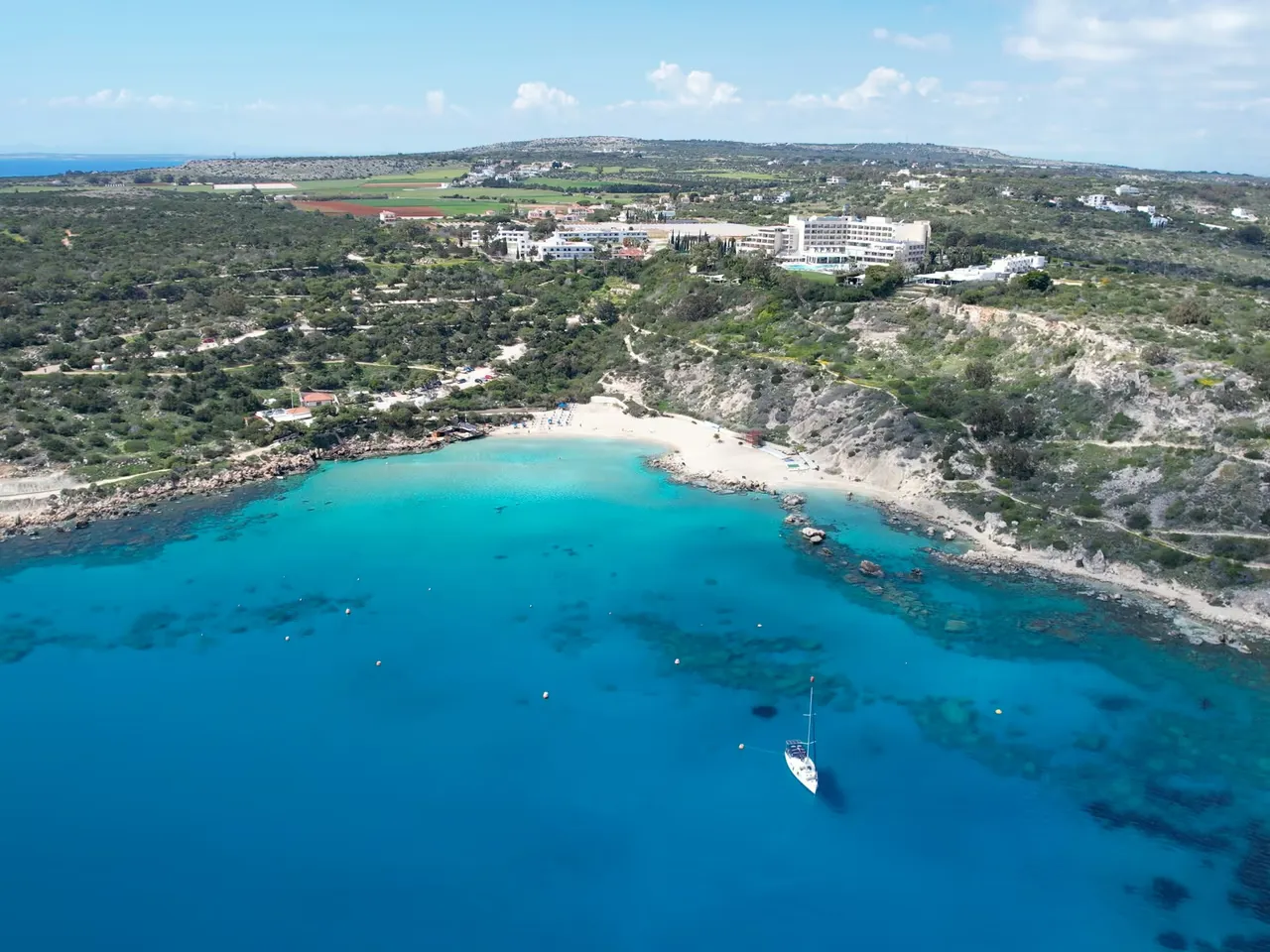
Konnos is 200 metres of fine golden sand with calm water sheltered from the heavier winds, 4 kilometres east of the centre of Ayia Napa on the road between Cape Greco and Protaras. It is the last beach before Paralimni, and the approach drops down through pine trees. Above it is Cape Greco itself, limestone sea cliffs, sea caves and nature trails lined with pine and juniper, where everything turns on how closely you can point at the spot. Limnara, also called Kermia, lies 2 kilometres from the centre of Ayia Napa near the Cape Greco sea caves: 350 metres of fine golden sand in front of a hotel complex, with rocks at the edge of the bay.
Fig Tree Bay is the main beach of Protaras, in the holiday town of Paralimni, fine golden sand and crystal clear water, named after a single fig tree that has stood there since the 17th century. Louma, Pernera and Agia Triada are the quieter bays along this same stretch, golden sand again, with less behind them to count from.
Larnaca is a city beach rather than a resort one. Finikoudes is 600 metres of fine brown and beige sand under the palms, with calm shallow water, the marina and its pier at one end and the medieval fort at the other. Those two piers split the beach into stretches you can name. Mackenzie is the other Larnaca beach people ask about, and the seafront runs on past Piale Pasha and Agios Lazaros. Southwest of the town, the Salt Lake has a nature trail winding along it that walkers and joggers use.
Whoever picks up your message keeps it. You go through what happened once, and the same person carries the details on.
A band in the shallows off a marked sunbed row is a strong case. A vague stretch of coast is a weak one, and you hear that before you decide anything.
Nissi Bay is 300 metres with the sand lane running out to the islet. Pantachou runs for 1.2 kilometres with far less on it to fix on. Knowing which one you were on changes where a detectorist starts.
We explain the costs before any search is booked.
What a detectorist is actually walking into here.
Almost every beach here is fine golden sand with clear water over it, from Nissi Bay and Makronissos round to Konnos, Fig Tree Bay and Pernera. Finikoudes in Larnaca is brown and beige sand, and shallow. Ayia Thekla has a rocky bottom under its sand.
This is the Mediterranean. Nothing is uncovered at a set hour and there is no tide line to work back from, so a search is built on the pin you drop and the photographs you take rather than on the water.
Nissi Bay is sheltered against the winds, Konnos from the heavier ones, and Vathia Gonia has no headwinds at all. Makronissos is three bays facing different ways, so one can be nothing like the bay beside it.
Most of these beaches are organised, with sunbed rows, umbrellas and bars behind them to count along. Where a search has to go under the loungers, it is set up with whoever runs that section. Ayia Napa and Potamos tou Liopetriou both have working fishing harbours.
Want a first idea of your chances? Try the lost ring recovery calculator.
Fix the spot before you swim back in. Nissi Bay is 300 metres long, so the sunbed row behind you and the sand lane out to the islet give you things to line up against. Note whether the water was at your waist or chest, drop a pin, and photograph the view back out to sea, all for yourself. Send us the beach and a picture of the band.
Often, if you can place yourself on the beach. Fig Tree Bay is fine golden sand and clear water, and the fig tree it is named after has stood there since the 17th century, so you have something fixed to line up against. Tell us where you were in relation to it and whether you were on the sand or in the water.
It depends which of the two. Konnos is small, 200 metres of fine golden sand with calm water, and the pine trees on the approach usually tell people where they came down onto the beach. Up on Cape Greco it is limestone, sea caves and walking paths. If the ring went off a ledge into deep water, that is a long shot, and you would hear that from us first.
Ayia Thekla is a quiet bay 300 metres long, with a rocky bottom under fine golden sand. Work backwards through the day with us: where you stood for photographs, where you sat, and where anyone went into the water.
Start with whoever runs the sunbeds or the bar you were at, since anything picked up on a city beach tends to be handed in there. Finikoudes is 600 metres of sand under the palms, with the marina and its pier at one end and the medieval fort at the other, so you can say which stretch you were on. At Mackenzie, name the place you were sitting in front of.
It helps with the marking more than anything else. Pernera and Louma are quieter than Fig Tree Bay, golden sand with clear water, and fewer sunbeds means fewer rows to count along. Pick something fixed on land, photograph it from the water side, and drop a pin before you leave the beach.
No. The marking takes ten minutes and only you can do it. Go back to the beach, stand where you were, photograph both directions, drop a pin and note the time of day. A search can be arranged after you have flown home.
One person takes the details and asks the questions that narrow the ground down, then we look at who can reach that beach and come back to you.
Ayia Napa, Protaras and Larnaca
Once we know the beach and the item we can say what is realistic, and start looking for someone who can reach it. The pin and your photographs come later, in private.
Searching for a ring finder? We pick an experienced local detectorist for you, someone with a metal detector who knows the area well.
Lost it just now? Do this first Who to tell where you lost it
From our blog: what to do after losing a ring here, and how a search works.
Lost a ring on a Cyprus beach? How Ayia Napa, Larnaca, Limassol and Paphos differ, what to note before you leave the sand and how a search starts.
Gold and silver rings are easy for a metal detector. Titanium, platinum and thin bands are harder. What your ring's metal means for a search.
For detectorists. How to use a sand scoop in knee to waist deep water when you are looking for one lost ring, and the habits that stop it slipping away.