
Timing a lost ring search around the tide
For detectorists. How to plan a search for one lost ring around low water, where the ring tends to sit, and why the first tide after the loss matters.
Brittany, Normandy and the Channel coast
An Oura ring that went during a kite afternoon on the Sillon can be looked for once the tide has gone back out. The villa on the digue or the breakwater you were level with, together with the hour it went, is what points a detectorist to the right part of the beach.
Ring Seekers is a lost ring and jewellery recovery service that works with experienced local metal detectorists to search for a ring, wedding band, watch, keys or phone lost in Saint-Malo, Dinard, Deauville or Le Touquet, on the Channel coast of France.
Tell us what happened and where. We choose an experienced detectorist who knows the beach, brief them with your map and photos, and tell you honestly if the odds are poor.
Stand where you sat or flew the kite and store that spot as a location on your phone, before the sea comes back over it. Where the tide goes out this far, a location recorded on the spot beats anything written later. Take one photo from there towards the digue or the seafront, and note two times: when you can still picture the ring on your hand, and when you realised it had gone. Shake out the kite bag and the towels over bare sand before packing up.
Saint-Malo and Dinard look at each other across the bay. Deauville and Trouville-sur-Mer are on the Côte Fleurie in Normandy, and Le Touquet is on the Côte d'Opale.
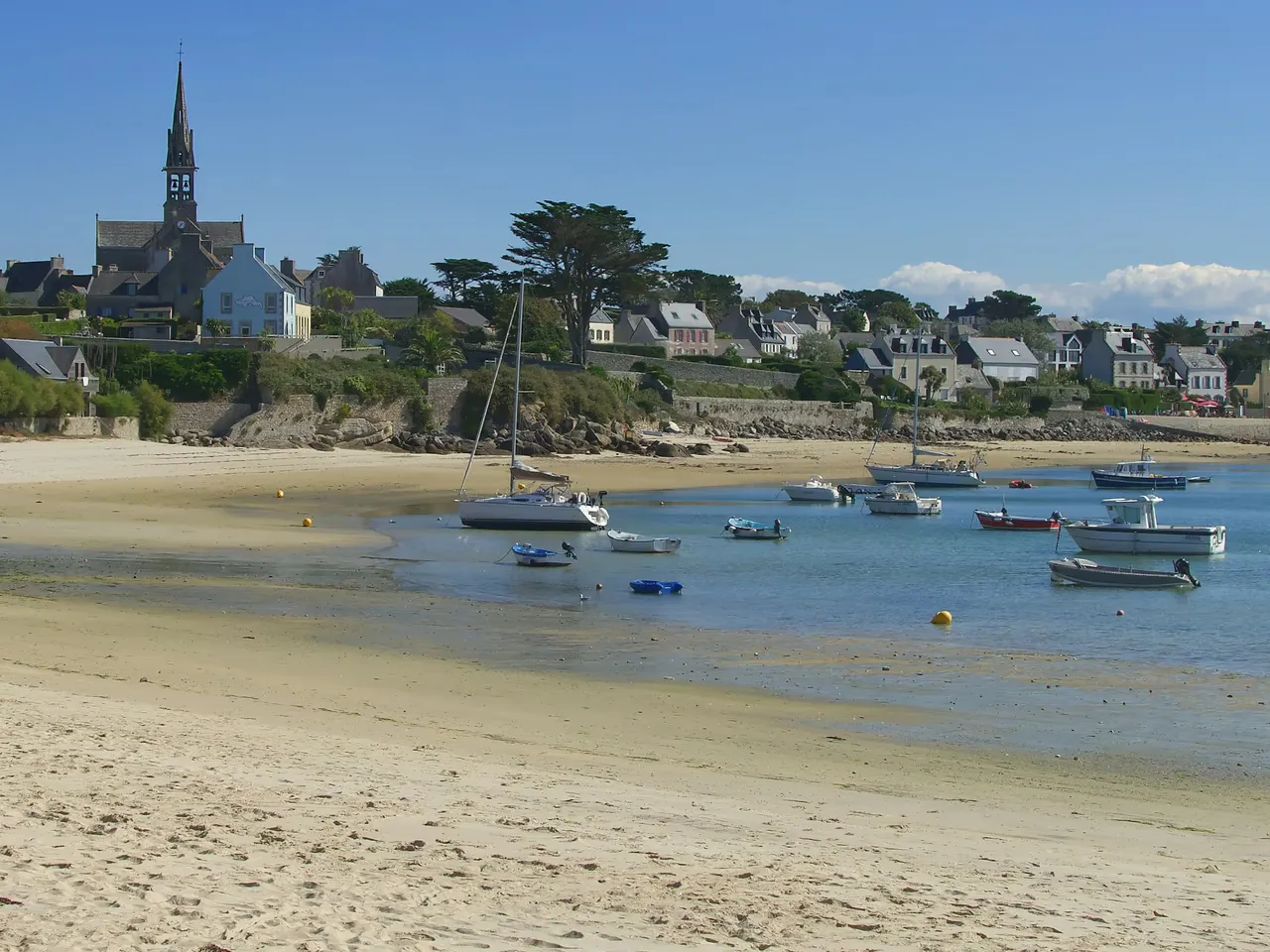
The Sillon is Saint-Malo's biggest sand beach, running from Intra-Muros to Paramé and taking in the Grande Plage, the Hoguette and Rochebonne. Along it runs the digue, a promenade lined with villas, and a row of oak breakwaters stands on the beach. It is good for swimming and for windy days, when kites and windsurf boards come out.
Bon-Secours is reached through the ramparts and the walled town. It is a busy sand beach with a sailing school, looking out over the bay to Dinard. The Éventail, sheltered by the ramparts, faces the Fort National at the very start of the Sillon. The Môle faces west behind the jetty that shelters the port, and fills up in summer.
In the centre of Dinard, the Écluse is a large stretch of fine sand facing north. In rough weather the waves crash against its seawall. Saint-Énogat, reached past the Jules Verne fountain, is another north-facing beach of fine sand lined with villas.
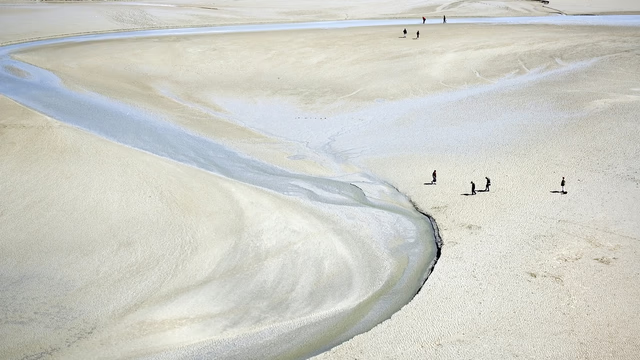
The Prieuré lies at the far end of its own bay, the first big beach on the way into Dinard from the Rance dam. The wind reaches it less than the open beaches, the sand shelves very gently, and at low tide the sea goes a long way out. From its seawall the coastal path leads to the Promenade du Clair de Lune, a walk of gardens and Belle Époque villas looking over the bay to Saint-Malo, where the sea bus from Saint-Malo comes in. East of Saint-Malo, guided walks cross the bay of Mont-Saint-Michel barefoot from the Bec d'Andaine at Genêts.
Deauville's beach has its Art Deco cabins and parasols, and the Planches, a boardwalk of azobé wood, run past the cabins with the names of film directors and actors marked along them. In season, large masts with boats, houses, trains and balloons are planted on the beach to help children find their way around, and they work just as well for placing a loss. Next door, Trouville-sur-Mer has its own Planches, the Promenade Savignac, also of azobé wood, running along the top of the beach below the seafront villas. Below it, the beach is fine sand and shells, with a club de plage and a lifeguard post in summer.
Le Touquet's beach is eleven kilometres of fine sand and dunes, from the Canche bay at the northern tip to Stella-Plage in the south, and at low tide a great deal of it is uncovered. Avenue Louison Bobet runs along the seafront at the southern end of the town, and sand yachts go out on the wide beach.
If the detectorist needs to know which side of a breakwater you sat on, the question reaches you in the same WhatsApp chat, from the person you have been writing to since your first message.
At Deauville, say whether you were on the Planches or had stepped down onto the beach. They are two different searches, and the brief is written for one or the other.
A loss on sand the sea covers later in the day is searched once the water has gone back out, so the date and hour you give us go into the brief and the detectorist plans the visit around them.
We explain the costs before any search is booked, and a reply saying you need a day to decide is a perfectly normal answer.
What to keep in mind from Saint-Malo to Le Touquet.
The bay of Saint-Malo, Dinard included, has some of the biggest tides in Europe, and the sea comes in and goes out twice a day. Sand that was dry when you arrived can be under the sea later the same day, so the hour of the loss matters as much as the place.
The oak breakwaters along the Sillon and the villas on the digue behind them do not move with the tide. Whichever one stood nearest to you is worth a photo, and so is the view along the beach from your towel.
Want a first idea of your chances? Try the lost ring recovery calculator.
Use what stays above the water. Tell us which villa on the digue or which oak breakwater you were level with, since either can be found again whatever the tide is doing. Add the time you were flying and the time you noticed the Oura ring had gone. If it could have come off at any point of the afternoon, anywhere along the Sillon, it is a long shot, and you would hear that from us first.
Work along the boards by the names on them. The Planches run past the Art Deco beach cabins, with the names of directors and actors invited to the American Film Festival marked along the way. The last names you remember reading, and the points where you stepped onto the boards and off them again, frame the stretch to look at.
At low tide a great deal of the beach at Le Touquet is uncovered, so start with the time and whether the sea was near or far out. The end of the avenue gives you a starting point: pin the spot where you walked down onto the sand, say which way you went from there, and whether the keys were in a pocket, a bag or your hand.
Tell us which part of the boards you came down from and where you sat on the sand, whether the lifeguard post or the club de plage was nearer, and whether the tide was in or out. A photo from your spot towards the villas on the seafront helps.
The Écluse is a large beach of fine sand facing north in the centre of Dinard, and people swim there at high tide and at low tide, so the time of your swim matters as much as the spot. Tell us where along the beach you went down: at the western end the sand is level with the seawall, and on the eastern side you reach it by stairs.
Think back to whether it went at the landing itself or later on the walk. The sea bus from Saint-Malo puts you straight onto the promenade, which runs between the Pointe du Moulinet and the Prieuré beach. Say whether anyone heard a splash, the time of the crossing, and which garden or villa you had reached when you went to use the phone.
At low tide the sea goes out too far at the Prieuré for a swim, and the slope is very gentle, so a lot of sand lay between your towel and the water. Drop a pin for yourself where you left your things and note the line you walked out on, and tell us the hour you set off, which tells us how far out the edge of the sea was.
Bon-Secours is reached through the ramparts and the walled town of Saint-Malo, so say whether you noticed the gap on the beach or only later, back among the streets. Mark where you sat on the sand, and send a photo of the other earring if you still have it.
Brittany, Normandy and the Channel coast
One WhatsApp message naming the beach and the piece that went gets things moving, whether it went this morning or on the last day of a trip that is already over. If you noticed whether the sea was in or out, say so. Your pin and pictures can come after that.
Many people search for a ring finder after a loss like this. Here, that is an experienced local detectorist with a metal detector, chosen because they know the area.
Lost it just now? Do this first Who to tell where you lost it
From our blog: what to do after losing a ring here, and how a search works.
For detectorists. How to plan a search for one lost ring around low water, where the ring tends to sit, and why the first tide after the loss matters.