
Big Island
Lost a ring on the Big Island?
From Magic Sands and Kahaluʻu in Kona up to Hāpuna, down to Hoʻokena and across to Hilo.
A necklace goes at the water's edge more often than out in the bay: a clasp that gives way as a mask comes over your head, a chain caught on a rash vest, a fin being pulled on while you stand in the shallows. Small and light, it stays close to where it dropped, so the few feet you were standing in are what a search is built on.
Ring Seekers is a lost ring and jewelry recovery service that works with experienced local metal detectorists to search for a ring, wedding band, watch or phone lost on the Big Island of Hawaii. We work with experienced detectorists who live nearby. Tell us what happened and where. We choose an experienced detectorist who knows the beach, brief them with your map and photos, and tell you honestly if the odds are poor.
This page is for a necklace or a chain and just as much for a lost ring, a wedding band, an earring, a bracelet, an Oura ring, a watch or a phone, on sand that runs from white to grey to black.
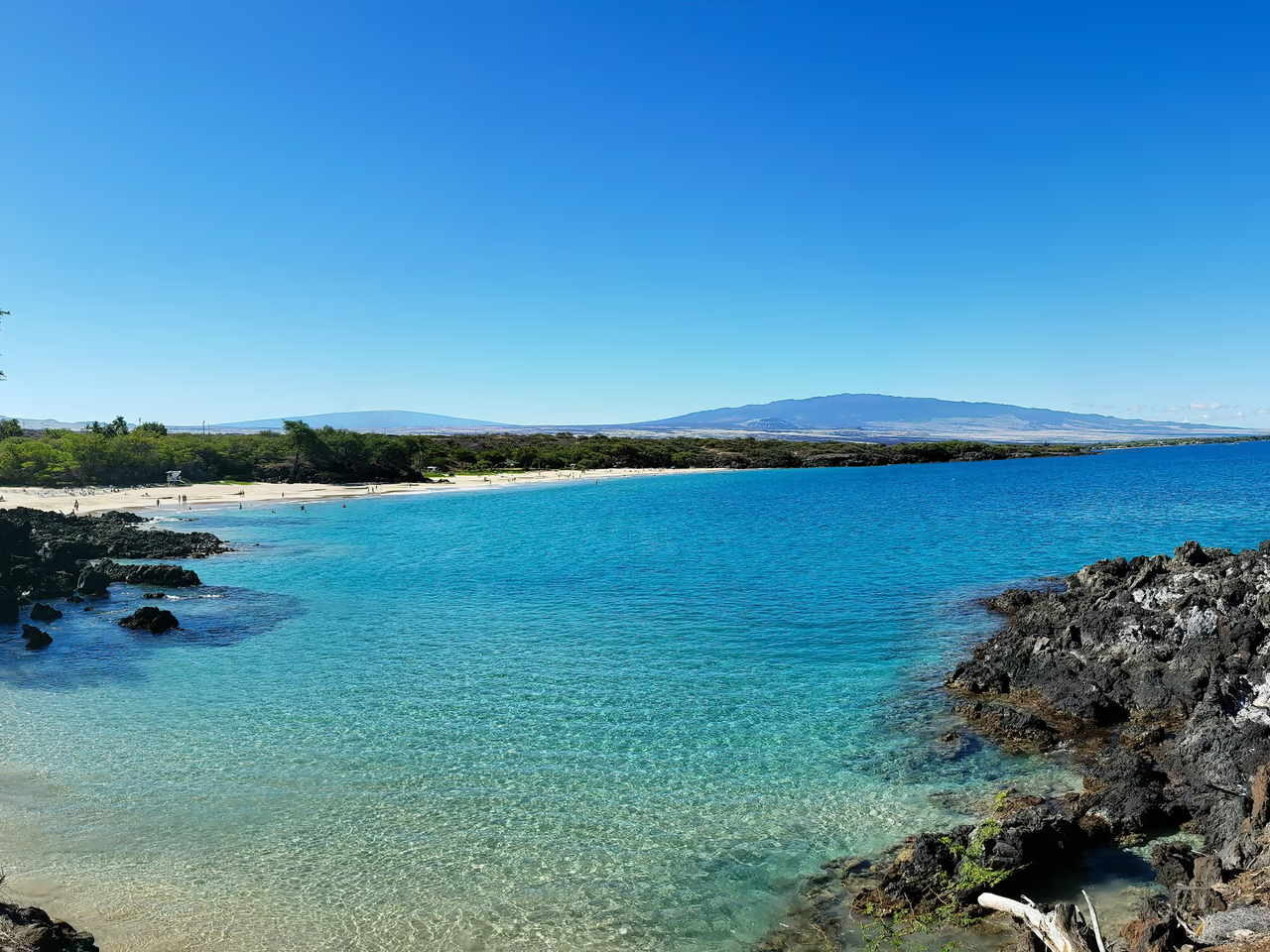
How a search on a Big Island beach works
If you have a lost ring on the Big Island, use the first hour to fix the spot. Line yourself up with two things that do not move, such as a lifeguard tower and a hotel, pavilion or point of lava rock, and take a photo each way. Drop a pin and note the time. If it came off while snorkelling, stand only on sand, never on coral. Then send that on WhatsApp with a photo of the ring.
We choose an experienced detectorist who knows that beach and pass on your marked map. Then the ground decides the rest. White sand at Hāpuna, grey sand at Hoʻokena and black sand at Richardson all hold a chain or a ring differently, and lava rock holds nothing at all, it simply lets things fall between it.
Places we cover in Big Island
- Big Island (Hawaiʻi Island), island wide
- Kailua-Kona and Aliʻi Drive
- Laʻaloa Beach Park (Magic Sands), Kona
- Kahaluʻu Beach Park, Kona
- Hāpuna Beach State Recreation Area (Hapuna), Kohala Coast
- Kaunaʻoa (Mauna Kea Beach), Kohala Coast
- ʻAnaehoʻomalu Bay (Anaehoomalu), Waikoloa
- Hoʻokena Beach Park (Hookena), South Kona
- Kealakekua Bay State Historical Park (Kealakekua)
- Two Step, Hōnaunau Bay (Honaunau)
- Richardson Ocean Park, Hilo
Big Island beaches where rings and watches go missing
The Kona side, the Kohala resorts and Hilo each lose jewelry in their own way.
Laʻaloa Beach Park (Magic Sands), Kona
Laʻaloa is a small pocket of white sand on Aliʻi Drive, just north of Kahaluʻu Bay, also called Magic Sands or Disappearing Sands. In winter the sand is pulled away and the beach becomes a rocky shoreline, then it returns. It is busy with bodysurfers and bodyboarders and has a lifeguard, showers and restrooms. A ring or watch that comes off as a wave knocks you over lands in shifting sand.
Kahaluʻu Beach Park, Kona
Kahaluʻu has calm water that makes it a popular place to snorkel, and honu (green sea turtles) come in to its shore. A necklace, a ring or an Oura ring comes off while you pull fins on and off at the water's edge, which is also the patch of sand a detectorist can work.
Hāpuna Beach State Recreation Area, Kohala Coast
Hāpuna is the largest of the island's white sand beaches, next to the Hāpuna Beach resort, with a lifeguard, showers and food concessions. Wide open sand like this is good ground for a search, as long as you can say which part of it you were on.
Kaunaʻoa (Mauna Kea Beach) and ʻAnaehoʻomalu Bay
Kaunaʻoa is a white sand crescent with generally calm water beside the Mauna Kea Beach Hotel. At Waikoloa, ʻAnaehoʻomalu Bay has palm-lined sand and historic fishponds, with the best snorkelling near its northern edge. On both, the line between dry sand and the water is where most things are lost.
Hoʻokena Beach Park, South Kona
Hoʻokena sits on Kauhakō Bay, about 23.5 miles (38 km) south of Kailua-Kona at the end of a narrow, winding road. Its sand is grey, a mix of black and white sand, with a few sandy entry points between rocky stretches. There is camping behind the beach, and currents can be strong in high surf. We have had an enquiry from Hoʻokena.
Kealakekua Bay and Hōnaunau
Kealakekua Bay is a state historical park on deep, clear water reached mostly by boat or kayak, so a search there starts from where your boat or kayak stopped and how deep the water was. A little south, the Two Step snorkel entry on Hōnaunau Bay drops straight off lava rock, so the shallow sand patches beside the entry are the ground worth searching.
Richardson Ocean Park, Hilo
On the east side, Richardson has black sand flecked with green olivine crystals, spring-fed calm water and tide pools. Its shallow bay is the most popular snorkelling spot on that side of the island, and there is a lifeguard, showers and picnic tables. An earring or bracelet can be dropped by the tide pools as easily as in the water.
What you get from Ring Seekers on the Big Island
One person on WhatsApp
You explain it once, and the same person keeps you posted, even after you have flown home.
Your map and photos go to the detectorist
The detectorist gets your marked spot, photos and time of loss before stepping onto the sand.
Plain about poor odds
A phone dropped into deep water off the step at Hōnaunau, or a chain lost somewhere out in a bay, is a poor bet. We say so before you spend anything.
We plan around sand, coral and surf
Winter strips the sand from Magic Sands, Kahaluʻu has living coral, and high surf at Hoʻokena brings strong currents. Those three things decide where and when a detectorist can work.
Cost talked through up front
What a search would cost reaches you before anyone is asked to drive across the island.
Tide, water and ground around the Big Island
What a detectorist works with on this island.
Tides on the Kona and Hilo sides
NOAA station Kawaihae (1617433), for the Kohala Coast: mean range 1.43 feet (0.44 metres), and 2.11 feet (0.64 metres) between the higher high and the lower low. NOAA station Hilo (1617760): mean range 1.67 feet (0.51 metres), and 2.40 feet (0.73 metres) between the higher high and the lower low. The range is small, so a search of wet sand is timed for low water.
Water temperature and coral
NOAA harbour gauges in 2025 averaged 78.7 F (25.9 C) in February and 82.2 F (27.9 C) in August at Kawaihae, and 78.2 F (25.7 C) in February and 80.0 F (26.7 C) in August at Hilo. In a bay with reef across it, a searcher works the sand between the rock.
White sand, grey sand, black sand and lava
Hāpuna and Kaunaʻoa are deep white sand that a coil reads well. Hoʻokena is grey, a mix of black and white, and Richardson in Hilo is black sand with olivine in it. Between them runs lava rock, where a chain or a ring drops into a crack rather than into sand, and that is the one kind of ground nobody can promise anything on.
Want a first idea of your chances? Try the lost ring recovery calculator.
From a Kona snorkel entry to the black sand at Hilo
My necklace came off snorkelling at Kahaluʻu. Can it be found?
Possibly, if it fell on sand. Kahaluʻu is a calm snorkelling bay known for honu (green sea turtles), and a chain usually goes at the water's edge, while you are pulling fins on and off or lifting a mask over your head, rather than out in the bay. A searcher works the sand, so tell us how far in you were and what you were standing beside.
I lost my ring bodyboarding at Magic Sands. Does it matter that it was winter?
Yes. Laʻaloa (Magic Sands) is a small pocket beach whose sand is stripped away in winter, leaving a rocky shoreline. A ring can drop between the rocks or be buried when the sand comes back. Tell us the date and where you were in relation to the lifeguard tower.
I lost my wedding band at Hāpuna Beach. Where do I start?
Hāpuna is the largest white sand beach on the island, so the spot matters more than the name. Line yourself up with two things that do not move, such as the lifeguard tower and the resort beside the beach, and take a photo each way. Then tell us whether you were on dry sand, at the water's edge or in the shore break, because those are three different searches.
Can someone search Hoʻokena Beach Park?
We have had an enquiry from Hoʻokena, so we know people lose things there. It is a grey sand beach on Kauhakō Bay, about 23.5 miles (38 km) south of Kailua-Kona down a narrow, winding road. A few sandy entry points break up the rocky shore, and currents can be strong in high surf. A ring lost on the sand or at a sandy entry point is the better prospect.
My ring went into the water at Two Step. What now?
It depends how deep. Two Step is the snorkel entry on Hōnaunau Bay, where access is managed by Hawaiʻi County, and people step straight off lava rock into water that gets deep quickly. Something that went down in the shallows over sand is worth a look. Something that went off the step into deep water is a long shot, and you would hear that from us first.
I lost an earring at Richardson Ocean Park in Hilo. Is it worth asking?
Yes, if you can place it. Richardson has black sand flecked with green olivine, tide pools and a shallow bay popular for snorkelling. A gold earring or bracelet dropped on the sand or by the tide pools is a fair prospect. Note the shower or picnic table nearest to you.
Do we need to be there while someone searches?
No, and most people are on a plane by then. If you can walk the searcher to the spot it saves time, but a pinned map, photos taken from where you stood and a clear account of the morning do the same job. You hear the outcome either way, from the same person you first messaged.
Big Island
Which bay, how deep you were standing, and when
Answer those three and we can tell you what kind of search this is.
A chain in ankle deep water over sand and a ring out past the reef are not the same job, and we would rather sort that out with you now than after someone has travelled. Send the three answers and a photo on WhatsApp.