
Houston and suburbs
Lost a ring or watch in Houston?
No tide out here. What counts is the patch of ground you can still point to.
A watch comes off without a sound. It is pulled off with a glove, shaken out of a towel, or slid from a wet wrist at a lake edge. On a mown lawn it drops through the blades into the grass thatch or the top few centimetres of soil, shallow enough for any detector, and sits there until a mower or a rake moves it.
Ring Seekers is a lost ring and jewelry recovery service that works with experienced local metal detectorists to search for a ring, wedding band, watch or phone lost in Houston and its suburbs. The search is done by an experienced detectorist who knows the area. Tell us what happened and where. We choose an experienced detectorist who knows the place, brief them with your map and photos, and tell you honestly if the odds are poor.
This page is for a watch, an Oura ring, an earring, keys or a phone just as much as for a lost ring or a wedding band. Galveston beaches have their own page, as do other parts of Texas. This one covers the city, the suburbs and the lakes inland.
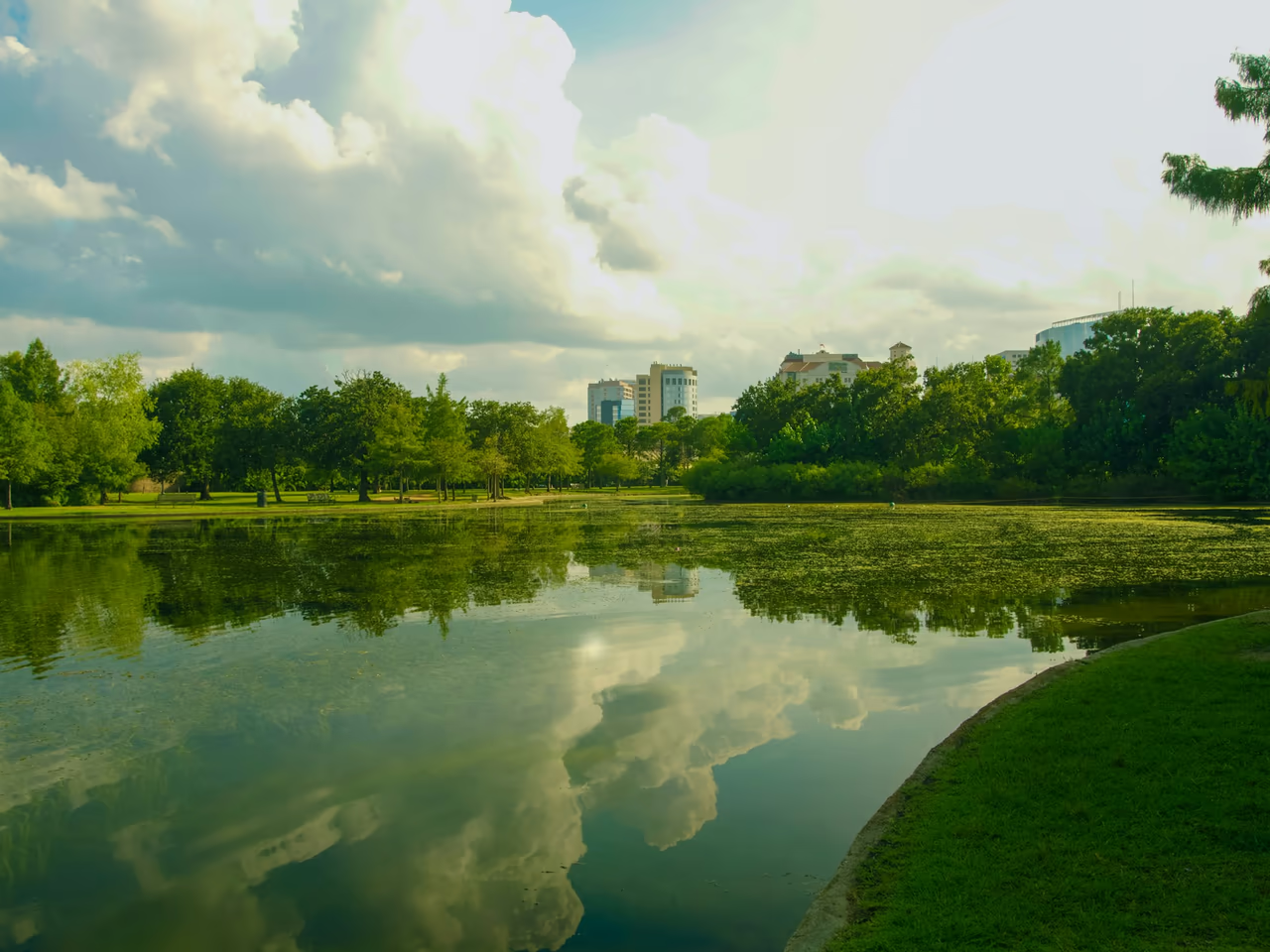
Before anyone mows, rakes or walks it again
Stop where you are and take a photo from the spot you were standing, with something fixed in the frame, such as a goalpost, a fence post or a pavilion roof. Drop a pin on your phone. In a garden, put the mower away and leave the beds alone. At a lake, note the time and how deep you had waded.
Then send us the pin, the photos and a line about what came off and how. The detail that matters is physical: grass, sand, mulch or water, whether the ground has been cut or raked since, and what you did in the minutes after.
Places we cover in Houston and suburbs
- Houston
- Cypress
- Katy
- Sugar Land
- Missouri City
- Pearland
- Spring
- Humble
- The Woodlands
- Conroe
- Baytown
- Sealy
- Wharton
- Liberty
- Lake Conroe Beach Park and Scott's Ridge
- Lake Houston and Alexander Deussen Park
- Northshore Park on Lake Woodlands
- Sugar Land Memorial Park
- Memorial Park and Hermann Park
- Stephen F. Austin State Park and Brazos Bend State Park
- Back gardens, lawns and sports fields across the area
From Lake Conroe to a back garden in Pearland
Every one of these places loses things in a slightly different way.
Lake Conroe, Conroe and Montgomery
Lake Conroe covers about 19,640 acres and lies roughly seven miles northwest of Conroe on the West Fork of the San Jacinto River, kept by the San Jacinto River Authority. Lake Conroe Beach Park sits on Highway 105 West, and on the west edge of the lake there is the Scott's Ridge swim area. Watches, phones and sunglasses go over the side of a boat, and rings come off wet hands at the swim beaches.
Lake Houston and Alexander Deussen Park
Lake Houston is a City of Houston reservoir of 11,282 acres on the San Jacinto River, about 18 miles northeast of Houston. Alexander Deussen Park covers 309 acres on its south side with boat launches, a T-pier and pavilions. Keys and phones go down at the pier and the ramp, usually with hands full of tackle or a cool box.
Northshore Park, The Woodlands
Northshore Park at 2505 Lake Woodlands Drive is about 7 acres, with two volleyball courts, pavilions and a path along Lake Woodlands. Earrings and rings come off during volleyball or at a Sunday concert, and court sand is the friendliest ground here for a small target.
Sugar Land Memorial Park
Sugar Land Memorial Park covers 150 acres along the Brazos River, with a lake, a 1.15 mile lake loop trail and open space for sports. Most of what goes missing here goes on grass and paths, so a watch or a band sits within a few centimetres of the surface.
Memorial Park and Hermann Park, Houston
Memorial Park is about 1,500 acres of trails, prairie, wetlands and sports complexes, with Hines Lake inside it, and Hermann Park draws its own crowds nearer the middle of the city. On ground that size, a watch or a wedding band is searchable once you can name the stretch you were on.
Stephen F. Austin State Park near Sealy, and Brazos Bend
Stephen F. Austin State Park covers 473 acres of wetland and hardwood forest on a bend of the Brazos River, off Park Road 38 at San Felipe, just east of Sealy. Brazos Bend State Park at Needville is 45 miles from downtown Houston, and alligators are common in some areas of it, worth knowing before anyone goes back to the water line.
Gardens and sports fields, Katy to Baytown
Most of the searches we actually set up around Houston are on ordinary ground: back gardens in Cypress, Spring or Humble, a park lawn in Liberty or Wharton, a youth football field in Pearland or Missouri City. Mown grass is the kindest place to lose something metal, because it holds it an inch down where the eye slides past.
What happens after your first message
One number, one person
You write once on WhatsApp and keep dealing with the same person, not a queue and not a form.
The detectorist is briefed before the drive
Your marked map, your photos and the time of day reach the detectorist before they set off, so nobody arrives asking you to explain it all again.
Plain words when the odds are poor
A phone dropped from a boat out in the middle of Lake Conroe is not a detectorist job, and we say so rather than take the booking.
Grass and sand are opposite problems
Loose sand gives a signal up easily but swallows a small earring if it is raked. Mown grass holds a watch close to the surface and hides it completely. The detectorist is told which one to expect.
You decide with the cost in front of you
None of this is a booking form. You get the figure, you take as long as you like with it, and a search happens only when you write back and say go ahead.
Ground, lakes and water levels around Houston
No tide inland. The kind of ground and the height of the lake matter instead.
Lawns, mulch and sand
On a lawn a ring or a watch usually sits in the grass thatch or the top few centimetres of soil, a depth any detector reaches. Mulched beds and volleyball sand are harder, because raking pushes a small earring deeper. Leave the patch alone until the search.
Lakes with no tide
Lake Conroe and Lake Houston are reservoirs, so nothing goes out and comes back the way it does on a coast. Lake Conroe has a normal conservation level of 201 feet above sea level. Only the shallow edge where someone can stand safely is a detector search, and deeper water is diving work.
Open parkland and how much gets covered
Memorial Park runs to about 1,500 acres and Sugar Land Memorial Park to 150 acres, so nothing here is searched whole. A detectorist works outwards from the point you mark, in overlapping passes, and the tighter that point is the further those passes reach.
Want a first idea of your chances? Try the lost ring recovery calculator.
What people ask us about Houston and the lakes
I took my watch off on the lawn in Katy and now I cannot find it. Is that worth a search?
It is usually the best kind of case we get. A watch that goes down on a mown lawn in Katy or Cypress sits in the grass thatch or the top few centimetres of soil, a depth any detector reaches. Stop mowing that patch, keep the rake off it, and send us a sketch of where you were standing.
My ring came off in the shallows at Lake Conroe Beach Park. Can anyone look?
Possibly. Lake Conroe Beach Park sits on Highway 105 West near Montgomery, and a lost ring in the shallows is a fair search if you know where you stood and how deep the water was. A phone or keys that went over the side of a boat out on the lake, which covers about 19,640 acres, is a job for a diver rather than a detectorist.
My phone went off the T-pier at Alexander Deussen Park. What now?
Tell us how far along the pier you were. Alexander Deussen Park covers 309 acres on the south side of Lake Houston, with boat launches, a T-pier and pavilions. A phone in open water off the end of a pier is a long shot, and you would hear that from us first. One that went down on the boards, the bank or the ramp is a different case.
I lost my keys on a trail at Memorial Park. Where would anyone even start?
With the part of the route you can name. Memorial Park runs to about 1,500 acres of trails, prairie, wetlands and sports complexes, so nobody sweeps it end to end. Keys are a big, easy target once the ground is cut down to a stretch of path, a bench or the grass you sat on.
I lost an earring on the volleyball sand at Northshore Park in The Woodlands. Any chance?
Small earrings are hard, but sand is kinder than grass. Northshore Park at 2505 Lake Woodlands Drive is about 7 acres, with two volleyball courts, pavilions and a path along Lake Woodlands. Name the court and leave the sand unraked, because raking works a small target deeper.
I lost an Oura ring on a sports field in Sugar Land or Missouri City. What now?
Mark where you played as exactly as you can. An Oura ring is titanium and gives a weaker signal than gold, so the detectorist works slowly and close, and a field narrowed to one corner or one goalmouth is what makes that possible.
A wedding band came off at a picnic at Stephen F. Austin State Park near Sealy. Is that findable?
Often, if the picnic spot can be pinned down. The park covers 473 acres of wetland and hardwood forest on a bend of the Brazos River, off Park Road 38 at San Felipe just east of Sealy, so everything turns on which table, clearing or bit of bank you were on. Give us the time of day too.
Do you cover Wharton, Liberty, Pearland, Spring and Baytown too?
Yes, and Cypress, Humble and Conroe with them. Wharton sits on the Colorado River and Liberty on the Trinity River, and most of what we are asked to search out there is a back garden, a park lawn or a youth football field. Send the town and the patch within it.
Houston and suburbs
Send the pin before the grass gets cut
The town, the patch within it, the day, and one photo from the spot.
Nothing out here is washing the spot away. What works against you is a mower, a rake and a memory going soft, so the sooner the pin and the photo reach us on WhatsApp the more there is to work with.