
Savannah, Tybee and the Georgia coast
A grandmother's ring lost in the sand on Tybee Island
A tide of about 7 feet at the Fort Pulaski gauge and different sand on every island, so the place and the hour decide what happens next.
The ring that came down through the family is usually the easiest metal to find. Old rings are solid gold, so a detector reads them clearly through dry sand. What decides it is how well you mark the spot and what the tide has done since. At the Fort Pulaski gauge, the NOAA station nearest Tybee, the mean range is 6.92 feet (2.11 metres), so a lot of sand is covered and uncovered twice a day.
Ring Seekers is a lost ring and jewelry recovery service that works with experienced local metal detectorists to search for a ring, wedding band, watch or phone lost in Savannah, on Tybee Island or on St Simons Island, all on the coast of Georgia. You deal with one person, and an experienced local detectorist does the search. Tell us what happened and where. We choose an experienced detectorist who knows the beach, brief them with your map and photos, and tell you honestly if the odds are poor.
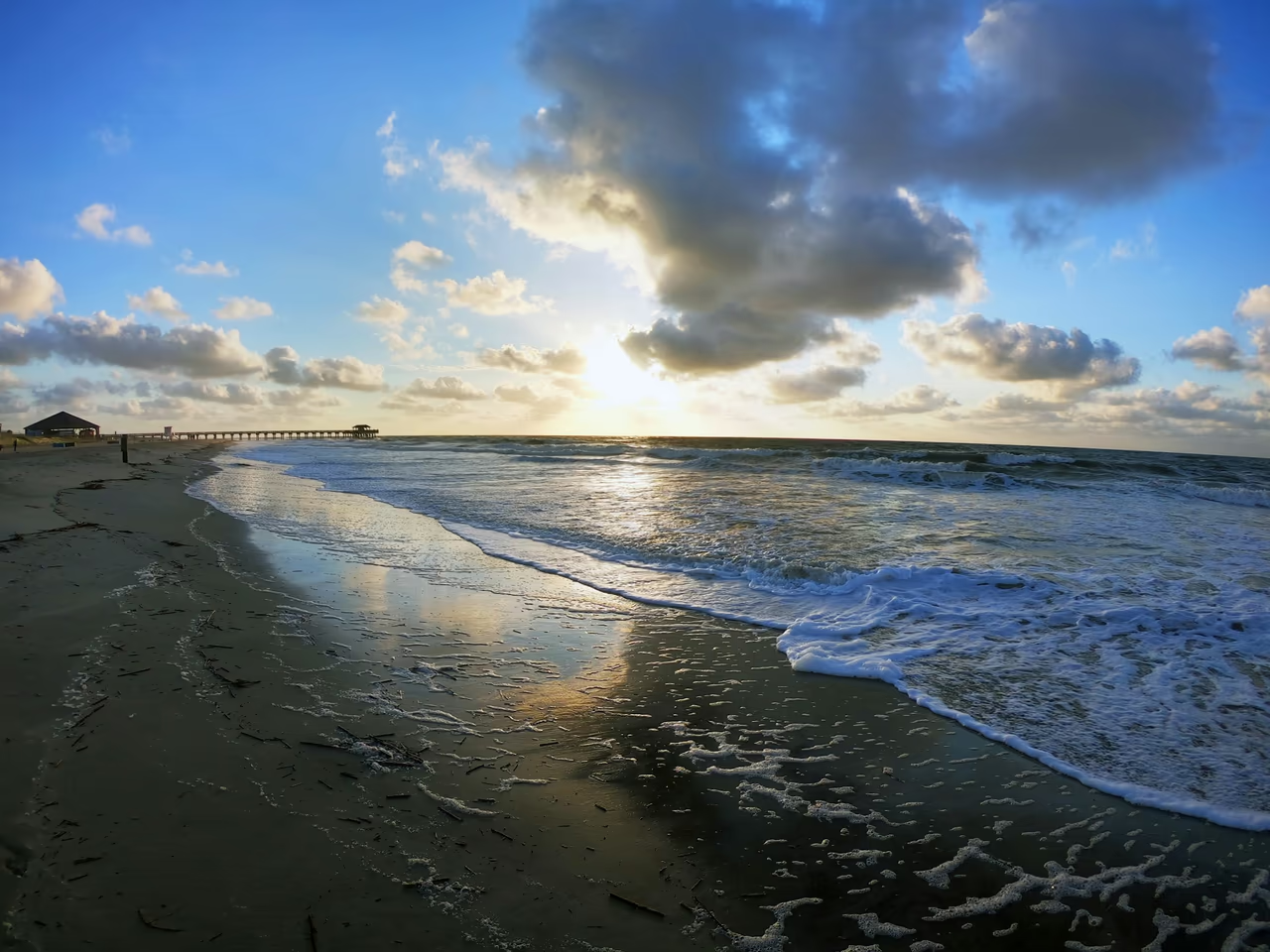
How a search works from Tybee Island to the Golden Isles
Stay where you are, do not dig, and mark the spot with a towel or a photo showing a crossover, a stand or a building behind you. Note the time, so we can check the tide table and work out whether that sand was wet or dry. Then send us a WhatsApp message.
From there we find a detectorist who can travel to that beach, park or square and hand over your pin, photos and the hour, so nobody starts by guessing. On Tybee the numbered street ends do most of the work, and on St Simons the accesses and the Coast Guard Station.
Places we cover in Savannah, Tybee and the Georgia coast
- Savannah
- Forsyth Park
- River Street
- Savannah squares
- Tybee Island
- North Beach, Tybee Island
- Mid Beach, Tybee Island
- South Beach, Tybee Island
- Tybee Pier and Pavilion
- Back River Beach, Tybee Island
- St Simons Island
- East Beach, St Simons Island
- Coast Guard Station beach
- Massengale Park
- St Simons Island Pier
- Gould's Inlet
- Jekyll Island
- Driftwood Beach
- Great Dunes Beach Park
- Sea Island
- Cumberland Island, by ferry from St. Marys
Beaches, parks and piers where jewelry goes missing on the Georgia coast
Forsyth Park, River Street and the squares, Savannah
Forsyth Park covers 30 acres of the Historic District around its cast iron fountain of 1858, and 22 of the original 24 squares survive. River Street runs along the river on cobblestones more than 200 years old. An earring on a lawn is a detector job; a ring on the cobbles is often spotted by eye in the gaps.
North Beach and Mid Beach, Tybee Island
North Beach runs from the mouth of the Savannah River to 1st Street, across from the Tybee Lighthouse and Fort Screven, and is the place for shells and wildlife. Mid Beach, 1st to 14th Street, is the quieter stretch. A ring lost while walking at low tide may be on sand the sea covers again within hours.
South Beach and Tybee Pier and Pavilion
South Beach runs from 14th to 18th Street and is the busiest stretch on Tybee, with the pier and most of the restaurants and hotels. A wedding ring or an heirloom ring lost in the crowds near the pier is trodden in within minutes, so write down the street end you were nearest straight away.
Back River Beach, Tybee Island
Back River Beach runs from 18th Street to the Back River Fishing Pier and is known for low waves and sunset views. The sandbars at the south end are deceptively dangerous, so mark where you were from the dry sand rather than walking out to one to look.
East Beach and Gould's Inlet, St Simons Island
East Beach, by the Coast Guard Station on First Street, has wide, hard packed sand that suits cycling, with the Massengale Park and Coast Guard accesses at either end to measure from. Gould's Inlet, at the north end, is quiet and known for birdwatching. A watch lost while biking on that flat sand needs a time and a landmark, because there is little else out there.
St Simons Island Pier
The pier stands at the end of Mallery Street in Pier Village and reaches out into St. Simons Sound. A phone or metal framed glasses dropped over the rail are a job for a diver, while the boards and the sand below are ordinary detector ground.
Jekyll Island and Cumberland Island
Driftwood Beach, on the north end of Jekyll Island, is known for the trees and driftwood washed ashore and is best walked at low tide. Great Dunes Beach Park is the easy access across from the playgrounds and mini golf. On a beach of bleached trunks, the nearest tree in a photo places a lost bracelet better than a map pin does. Further south, Cumberland Island is reached only by passenger ferry from St. Marys, and its long beach is a walk across the island from the ferry dock, so the dock you landed at and the path you took to the sand start the search.
What Ring Seekers can do for you on the Georgia coast
One person on WhatsApp
The same person takes your details and stays with you until the search is over.
A proper brief for the detectorist
Your pinned map, photos and the hour go to whoever searches.
We read the Georgia tide
The tide table for the hour you lost it is checked before anyone sets out, because it decides which sand was even uncovered.
We say when the odds are poor
A ring that went over the edge into the Savannah River, or off the end of a pier, is a different case from one on the sand, and you hear that before anything is booked.
Costs first
You know what a search would come to before anyone sets out, and nothing happens until you agree.
Tide, water and sand on the Georgia coast
A tide of about 7 feet
The NOAA station at Fort Pulaski, on the Savannah River near Tybee, gives a mean range of 6.92 feet (2.11 metres), and St Simons Island is much the same. Wet-sand searches are planned around low water.
Sandbars
The sandbars at the south end of Tybee are deceptively dangerous, and the safety advice along the Golden Isles is not to walk or swim out to one. A searcher works the sand you can walk off, so the landmark you give is worth more than a guess at the water.
Water temperature
The NOAA gauge at Fort Pulaski averaged about 50 F (10 C) in January 2025 and about 86 F (30 C) in July 2025.
Grass, cobbles and hard packed sand
Inland the ground does the opposite of the beach. The grass at Forsyth Park and the squares holds a ring near the surface for weeks. The cobblestones on River Street wedge one in a gap where the eye finds it before a detector does.
Want a first idea of your chances? Try the lost ring recovery calculator.
Questions about Savannah, Tybee and the Georgia coast
My grandmother's ring came off in the sand on Tybee. What do I do first?
Fix the spot before anything else. Stand still, put a towel or a shoe down, and photograph the nearest street end, crossover or building behind you, because the numbered streets from 1st to 18th are what a searcher works from here. Write down the time, so the tide for that hour can be checked. An old ring is usually solid gold and reads clearly, so it is the spot, not the ring, that decides this one.
I dropped my wedding band or phone off Tybee Pier. Is it worth a search?
Tybee Pier and Pavilion stands on South Beach at 16th Street. A wedding band, watch or phone that landed on the sand beside the pier is a fair search, worked best around low water. One that went off the far end into the sea is a long shot, and you would hear that from us first.
Can you help with a ring lost in Forsyth Park or on River Street in Savannah?
Yes, and they are different jobs. Forsyth Park is 30 acres of grass around the cast iron fountain of 1858, and grass holds a ring near the surface, so a photo with the fountain in shot narrows it fast. On River Street the cobblestones are more than 200 years old and a ring wedged between them is often spotted by eye. One that went over the edge into the river is out of reach on foot.
I lost my ring on East Beach, St Simons Island. What should I do first?
Note the nearest beach access or the Coast Guard Station, take a photo looking inland, and write down the time. The NOAA station on St Simons has a mean tide range of 6.62 feet (2.02 metres), so where the water stood then changes everything. Stay off the sandbars while you look, because the tide covers them quickly.
I lost a bracelet at Driftwood Beach on Jekyll Island. How do I describe the spot?
By the trees. Driftwood Beach on the north end is covered in washed up trunks and roots, and no two look alike, so a photo of the nearest one with the water behind it places you better than a pin. Say which side of it you were on and whether the tide was in or out, since that beach is best walked at low water.
I lost an earring on the grass in one of the Savannah squares.
Then the first thing to send is which square. Twenty two of the original twenty four survive and they look alike in a photo, so the name and the corner you stood in do most of the work. A small gold earring gives a weak signal, so a searcher covers a narrow patch slowly, which only works if the patch is small to begin with.
My watch came off at the St Simons Island Pier. Can it be found?
It depends which side of the rail it went. The pier stands at the end of Mallery Street in Pier Village and reaches into St. Simons Sound. A watch that dropped on the boards or the sand below is a strong, clean signal. One that went over the rail into the sound is a diver's job, and plastic sunglasses are beyond either.
What should I send you first?
A few lines on where, when and what happened. Once we agree how to go ahead, we ask for a map pin, photos of the spot with something fixed in the background, and a photo of the ring if you have one. Please do not post the exact spot in a public group.
Savannah, Tybee and the Georgia coast
The street end, the tree or the square you were nearest
Whichever applies, plus the hour and a photo of the ring.
The tide here moves about seven feet twice a day, so the hour is nearly as useful as the place. Send both on WhatsApp for a straight answer about what the sand is likely to have kept.