
Lost a ring in Malta or Gozo, from Golden Bay to Sliema
Lost a ring in Malta? How the sandy bays in the north, the flat rocks at Sliema and the coves on Gozo change where a ring ends up and how a search works.
Gozo and Comino
Something lost on Gozo or Comino can often be worked back to a small piece of ground. Whether it went in the water or stayed on land shapes everything after it, so put that in your opening lines.
Ring Seekers is a lost ring and jewellery recovery service that works with experienced local metal detectorists to search for a ring, wedding band, watch, keys or phone lost in Gozo and Comino.
Tell us what happened and where. We choose an experienced detectorist who knows the island, brief them with your map and photos, and tell you honestly if the odds are poor.
Comino is reached by boat, and snorkelling is part of what Xlendi, Marsalforn and the Blue Lagoon are written up for. If either came into your day, tell us early, because a boat moves and the spot goes with it.
Put the item at the top and describe it the way you would to a friend, then the place, then whether the sea came into it at any point. Those opening lines do more work than anything else you send us.
After that the questions divide. For a day on sand, we ask where you had settled and how far the day spread out from there. For a day in and out of the water, we ask how deep you were and what you were doing at the time. Reading this from a boat still on its mooring? Note how the shore looks from where you are sitting before the crew casts off.
The shore changes character from one of these to the next.
Xlendi sits at the end of a deep, lush ravine that was once a river bed, and the bay is flanked by steep cliff. There is a small sandy and pebbly beach with shallow water close in, while bathing along the bay is usually off the rocks, with access down a ladder into deep, crystal clear water. On the left side, tiered pathways give a walkway and a flat space for a towel. Round the promontory, the coastline is pitted with hand-dug salt pans.
Marsalforn is described as Gozo's main seaside town and one of the larger bays on the island, with hills around it. There is a small but pleasant sandy bank on the harbour with safe bathing, and families tend to use the sandy area in front of the local police station, sheltered by the breakwater promontory. Stronger swimmers use the rocky ground at Il-Ponta ta' Santa Marija and Għar Qawqla. Fishing boats work out of Il-Menqa, and the harbour side is lined with cafes and restaurants.
Beyond Marsalforn Bay lies the pebbly inlet of Qbajjar and the cove of Xwejni, which is characterised by shallow pools surrounded by large boulders, and both are swimming zones. The walk round to Qbajjar runs along the water's edge, and carrying on brings you to Xwejni and the saltpan area. None of it is open sand.
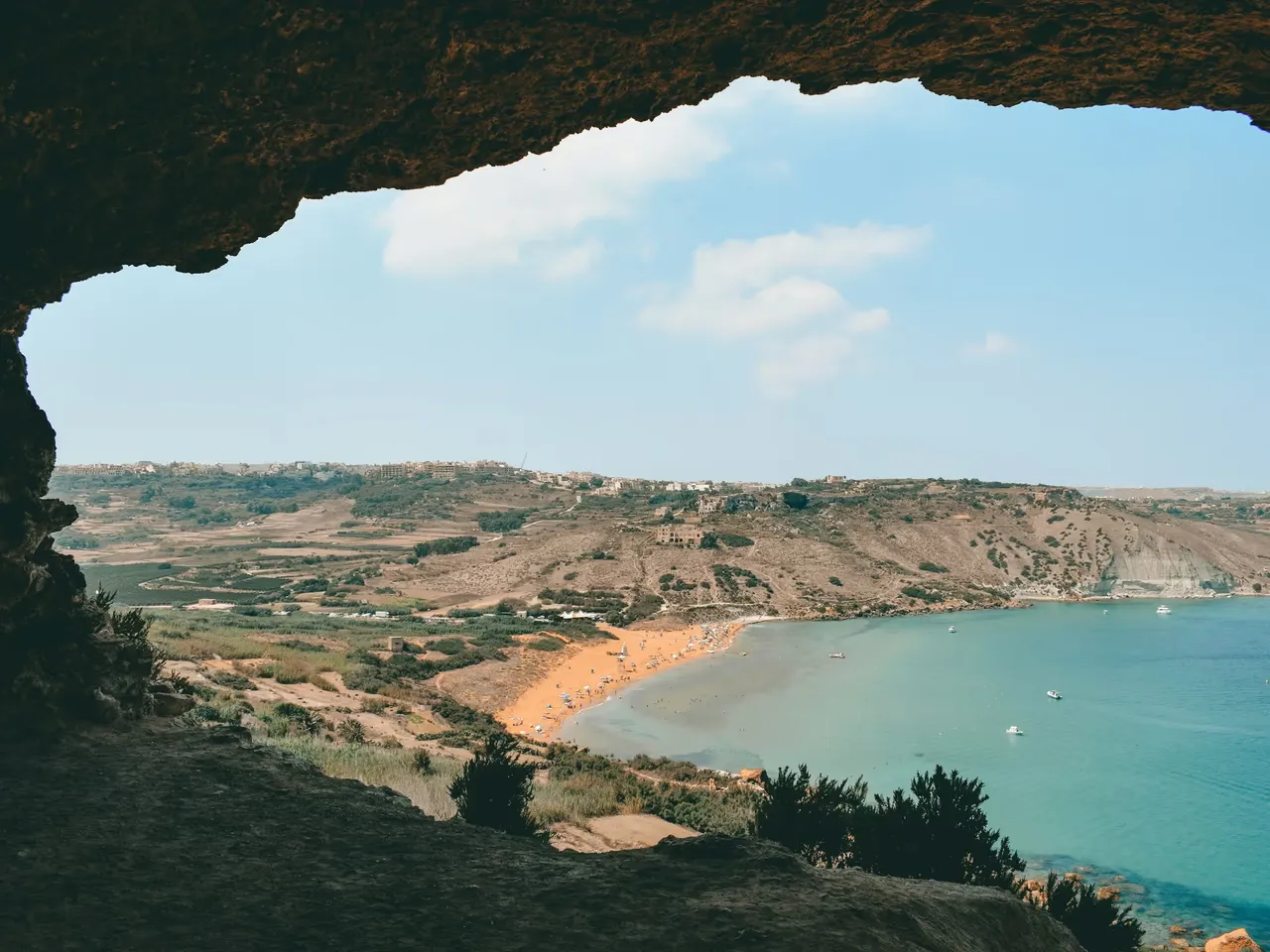
Ramla is written up by the tourism board as Gozo's largest sandy bay, its sand of a deep, reddish-gold hue. The bay is surrounded by countryside and nestles below steep terraced hills and the mythical Calypso's Cave. There are no hotels or tourist developments nearby, only snack bars and cafes on the beach side. The best approach is from Nadur or Xagħra, down a bamboo-lined valley.
On the tiny island of Comino you find the sheltered, dazzlingly blue waters of this small inlet. Boat trips from Gozo and from Malta bring people over for a dip, and the lagoon draws day-trippers, snorkellers and scuba divers. The lagoon lies between Kemmuna, which is Comino itself, and the islet of Kemmunett, also called Cominotto.
Mġarr is the primary harbour of Gozo and the first sight that greets people arriving by ferry from Ċirkewwa, with a fast ferry running to Grand Harbour in Valletta for foot passengers. It has a marina, a waterfront of bars and restaurants, and the Zewwieqa area for swimming. Round at Qala, Ħondoq ir-Rummien is a small cove with deep clear water and bathing ladders into the sea.
At Dwejra you can swim in the deep water of the bay, in the calm shallows of the Inland Sea or round the Blue Hole. The Inland Sea is a lagoon with a quayside on one side and a pebbly beach on the other, joined to the open sea by a tunnel the small boats take on trips out. Mġarr ix-Xini is a secluded, sheltered inlet used by swimmers and divers, with a path running up from the bay.
Getting to the spot is part of the planning here. Comino is reached by boat, and stretches of the Gozo coast are easier to come at from the water than from the road. Tell us how you got there yourself, because that is usually the way back to it.
A loss on sand or rock and a loss under water are not arranged in the same way, so that question gets settled early rather than late, and you hear our thinking on it before anybody is asked to go out.
A picture of your own ring, watch or chain carries further than a catalogue shot of the same model, because the wear on a thing is what makes it recognisable. Anything from a wedding day will do.
No exact spot, no receipt, no valuation, no tidy account of the day. Send what you have in whatever order it comes out, and the rest gets asked for as it becomes useful.
Not much of this coast stays the same for long.
At Xlendi bathing is usually off the rocks with access down a ladder into deep, crystal clear water, and at Ħondoq ir-Rummien access to the sea is from bathing ladders too. Say where you got in and where you climbed out, because they are not always the same ladder.
The sand at Ramla is of a deep, reddish-gold hue. Swimming there is safe and the water clear and clean, with smooth underwater boulders in the central strip. Whether you were on the sand, in the shallows or out past those boulders is the thing to be exact about.
Qbajjar is a pebbly inlet, while at Xwejni the shallow pools sit among large boulders. Pebble and boulder need naming separately, so say which you had under you.
Want a first idea of your chances? Try the lost ring recovery calculator.
The boat comes first here, ahead of the water. Write down which boat brought you over, where it was moored, and roughly where you swam in relation to it, because that is the part that stops being answerable once you are back on Gozo. The lagoon is a small sheltered inlet on Comino and it takes day-trippers, snorkellers and scuba divers together. By the rock where people get in and out there is something to work with. Over open water, that is a long shot, and you would hear that from us first.
Knowing the ladder is a real start. Bathing at Xlendi is usually off the rocks along the bay, with access down a ladder into deep clear water, so tell us which ladder you were using and whether the watch was on you going in. If you had been up on the tiered pathways earlier, mention that too, because a towel space and a ladder both want covering.
The first job at Ramla is narrowing the ground, not describing the bracelet. Which way you came in helps: the approach from Nadur or Xagħra runs down a bamboo-lined valley, while the road from Marsalforn comes past Calypso's Cave. After that, where you had settled and how far the day spread out from it will do.
A phone counts here just as a ring does. Marsalforn has a small sandy bank on the harbour and a promenade along it, so an evening out can cross paving and sand without anybody registering the change. Tell us where you were sitting, which way you walked afterwards, and whether the phone was on the table, on a towel or on you.
Both names are honest and neither causes trouble. Beyond Marsalforn Bay lies the pebbly inlet of Qbajjar, and past it the cove of Xwejni, with the salt pan area along the same shore. Say whether you were in the shallows, up on the pans or among the boulders, and that is enough to place you.
Mġarr is where the ferry from Ċirkewwa berths and the fast ferry from Valletta lands foot passengers, and it has a marina and a waterfront of bars and restaurants around it. It matters which surface you were on, so name it: paving, the quay itself, or sand. Take us back from where you parked or stepped off to the point where you noticed, and say what else you were carrying.
Then give us the stops in the order they came, and say where you swam at each. The last stop where you are sure you still had it does most of the work, and the first where you knew it had gone does the rest. The times on your own photographs usually close the gap between them.
Gozo and Comino
A few lines will do to begin with. From there we go back over the day together, as slowly as you need to.
A ring finder, in practice, is an experienced detectorist with a metal detector. We choose one who knows this area.
Lost it just now? Do this first Who to tell where you lost it
From our blog: what to do after losing a ring here, and how a search works.
Lost a ring in Malta? How the sandy bays in the north, the flat rocks at Sliema and the coves on Gozo change where a ring ends up and how a search works.