
United States
Lost a ring or other jewelry in the United States
Beaches, lakes and parks from California and Florida to New England and Hawaii.
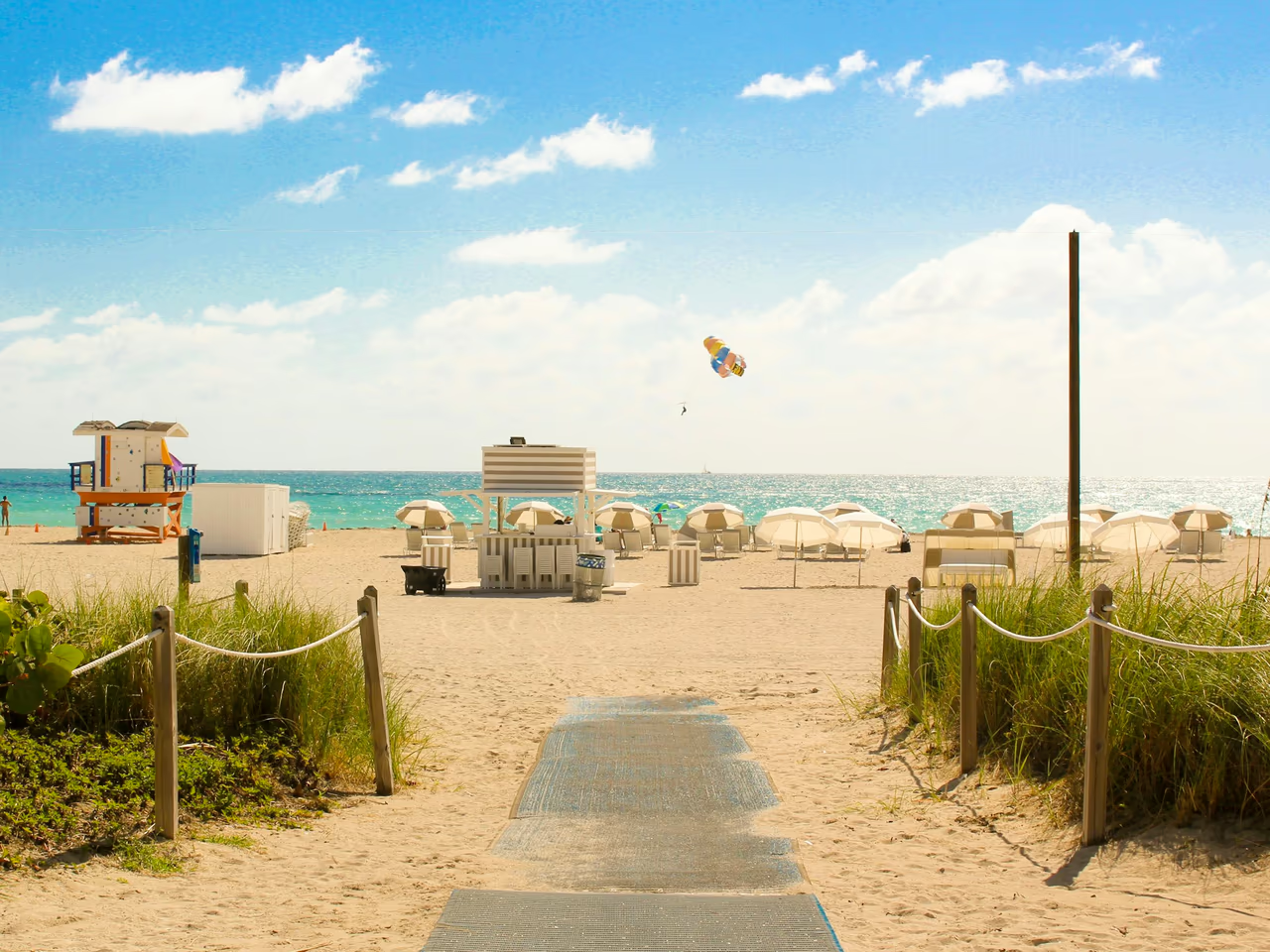
A ring lost on a US beach, lakeshore or lawn can often be found. What decides it is how exactly you can mark the spot and how much the tide, surf or time has moved things since.
Ring Seekers is a lost ring and jewelry recovery service that finds a metal detectorist who can reach the place in the United States where you lost a ring, wedding band, watch, keys or phone. Message us with where and when it happened. We brief the detectorist with your map and photos, and tell you honestly if the odds are poor.
How Ring Seekers helps in the United States
Most people who lose a ring start by searching for a ring finder or a metal detectorist near me. We take that search off your hands. You tell one person on WhatsApp what happened, and we look for a detectorist who can reach the beach, lake or park, then brief them with your map and photos.
It is not only rings. We also take enquiries about wedding bands, engagement rings, Oura rings, other jewelry, watches and Apple Watches, phones, keys and key fobs, glasses and hearing aids.
We have had enquiries from places such as Zuma Beach in Malibu, Mission Beach in San Diego, Surf City in North Carolina, Orange Beach in Alabama, Sullivan's Island and Hilton Head in South Carolina, Martha's Vineyard, Discovery Park in Seattle and Ho'okena on the Big Island. Every case starts the same way, with where and when it happened.
What you get from Ring Seekers in the United States
One person on WhatsApp
You explain it once. The same person takes the details, finds a detectorist and keeps you posted.
Your map and photos go to the detectorist
The detectorist sees your marked spot, your photos and the time of the loss before starting, which saves the first part of the search.
Plain about poor odds
A ring lost in heavy surf weeks ago, with no idea of the spot, is a poor bet. We say so before you spend anything.
Planned around the place
Sand, water, tide and season decide how a search is planned. We look at the spot you marked before anyone sets out.
More than rings
Wedding bands, Oura rings, earrings, bracelets, watches and phones all contain metal that a detector can pick up.
Costs explained first
We explain the costs before any search is booked.
States and areas we cover in the United States
Pick your state, then the area. Each area page covers the towns, beaches, lakes and parks around it.
Alaska
Arizona
California
Florida
- Florida, the whole state
- Miami and Miami Beach
- Fort Lauderdale
- Boca Raton and Palm Beach
- Key West and the Florida Keys
- Naples and Marco Island
- Fort Myers Beach and Sanibel
- Sarasota and Siesta Key
- Anna Maria Island
- Clearwater and St Pete Beach
- Orlando
- Cocoa Beach and the Space Coast
- Daytona Beach and New Smyrna
- Jacksonville Beach and St Augustine
- Destin and 30A
- Panama City Beach
- Pensacola Beach and Navarre
Idaho
Indiana
Kentucky
Maryland
Massachusetts
Michigan
Nebraska
Nevada
New Hampshire
North Carolina
Oklahoma
Pennsylvania
Rhode Island
South Carolina
Tennessee
Texas
Utah
Vermont
Virginia
Washington
West Virginia
Other places we can help
Some towns do not have an area page of their own, often because they are inland or a long way from the coast. We still take enquiries from them, including these.
- Waco, Amarillo, Tyler, Longview, Kilgore, Nacogdoches and Texarkana in Texas
- Huntsville, Alabama
- Columbia and Clemson, South Carolina
- Charlottesville and Winchester, Virginia
- Harrisburg and Altoona, Pennsylvania
- Parkersburg, West Virginia
- Johnson City, Tennessee
- Barre and Bennington, Vermont
- North Conway, New Hampshire
- Brewer, Maine
- Yakima, Washington
- Anchorage, Eagle River and Girdwood, Alaska
Message us with where and when you lost it, and we will check who can reach you.
How the United States is organised on this site
The country is split into states. Each state page covers the whole state and links to its area pages. Each area page covers the towns, beaches, lakes and parks around it.
States with a page today start on the Pacific with California, Oregon, Washington, Alaska and Hawaii. Inland in the West there are Arizona, Nevada, Utah, Colorado and Idaho. The Midwest has Kansas, Nebraska, Iowa, Missouri, Minnesota, Wisconsin, Illinois, Indiana, Michigan and Ohio. In the South there are Texas, Oklahoma, Louisiana, Alabama, Georgia, Florida, Tennessee, Kentucky, South Carolina and North Carolina. In the East there are Virginia, West Virginia, Maryland, Washington DC, Delaware, New Jersey, Pennsylvania, New York, Connecticut, Rhode Island, Massachusetts, Vermont, New Hampshire and Maine, and more states are being added. If you know the beach, lake or park, start with the area page. If you are not sure which area it falls under, start with the state page. Either way, you can message us with where and when it happened.
What decides the odds
Sand
A ring dropped in soft dry sand usually stays close to where it fell. In wet sand at the waterline it sinks as the water drains through, so it is deeper than people expect.
Surf
Each wave stirs the sand and lets heavy metal settle lower. A storm or big swell can strip sand away or pile more on top, which changes the depth of a ring overnight.
Tide
The tide decides when the spot is out of the water and where the waterline was when you lost it. A search is planned around low tide, so the time of the loss matters as much as the place.
Time
The sooner the better. Footprints and marks in the sand soon vanish, and memory of the exact spot fades. A ring lost weeks ago is not always gone, but the odds drop.
What we search for across the United States
Wedding and engagement rings are the most common reason people message us, but a detector finds any metal item lost outdoors.
Rings and jewelry
- Wedding rings, wedding bands and engagement rings
- Oura rings and other smart rings
- Earrings and bracelets
- Necklaces, chains and pendants
- Heirloom jewelry
Other metal items
- Watches and smartwatches
- Phones
- Car keys and key fobs
- Metal-framed glasses and sunglasses
How things usually get lost
- A ring slipping off a cold finger in the surf
- Sunscreen on the hands
- Throwing a ball or a frisbee on the sand
- Taking jewelry off to swim and putting it down
- A phone or watch dropped off a pier or boat
Plastic sunglasses do not show on a detector; those are found by eye or by a diver.
How a search is arranged
From your first message to a detectorist on the sand.
Message us on WhatsApp
Tell us what was lost, where and when, and what you were doing at the time.
Send the map and photos
A pin on a map, photos taken from where you stood and a photo of the ring or item.
We look at the spot
Sand, water, tide and season decide how a search is planned, and whether the odds are good.
We find a detectorist
We look for a detectorist who can reach the place and brief them with your map and photos.
Costs agreed before booking
We explain the costs before any search is booked, and tell you plainly if the odds are poor.
In the first hour
- Line yourself up with two things that do not move, such as a lifeguard tower and a set of stairs, and take a photo each way.
- Drop a pin on your phone map and note the time.
- Avoid digging around with your hands, which can push a ring deeper.
- Then message us with where and when it happened.
Questions about the United States
Do you have a detectorist in my town?
The search is done by an experienced detectorist who knows the area. When you message us, we choose an experienced detectorist who knows the place where you lost it and brief them with your map and photos. If nobody suitable can get there, or the odds are poor, we tell you before anything is booked.
Can a metal detector find a ring lost in the ocean?
Often, if it came off at wading depth and you can say roughly where. A ring in the surf sinks lower each time a wave stirs the sand, so the time of the loss matters because it tells us where the waterline was. A ring or phone dropped off a pier or boat into deep water is a much harder case, and we will say so.
I lost my Oura ring or wedding band. Can it be found?
Both are metal, so a detector picks them up. A lost Oura ring gives a signal much like a plain band, and a lost wedding ring in dry sand often stays close to where it fell. What decides it is how well you can mark the spot and how much the tide and surf have moved the sand since.
What should I send you?
Where and when it happened, what you were doing, and a photo of the ring or item. Once we go ahead, a pin on a map and photos taken from where you stood, lined up with something that does not move such as a lifeguard tower, a set of stairs or a tree, help the detectorist start in the right place.
Should I try a metal detector rental first?
You can, but mark the spot and take photos before you start. A metal detector for a lost ring works best in careful hands, because on a busy beach a borrowed machine mostly finds bottle caps and ring pulls, and repeated digging can push a ring deeper. Plastic sunglasses never show on a detector; those are found by eye or by a diver.
How are costs handled?
We explain the costs before any search is booked. They depend on the place and who can reach it, so we talk them through once we know where and when it happened. Nothing goes ahead until you have agreed.
United States
Lost something on a US beach, lake or park? Mark the spot first
Take photos from where you stood, drop a pin and note the time. Then message us on WhatsApp with where and when it happened, and we will check who can reach the place.
We explain the costs before any search is booked.