
Miami and Miami Beach
An engagement ring lost in the water off Miami Beach
From Sunny Isles Beach and Haulover down to Crandon Park, plus the mainland Miami parks.
An engagement ring that comes off in the shallows at South Beach, at Haulover or on Key Biscayne is not usually gone for good. What decides it is how exactly you can place the spot, and how quickly somebody gets there with a detector.
Ring Seekers is a lost ring and jewelry recovery service that works with experienced local metal detectorists to search for a ring, wedding band, watch or phone lost in Miami or Miami Beach, on the southeast coast of Florida. The search is done by a detectorist who knows these beaches. Tell us what happened and where. We choose an experienced detectorist who knows the beach, brief them with your map and photos, and tell you honestly if the odds are poor.
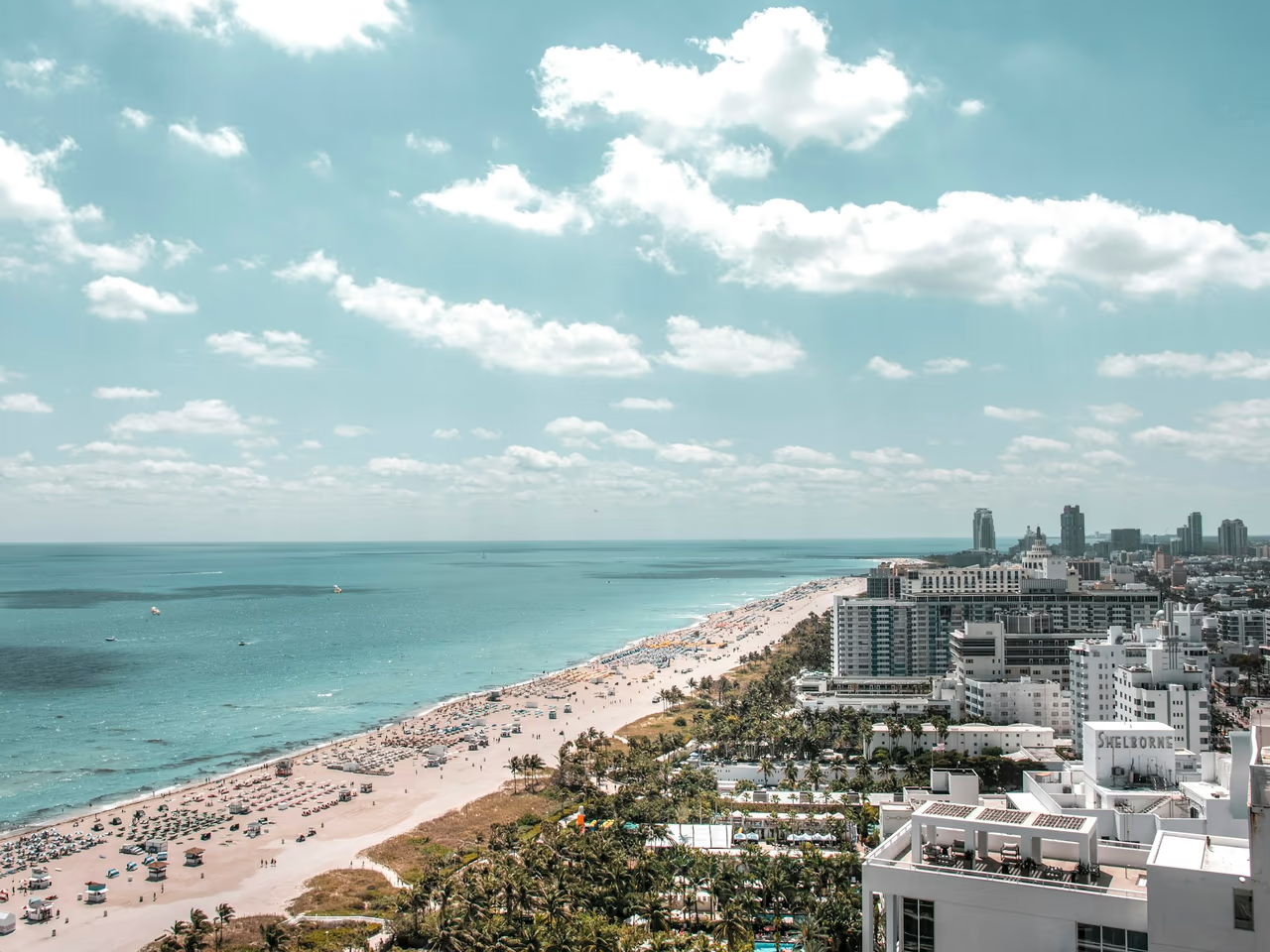
How a search works from South Beach to Key Biscayne
In the first hour, stop digging with your hands, which spreads a small ring through more sand. Take photos from the spot with a lifeguard tower number or a Beachwalk street end in view. Drop a pin on your phone map, then send us the pin, the photos, a picture of the ring and the time.
From there it is our job. We find a detectorist who can get to that stretch, pass on everything you sent, and come back to you with a straight view of the chances. A ring in dry sand, a ring in the shallows and a phone off a pier are three different jobs, and the details you send decide which one we are setting up.
Places we cover in Miami and Miami Beach
- Miami
- Miami Beach
- South Beach and South Pointe Park
- Lummus Park and Ocean Drive
- The Miami Beach boardwalk and Beachwalk
- Mid Beach
- North Beach Oceanside Park
- Haulover Beach Park
- Sunny Isles Beach and the Newport Fishing Pier
- Key Biscayne
- Crandon Park Beach
- Bill Baggs Cape Florida State Park
- Virginia Key
- Bayfront Park, downtown Miami
- Matheson Hammock Park
- Parks, lawns and gardens across mainland Miami
Miami beaches and parks where rings go missing
Each stretch has its own landmarks and its own way of hiding a ring.
South Beach and Lummus Park
Lummus Park runs along Ocean Drive from 5 Street to 14 Place, with 18 sand volleyball courts and Muscle Beach at 9 Street. An engagement ring can come off during a volleyball game or in the water. South Pointe Park, at 1 Washington Avenue, holds the southern tip. The lifeguard tower or the street you came down is your best marker.
The Miami Beach boardwalk up to North Beach
The Beachwalk is a seven mile promenade from South Pointe Park to North Beach Oceanside Park. In Mid Beach the old raised wooden boardwalk is now a 15 foot (about 4.5 metre) wide paved path up to 45th Street. North Beach Oceanside Park sits between 79th Street and 87th Terrace, with grass, shady spots and lifeguards.
Haulover Beach Park
Haulover is a 1.4 mile (about 2.3 km) beach on the open Atlantic, the largest remaining stretch of undeveloped beachfront in Miami-Dade. The clothing optional section lies between lifeguard towers 12 and 16, and the dog beach between towers 2 and 3, so a loss is easy to place by tower number. A watch strap can also give way on the kite field.
Sunny Isles Beach
The Newport Fishing Pier stands at Sunny Isles Beach Boulevard and Collins Avenue, with the swim zone marked out by buoys beside it. A phone can go over the rail, and a ring can come off inside the buoys. Tell us how far along the pier you were and which side you were fishing from.
Crandon Park, Key Biscayne
Crandon Park Beach is a two mile (about 3.2 km) beach on the Atlantic side of Key Biscayne, with 13 lifeguard stands along it. Its offshore sandbar shields swimmers from the surf, so the water is often calm and shallow a long way out. If you lost something while wading, tell us whether you were inside or beyond the sandbar.
Bill Baggs Cape Florida State Park
The park covers about the southern third of Key Biscayne, with more than a mile of sandy Atlantic beach, the Cape Florida Light and No Name Harbor, where boats anchor. Rings come off on the walk down from the car parks as often as in the water, and the lighthouse gives you a landmark most beaches here do not have.
Bayfront Park and Matheson Hammock
On the mainland, Bayfront Park covers 32 acres of downtown Miami on Biscayne Bay, with open lawns, a sandy beach area and concerts. An earring or ring can drop on the lawn during an event. Further south, Matheson Hammock Park has a man-made lagoon flushed by the bay tides, with lifeguards at weekends and on holidays.
Why people who lose a ring in Miami contact Ring Seekers
One person on WhatsApp
You deal with the same person from the first message to the end, with no call centre in between.
The detectorist gets your map and photos
We pass on your pin and photos, so whoever searches starts in the right place on the sand.
Plain about poor odds
If a ring went into deep water off a pier, or the spot cannot be placed at all, we say so rather than let you find out later.
Dry sand, shallows and deep water are three jobs
A band in the raked sand at Lummus Park, a ring inside the Crandon sandbar and a phone under the Newport pier each need a different person and a different day.
The cost reaches you while you are still deciding
You hear what a search would come to before anyone is asked to drive out to the beach, and you are not pushed for an answer.
What a detectorist works with around Miami
A small tide, warm water, seven miles of sand and a beach raked every morning.
Sand and daily beach cleaning
Miami Beach has a 7.5 mile (about 12 km) beach. Clean-up crews work the water line every day, collecting, cutting and turning seaweed. A ring near the water can be turned into the sand or moved with the seaweed, so mark the spot early.
A tide of about two and a half feet
At the Miami Beach tide station the mean range is 2.46 feet (0.75 metre), and at Virginia Key, on the way to Key Biscayne, it is 2.04 feet (0.62 metre). King tides, the highest of the year, usually come in September, October and November, and push the search strip further up the sand.
Rip currents
Rip currents show as darker water or a line of foam heading out to sea, and they form and fade with the swell. A search in the water is timed for a calm day, when a detectorist can hold a line in waist-deep water instead of being pushed along it.
Water temperature
Monthly averages at Virginia Key run from 72.5 F (22.5 C) in January to 88 F (31 C) in August. Cold is rarely what holds up a water search here. The surf is.
Towers, street ends and station numbers
This coast is addressed in numbers. Lummus Park is read off the Ocean Drive street ends from 5 Street to 14 Place, Haulover by lifeguard tower, North Beach Oceanside Park by the blocks between 79th Street and 87th Terrace, and Crandon by which of its 13 stands you were near. One of those numbers is the difference between a strip and seven miles of sand.
Want a first idea of your chances? Try the lost ring recovery calculator.
Questions about Miami and Miami Beach
My engagement ring came off in the water at South Beach. Is it gone?
Not necessarily. The tide here moves about two and a half feet, so the waterline does not travel far, and a ring in shallow water usually settles close to where it left your hand. What we need is the lifeguard tower you were in front of, the street end you walked down from Ocean Drive, and how deep the water was on you.
I lost my ring on Haulover Beach. How do I describe where?
By tower number. Haulover runs 1.4 miles (about 2.3 km) with the clothing optional section between towers 12 and 16 and the dog beach between towers 2 and 3, so the nearest tower places you within a short strip. Add whether you were on the kite field, on the dry sand or in the water.
I lost an Oura ring or a watch in the water at Crandon Park. Is it worth a search?
It can be. Crandon's offshore sandbar shields swimmers from the surf, so the water there is often calm. An Oura ring and most watches carry enough metal for a detector to pick up. Note how deep the water was on you, the nearest lifeguard stand and the time, because the tide changes the depth.
My phone or sunglasses went off the Newport Fishing Pier in Sunny Isles Beach. Can they be found?
A phone reads on a detector, so it can be found on the bottom when the sea is calm enough to work. Plastic sunglasses do not read at all, and those are found by eye or by a diver. Note which side of the pier you stood on and how far along it you were, and we will tell you honestly whether a search makes sense.
I lost an earring or a ring on the lawn at Bayfront Park. What do you need?
A photo that shows the stage or the fountain from exactly where you stood. Bayfront Park covers 32 acres of downtown Miami, and an earring is small, so on open grass a precise spot makes the biggest difference of anything you can send. Tell us whether it happened during an event and roughly what time.
My wedding band is somewhere on the beach at Bill Baggs Cape Florida. Where do we start?
With the landmark you were nearest. The park takes up about the southern third of Key Biscayne, with more than a mile of sandy Atlantic beach, the Cape Florida Light at one end and No Name Harbor on the bay side. Tell us which of those you could see, how far you had walked from the car park, and whether the band went down on sand or in the water.
The beach was raked this morning. Has my ring already been taken away?
Usually not. Crews work the water line on Miami Beach every day, collecting, cutting and turning the seaweed, which can move a ring or turn it into the sand rather than carry it off. It is a reason to mark the spot and message us early rather than a reason to give up on it.
Miami and Miami Beach
Dry sand, the shallows, or past the first line of waves
Which of the three, the tower or street end you were at, and the hour.
Those answers change a Miami search more than the name of the beach does. Send them on WhatsApp with a pin and a photo of the ring, and you will get a straight read on what is possible.