
Jūrmala
Lost a ring on the beach in Jūrmala
Majori, Dzintari, Bulduri and Lielupe, then west through Dubulti, Pumpuri, Melluži, Asari and Vaivari to Kauguri and Jaunķemeri.
Jūrmala is one beach with many names. It is the central 24-kilometre stretch of the Gulf of Riga coast in Latvia, and the city behind it is made up of more than ten distinct areas, so the first thing a search needs is which of them you were in. A ring lost at Majori and a ring lost at Kauguri are both worth looking for, and the two days look nothing alike.
Ring Seekers is a lost ring and jewellery recovery service that works with experienced local metal detectorists to search for a ring, wedding band, watch, keys or phone lost in Jūrmala. You write once, in English.
Tell us what happened and where. We choose an experienced detectorist who knows the beach, brief them with your map and photos, and tell you honestly if the odds are poor.
The beach here is quartz sand, the sea is calm and only slightly salty, and a forested dune runs behind almost the whole length of it.
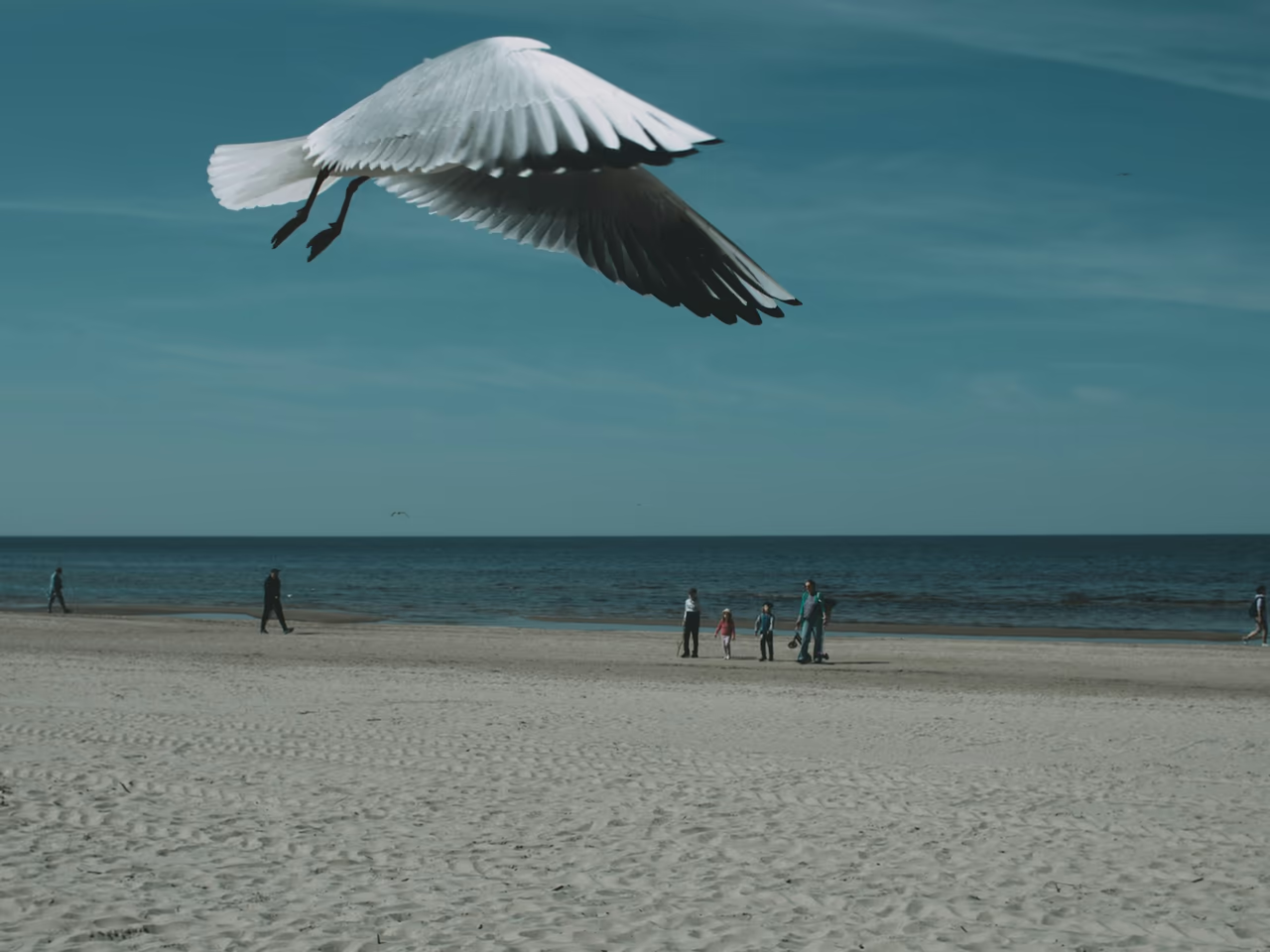
How a search on this beach gets started
Begin with the street. In Jūrmala the streets run down to the sand, and the beach is described by where they end, so the end of Turaidas Street or the ramp at Pilsoņu Street says more than the name of a district does. If the street name has gone, the café you sat near or the playground the children used will do the same job.
Then tell us what kind of day it was. Each beach is divided into active stretches, with courts for volleyball and other sports, and quiet ones for lying in the sun. Say which kind you were on, whether you went into the water and how far, and when you last remember the ring, the watch or the keys being with you. A pin on a map and a few photos come after that.
Places we cover in Jūrmala
- Majori Beach and the beach promenade
- Jomas Street, Majori
- Dzintari Beach
- Dzintari Concert Hall on Turaidas Street
- Dzintari Forest Park
- Bulduri Beach and the dune forest behind it
- Lielupe Beach
- The beach at the Lielupe estuary
- Buļļuciems
- Dubulti Beach
- Jaundubulti Beach
- Pumpuri Beach
- Melluži Beach
- Asari Beach
- Vaivari Beach
- Kauguri Beach and Kaugurciems
- Jaunķemeri Beach
- The River Lielupe shore at Dubulti and Priedaine
From the river mouth to Jaunķemeri, beach by beach
What each stretch of the Jūrmala shore is like.
Majori Beach
Majori is the central beach of Jūrmala, where the streets of the Majori area meet the white sand. On summer days it fills with holidaymakers, some on rented beach chairs and some on blankets, with cafés close at hand. An illuminated beach promenade nearly a kilometre long runs from Turaidas Street to Tirgoņu Street, where a bronze turtle stands. There is a beach sports centre at the end of Kaiju Street with courts for beach football, volleyball, tennis and handball, and a playground at the end of Pilsoņu Street.
Jomas Street and Dzintari Forest Park
Jomas Street is one of the oldest streets in Jūrmala and one of its central ones, a pedestrian street lined with restaurants, summer terraces, hotels and cafés with live music. Dzintari Forest Park is a park among the pines with a viewing tower, playgrounds for children of different ages, paths for walkers and roller skaters, a skate park, streetball courts and cafés. Neither is beach, so say plainly which of them you were in and what you were doing there.
Dzintari Beach
Dzintari Beach lies near Dzintari Concert Hall, which stands at 1 Turaidas Street, and music from the hall carries along the sand. On hot summer days most people gather near the main way onto the beach, at the end of Turaidas Street. There is a playground at the end of Drustu Street and a set of exercise bars where Mālpils Street reaches the sea.
Bulduri, Lielupe and the river mouth
Bulduri has more room to spread out. A wide belt of forested dunes separates the beach from the villas of Bulduri, and a path winds through the dune forest towards the River Lielupe. Lielupe Beach is close to a wild seashore, with a large sand rampart and a stand of young pines, and the red and white tower of the Buļļuciems Lighthouse can be seen from anywhere along it. Beyond that the river meets the sea at a beach with a vast area of bare dunes that local people call the edge of the world.
Dubulti, Jaundubulti and Pumpuri
Dubulti is the next beach west of Majori and still a lively one. Where Baznīcas Street meets the beach there is a wooden boardwalk with the active area marked on both sides of it, and jet skis out on the water. Jaundubulti and Pumpuri are for peaceful days, often with only local holidaymakers on the sand and a few seasonal cafés. Behind them a wooded strip of dunes carries a nature trail, and Pumpuri has a stretch marked out for kiteboarding and windsurfing.
Melluži, Asari and Vaivari
These are beaches for people who want the shore to themselves, and away from the seasonal cafés there is often nobody in sight. A belt of willow trees stands in front of the green line of the dune forest, and narrow paths cross the dunes. Melluži and Asari both have volleyball courts and playgrounds, and Kāpu Street links the two with Vaivari. Vaivari Beach has no seasonal cafés, and long walks and bicycle rides tend to begin or end there.
Kauguri and Jaunķemeri
Kauguri Beach belongs to the locals, since most of the permanent residents of the city live in the Kauguri district beside it. There is no forested dune on this stretch. Houses stand there instead, on the ground of old Kaugurciems, which was once a fishing village. Playgrounds and fitness equipment are at the end of Kapteiņa Zolta Street. At Jaunķemeri the strip of white sand narrows a good deal, and plants and grasses grow almost to the edge of the water.
Who you are dealing with
Your message comes straight to us
Your first message and each one after it come straight to us, in English, and we reply as soon as we can, so the story only has to be told once.
Detectorists who know the coast
Ring Seekers works with experienced local metal detectorists. Most of them search as a hobby, on the beaches close to where they live.
Your map and photos go with them
The detectorist receives what you sent: the pin, the pictures of the beach and of the item, and the day as you told it. The search begins from your spot.
The cost comes first
We explain the cost before anything is arranged.
What the Jūrmala shore is like to search
A few things about this coast that shape a search.
Quartz sand on a flat beach
The beach is quartz sand, and flat enough that people walk it barefoot and cycle along it. The coastline is also cleaned and aerated regularly. Tell us the day of the loss, and whether you have seen that stretch being worked since.
A calm, slightly salty sea
The waves on this part of the Gulf of Riga are calm and the water is only slightly salty. If you were in the sea when it went, the useful details are how far out you were and how high the water stood on you.
Dune forest behind the sand
A forested dune runs along almost all of the beach, sheltered by willow groves, and at Kauguri houses stand in its place. If your day included a walk through the trees or along a dune path, mark that route as well as your place on the sand.
Want a first idea of your chances? Try the lost ring recovery calculator.
Questions about Jūrmala
My wedding ring came off on Majori Beach. Where do I start?
Start with the street you came down to the sand by. Majori is the central beach of Jūrmala and its fixed points sit close together: the lifeguard station building near Pilsoņu Street, the playground at the end of that street, the sports courts at the end of Kaiju Street and the bronze turtle at the end of Tirgoņu Street. Tell us which of them you could see from your towel.
I lost a bracelet somewhere along Jomas Street.
Jomas Street is a pedestrian street of restaurants, summer terraces, hotels and cafés with live music, so work back through where you sat and where you paid. It is worth asking at each of those places first. If the bracelet is still missing, send us the part of the street you walked and what the bracelet looks like.
We went to a concert at Dzintari and my earring is gone.
Dzintari Concert Hall stands at 1 Turaidas Street and has an open-air auditorium, and Dzintari Beach is the nearby beach. Tell us whether the evening stayed in the auditorium or carried on down to the sand, and roughly where you sat. An earring is small, so the tighter the area you can give us, the better.
My watch went into the sea while I was swimming at Bulduri.
Say which line you walked down, because the streets that end on the beach at Bulduri are numbered lines. Then tell us how far out you were and whether you could still stand. The volleyball court and the playground at 6. līnija are the kind of marker that helps a detectorist find your stretch of water.
My keys went into the water from a jet ski off Dubulti.
Jet skis run off the Dubulti shore, and they are hired at the end of Kļavu Street. Keys that went into open water well away from the beach are a long shot, and you would hear that from us first. If they could have gone on the sand before you set off or after you came back, that is a small area and worth describing.
We were at Kauguri and are not sure which part of the beach.
Kauguri has no forested dune behind it, so what you saw from the sand was the houses of old Kaugurciems. The playground and the fitness equipment at the end of Kapteiņa Zolta Street are the main markers on that beach. Tell us which side of them you were on, and send any photo from the day.
We came out from Riga for the day and only noticed on the way back.
Majori beach is only 30 minutes from Riga city centre, so a day trip is a short story to retrace. Write the day down in order while you still have it: where you reached the beach, where you sat and where you ate. The photos on your phone carry the time they were taken, and that helps to place the moment.
Jūrmala
Start with the beach and the street
A WhatsApp message in English is enough.
Tell us what is missing, which beach you were on and the street you came down to it by. A pin on the map and photos can follow once we have that.