
Gran Canaria
Lost a ring or watch in Gran Canaria?
Playa del Inglés, Maspalomas, Meloneras, San Agustín, Puerto Rico, Amadores, Anfi del Mar, Puerto de Mogán and Las Palmas.
Few islands ask so many different questions of one lost ring. Gran Canaria has a field of dunes crossed by marked paths, man made bays in the south west whose sand was put there on purpose, and a three kilometre city beach in Las Palmas. What decides the outcome is which of those you were on, how closely you can mark the spot, and where the tide stood.
Ring Seekers is a lost ring and jewellery recovery service that works with experienced local metal detectorists to search for a ring, wedding band, watch or phone lost in Gran Canaria. We have searched in Spain before.
Tell us what happened and where. We choose an experienced detectorist who knows that spot, brief them with your map and photos, and tell you honestly if the odds are poor.
How a search works in Gran Canaria
Do two things before you leave the beach. Drop a pin on your phone where you are standing, and write down the time, because the time tells us where the tide stood and so which sand to work first. Then take two photos, one inland and one out to sea, with something fixed in the frame such as a breakwater or the lighthouse.
Send us the pin, the time and a photo of the item on WhatsApp, and a search can still go ahead after you have flown home. Say which stretch of coast it was. San Bartolomé de Tirajana covers San Agustín, Playa del Inglés, Maspalomas and Meloneras, Mogán covers Arguineguín to Puerto de Mogán, and Las Palmas covers Las Canteras and Las Alcaravaneras.
Places we cover in Gran Canaria
- Playa del Inglés
- Maspalomas and the lighthouse
- The Maspalomas dunes and their marked paths
- La Charca and the palm grove, Maspalomas
- Meloneras
- Playa del Faro and Las Mujeres
- San Agustín
- Las Burras and Puerto Chico
- El Veril and El Cochino
- Pasito Blanco
- Arguineguín and Patalavaca
- Anfi del Mar
- Puerto Rico
- Amadores
- Playa del Cura and Taurito
- Puerto de Mogán
- Las Palmas de Gran Canaria
- Las Canteras, from La Puntilla to La Cícer
- Playa Chica and Peña La Vieja
- Las Alcaravaneras
- Agaete and Puerto de las Nieves
Where rings and jewellery go missing around Gran Canaria
The resort beaches of San Bartolomé de Tirajana, the built bays of Mogán and the city beaches of Las Palmas.
Playa del Inglés, San Agustín, Las Burras and El Veril
The town hall's beach guide puts Playa del Inglés at 2,850 metres by 80, fine yellow sand, with a Blue Flag since 1988. Along the same promenade, San Agustín is 670 metres of grey sand and rock, Las Burras, also called Puerto Chico, is 380 metres long but 110 wide and held calm by a groyne, and El Veril, also called Corralillo, is 350 metres of fine yellow sand, 60 metres wide. Rings come off in the water and under a towel, and watches when the sun cream goes on.
Maspalomas, the lighthouse and Meloneras
Playa de Maspalomas runs 2,710 metres from the lighthouse to the Punta de Maspalomas, where it meets Playa del Inglés, and averages 55 metres wide. Behind it lie the Maspalomas dunes, just over 400 hectares of sand hills crossed by marked paths, with a lagoon, La Charca, and a palm grove. Meloneras, 570 metres by 75, is yellow and grey sand with boulders, and Playa del Faro, 750 by 18, is boulders, gravel, rock and some yellow sand, and suits surfers more than swimmers.
Puerto Rico, Amadores and Anfi del Mar
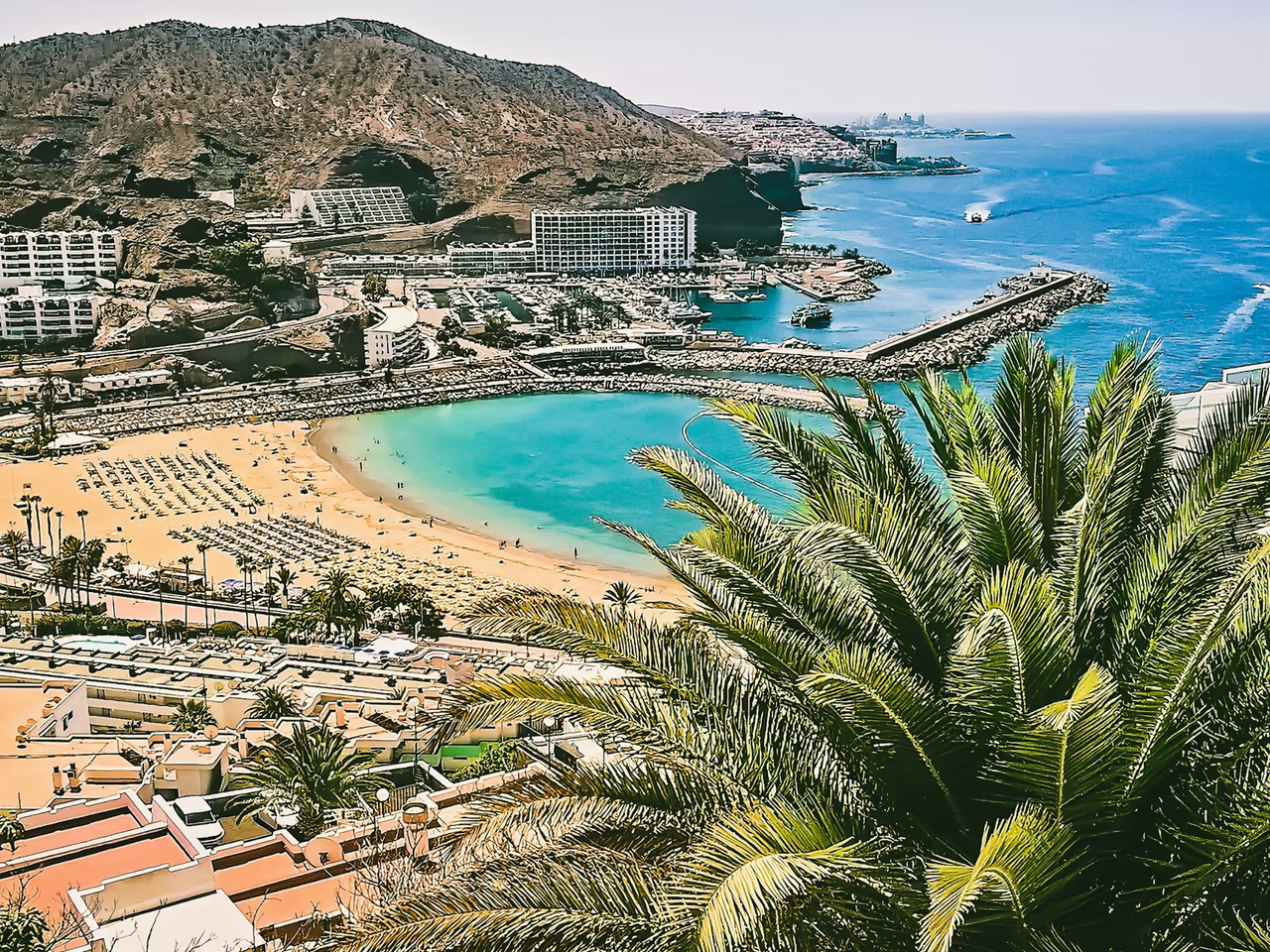
Puerto Rico is a small shell shaped beach, closed between two breakwaters and sheltered by its marina. It was one of the first artificial beaches built on the island in the 1960s, and the water inside stays almost flat. Amadores, white sand between two breakwaters, is also artificial and is joined to Puerto Rico by a seafront promenade about a kilometre long. Anfi del Mar, between Arguineguín and Puerto Rico, is a bay of white sand and calm water beside a small marina, and the island tourist board recommends it for families.
Arguineguín, Pasito Blanco and Puerto de Mogán
The official island tourist board calls Puerto de Mogán a small sheltered beach with calm water, and it sits beside the canals and the working fishing harbour. Arguineguín and Patalavaca sit at the other end of the same coast. Pasito Blanco, 450 metres by 40, is fine sand with boulders and rock next to a private marina.
Las Palmas and the north west
The city council gives Las Canteras as 3,100 metres of golden sand in the north of the city, watched by a rescue and lifeguard service. The La Barra reef, about 200 metres offshore, runs parallel to more than half of it as a natural breakwater, and the south end, La Cícer, is the surf end. The council gives Las Alcaravaneras as almost a kilometre long and 85 metres wide, sheltered by the port.
What Ring Seekers does for a loss in Gran Canaria
One person on WhatsApp
The person who takes your details is the one who follows it through.
The detectorist gets your map and photos
Your pin, the time and your photos reach the detectorist before anyone sets out, so the first sweep is on the right strip of sand.
Plain about poor odds
A phone in deep water off a marina, or a ring lost somewhere along Playa del Inglés with no landmark, may not be worth a search. You hear that from us at the start.
We know how this sand and tide behave
The tide here is big enough to matter, so the shallows are worked around low water. Inside the built bays of Puerto Rico and Amadores the water is calm, and a ring tends to stay near where it fell.
Costs before anything is booked
We explain the costs before any search is booked.
Sand, tides and surf in Gran Canaria
What the Atlantic does here.
Pale sand, grey sand and built bays
The San Bartolomé de Tirajana beach guide lists fine yellow sand at Playa del Inglés, Maspalomas and El Veril, yellow and grey sand with boulders at Meloneras, grey sand and rock at San Agustín, and fine grey sand at Las Burras. Puerto Rico, Amadores and Anfi del Mar sit in bays built for the purpose, and the city council gives Las Canteras as golden sand. Clean sand like that is good ground for a detector. The resort beaches are cleaned regularly, so an item on the surface may not stay where it fell.
Atlantic tides, breakwaters and surf
There are two high waters and two low waters a day here, and unlike the Spanish Mediterranean resorts the difference between them is big enough to matter. The Puertos del Estado tide gauge in the Puerto de Las Palmas, over the record from 1992 to 2017, gives an average tidal range of 1.63 metres, a largest recorded range of 2.97 metres and a smallest of 0.39 metres. A ring dropped at the water's edge at high water can be lying on bare wet sand a few hours later, which is when the shallows are worked. Several of the southern beaches are held by breakwaters or groynes, and Las Canteras is sheltered along more than half its length by the La Barra reef, which the city council calls the natural defence that keeps the sand in place. The surf beaches are La Cícer and Playa del Faro.
Want a first idea of your chances? Try the lost ring recovery calculator.
Questions about Gran Canaria
Can a lost wedding ring be found at Playa del Inglés or Maspalomas?
Only if you can narrow it down. The San Bartolomé de Tirajana beach guide gives Playa del Inglés as 2,850 metres by 80 and Playa de Maspalomas as 2,710 metres by 55. That is a great deal of sand for one wedding ring, so we need a pin on your phone and a fixed landmark, such as a kiosk, a walkway or the lighthouse.
I lost my ring in the Maspalomas dunes. Is that different?
Only in how you describe the spot. Marked paths cross the dunes between Playa del Inglés and Playa de Maspalomas, and the sand hills look alike from inside, so tell us which path you took, roughly how far in you were, and what you could see, the lighthouse, the sea or the hotels. Then a search starts around your spot.
My ring came off in the water at Puerto Rico or Amadores. Is it gone?
Not necessarily. Both are man made bays sheltered by breakwaters, so the water inside is calm and the sand is not dragged out the way it would be on an open coast. A ring that goes down in waist deep water there tends to stay near where it fell. Tell us the time and how deep you were standing.
I lost a watch or an Oura ring at Las Canteras in Las Palmas. What are the chances?
A watch or an Oura ring gives a detector a clear signal, which helps. The problem is the size of the beach. The city council gives Las Canteras as 3,100 metres of golden sand, so we need the section by name: La Puntilla, Playa Chica, Playa Grande, Peña La Vieja or La Cícer. If you were surfing at La Cícer, say which building you were level with.
I dropped my phone or sunglasses off a boat at Puerto de Mogán or Puerto Rico. Can you help?
Sometimes, with a diver. Ask the skipper for the position and the depth before you step off the boat. A phone or metal framed sunglasses give a signal under water, while plastic frames have to be spotted by eye. A harbour bottom can be silted and hard to see, so the odds may be poor.
Gran Canaria
Lost something in Gran Canaria? Send us the pin and the time
Which beach, which part of it, what time, sand or water, and a photo of the item.
The tide has moved since it happened, but the spot has not. Tell the lifeguards if the beach has them, then send us the pin and the time on WhatsApp.