
New Orleans and Baton Rouge
Lost a ring or phone in New Orleans?
Some ground here is cleared within hours. Grass and lake shore hold on to things much longer.
A phone goes down in a parade crowd and is under feet and beads before you have finished reaching for it. The useful part is that the neutral ground is grass, and grass keeps what lands on it, near the surface, until something or somebody moves it. On St. Charles Avenue somebody moves it fast, which is why the hour after the last float matters so much.
Ring Seekers is a lost ring and jewelry recovery service that works with experienced local metal detectorists to search for a ring, wedding band, watch or phone lost in New Orleans, Baton Rouge or on Louisiana's Northshore. The search is done by an experienced detectorist who knows the area. Tell us what happened and where. We choose an experienced detectorist who knows the place, brief them with your map and photos, and tell you honestly if the odds are poor.
The same goes for an earring on a park lawn, a watch at a Baton Rouge lake or a lost ring in the shallows off the lakefront.
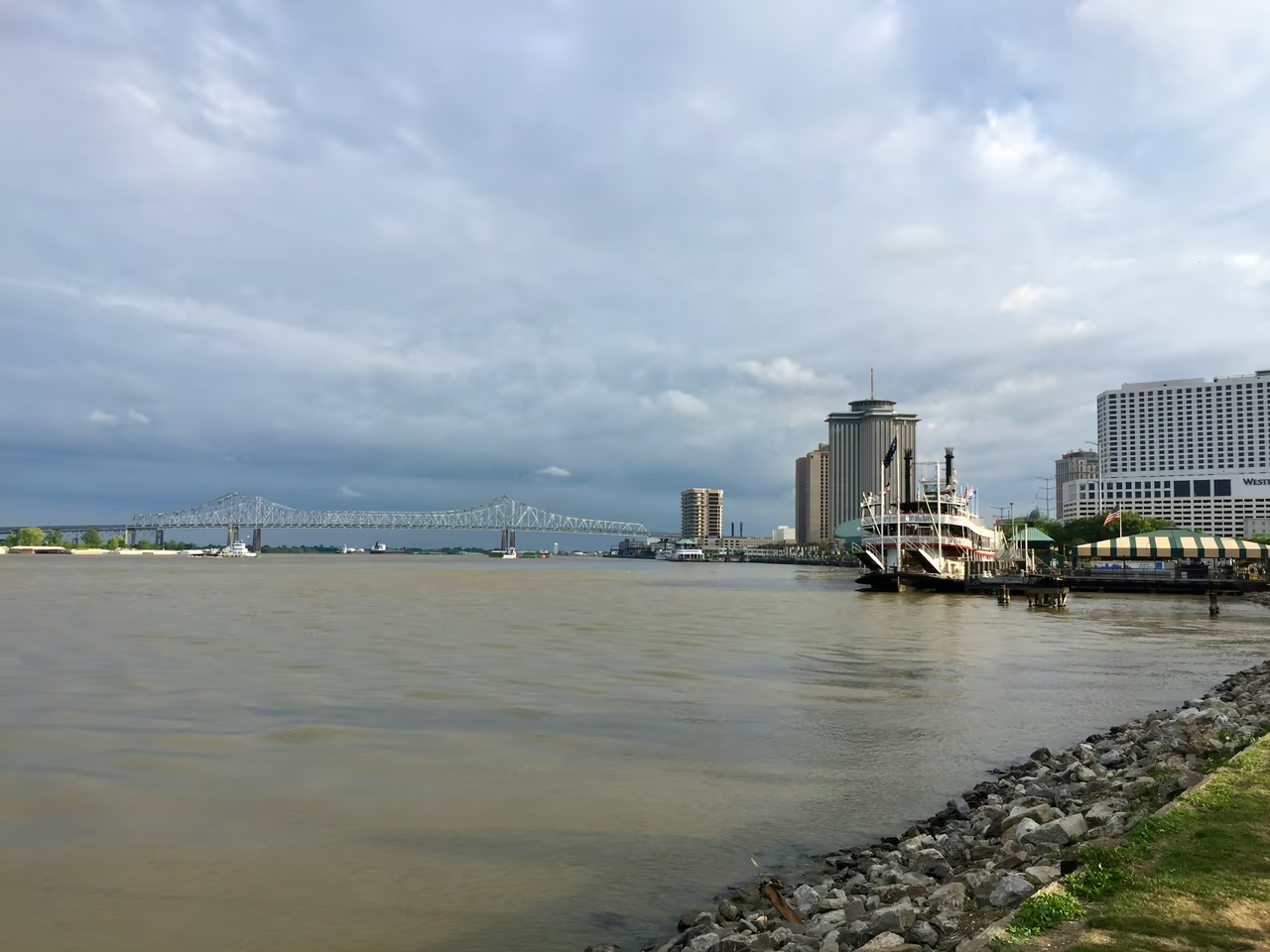
Before the clean-up crews reach your block
Stay near the spot and keep hands and rakes out of the grass. Drop a pin on your phone map, photograph the place from two directions with a tree or a lamp post in each frame, and write down what you were doing at the moment it came off. On a parade route the nearest cross street and the side of the avenue are worth more than anything else you can tell us.
Then send the pin, the photos and a description of the phone, ring, band or watch. Say whether it went onto grass, onto sand or into water, and whether anyone has raked, mown or swept the spot since.
Places we cover in New Orleans and Baton Rouge
- New Orleans
- Baton Rouge
- Mandeville and the Northshore
- City Park, New Orleans
- Audubon Park and Audubon Riverview Park (The Fly)
- St. Charles Avenue parade route
- The French Quarter
- Lakeshore Drive and the New Orleans Lakefront
- Lake Pontchartrain
- City-Brooks Community Park, Baton Rouge
- University Lakes and the LSU campus
- Mandeville Lakefront
- Fontainebleau State Park
Parks, parade routes and lakefronts where things go missing
City Park, New Orleans
City Park covers over 1,300 acres, with Big Lake, the lagoons and the Couturie Forest. It is big enough that the name of the park tells a searcher nothing, so what counts is the bench, the bridge or the tree you can put yourself beside. On the open lawns a band or a watch stays in the thatch.
Audubon Park and The Fly
Audubon Park has a 1.8 mile (2.9 km) jogging path, a lagoon and old live oaks, and Audubon Riverview Park, known as The Fly, sits on the Mississippi. A ring slips off during a run, and an earring comes out during a picnic on the grass. Both land shallow and stay put, which makes the loop one of the better places on this page to lose something.
St. Charles Avenue and the French Quarter
The main Mardi Gras route runs down St. Charles Avenue towards Canal Street, and the city says millions of people use the neutral grounds every year to watch parades. Rings and phones end up in the grass or under a heap of beads, and crews with rakes and blowers clear the route soon after. In the French Quarter the ground is street and pavement, so a ring rolls rather than sinks.
Lakeshore Drive and the New Orleans Lakefront
The New Orleans Lakefront offers over 5.5 miles (8.9 km) of public space along Lake Pontchartrain. Things go in off the steps and the seawall, and because the lake barely moves they stay roughly where they entered. The searchable part is the shallow margin where a detectorist can stand.
City-Brooks Community Park and the University Lakes, Baton Rouge
City-Brooks Community Park is 154 acres on Dalrymple Drive near LSU, with a 50 acre lake, walking trails and a historic nine-hole golf course. Nearby are the University Lakes, six lakes round the LSU campus. A watch or an Oura ring comes off on a lakeside walk here as easily as a wedding ring does.
Mandeville Lakefront and Fontainebleau State Park
On the Northshore, the Mandeville Lakefront is a quiet park about one mile (1.6 km) long beside Lake Pontchartrain. Also in Mandeville, Fontainebleau State Park covers 2,800 acres with a sandy beach on the lake. Sand is the friendliest ground on this page: it holds a phone or a band close to the surface and gives the signal up cleanly.
How a New Orleans or Baton Rouge search is run
One person on WhatsApp from start to finish
The same person takes the details, agrees terms with you and stays your contact until the search is done or called off.
Your map and photos go to the detectorist
We choose an experienced detectorist who knows New Orleans, Baton Rouge or the Northshore and brief them with your pin, your photos and how it came off, so nobody starts from a guess.
Honest about poor odds
A phone swept up after a parade, or a ring out in the deep part of a City Park lagoon, may be past reach. You hear that before anything is booked.
Grass, sand and lake water are three different jobs
Grass holds a target shallow and hides it. Sand gives it up easily. Lake water keeps it near where it went in but needs someone standing in it. The detectorist is told which one they are walking into.
The cost arrives with the honest answer
The figure for a search reaches you before anyone is asked to travel to New Orleans, Baton Rouge or the Northshore, with no pressure attached to it.
Water, parades and ground around New Orleans and Baton Rouge
Lake Pontchartrain has almost no tide
The New Canal station on the New Orleans lakefront gives a mean tide range of 0.55 feet (about 17 cm), so a ring lost in the shallows off Lakeshore Drive or Mandeville is never uncovered at low water. Storms move the lake far more: the highest level recorded there, on 30 August 2012, was over 6 feet (1.9 m) above mean sea level.
Parade routes are cleared fast
Once a parade has passed, clean-up crews work the route with rakes and blowers, and local reporting describes nearly all the debris gone within three hours. That is the shortest clock on this page, and it is why a phone or a ring dropped on the neutral ground is worth going back for straight away.
Grass, pavement and the ground under a crowd
On the neutral grounds and the park lawns a small metal thing drops through the blades and sits in the thatch, close to the surface and completely invisible. On French Quarter pavement it rolls instead, which means it ends up at a kerb, a grating or a doorway rather than where you dropped it.
Want a first idea of your chances? Try the lost ring recovery calculator.
If it happened at a parade, in a park or by the water
My phone went down in the crowd at a parade on St. Charles Avenue. Any chance?
Go back the moment the parade has passed, before the clean-up crews reach your block. The route runs down St. Charles Avenue towards Canal Street, and local reporting describes nearly all the debris gone within about three hours, so speed counts for more here than anywhere else on this page. Note the nearest cross street and which side you were standing on, and send that with photos.
An earring came off while I was running in Audubon Park. Is that findable?
Often, yes. The jogging path runs 1.8 miles (2.9 km) past the lagoon and the old live oaks, and an earring that leaves an ear on grass drops straight down and stays in the thatch rather than rolling. What we need is the stretch rather than the park: which side of the loop you were on, and what you had just passed when you noticed.
I dropped my ring into Lake Pontchartrain off Lakeshore Drive. Is it worth a search?
It turns on depth and on how closely you can mark the spot. The lakefront runs over 5.5 miles (8.9 km) along the water, and the lake has almost no tide, so a lost ring stays under rather than drying out at low water. If it went in where you could stand, that is a search. If you were out of your depth, it is a long shot, and you would hear that from us first.
What about a wedding band lost somewhere in City Park?
Tell us which part of it. City Park covers over 1,300 acres, with Big Lake, the lagoons and the Couturie Forest, so the name of the park narrows nothing at all. A band dropped on grass beside a bench, a picnic spot or a path edge is a real search once you can point to a tree, a bridge or a building. Ask the staff as well, because jewelry does get handed in.
My watch came off at City-Brooks Community Park in Baton Rouge. What now?
Mark the patch and leave it alone. City-Brooks is 154 acres on Dalrymple Drive near LSU, with a 50 acre lake, walking trails and a historic nine-hole golf course, so the difference between the lake path and the open grass is the whole job. A watch is a loud target for a detector, and on mown grass it sits close to the surface.
Is a phone lost at the Mandeville Lakefront or on the Fontainebleau beach worth trying?
Often it is. The Mandeville Lakefront is a quiet park about one mile (1.6 km) long beside Lake Pontchartrain, and Fontainebleau State Park in the same town has a sandy beach on the lake within its 2,800 acres. Sand keeps a phone near the surface and gives up a signal readily. Tell us where you put your towel down and which way you walked from it.
What do you need from me to start?
The place, the day and the time, a photo of what came off if you have one, and a line saying whether it went onto grass, onto sand or into water. You get a straight answer on your chances and the figure for a search, and nothing is arranged unless you say go.
New Orleans and Baton Rouge
The cross street, the side of the avenue, the hour
Or the bench, the tree or the stretch of shore, if it was not a parade.
Two photographs and a pin are worth more than a long account of the day. Send them on WhatsApp with a line about what came off and where it landed, and you will get a straight read on the case back, poor odds included.