
Maui
Lost a ring or watch on Maui?
From Black Rock at Kāʻanapali and the Nāpili crescent down to the shore break at Mākena.
Losing something on the last morning feels like the end of it, and it is not. A flight home changes nothing about the sand, and a spot marked and photographed before you leave the beach keeps its value for days. What decides the odds is how exactly you can place where it happened, and whether it came off on dry sand, in the shore break or out in the water.
Ring Seekers is a lost ring and jewelry recovery service that works with experienced local metal detectorists to search for a ring, wedding band, watch or phone lost in Maui, Hawaii. We organise the search from start to finish, and an experienced local detectorist carries it out. Tell us what happened and where. We choose an experienced detectorist who knows the beach, brief them with your map and photos, and tell you honestly if the odds are poor.
If you have already flown, send what you have anyway. A search can be arranged and reported back to you at home.
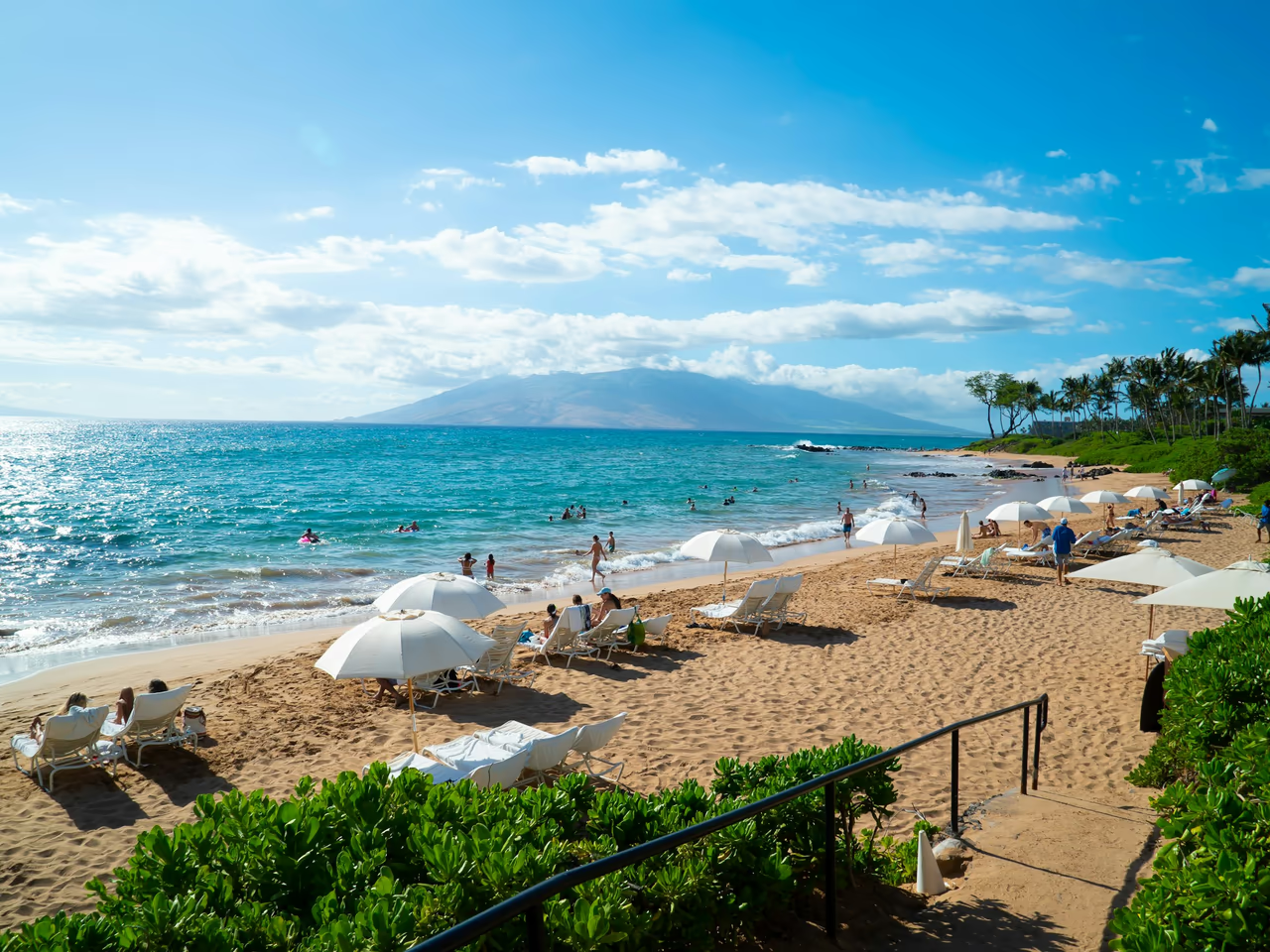
Fix the spot before you pack the car
If you have a lost ring on Maui, use the first hour to fix the spot. Line yourself up with two things that do not move, such as a lifeguard tower and a hotel or rocky point, and take a photo each way. Drop a pin and note the time. If it came off while snorkelling, stand on sand rather than coral. Then send that to us with a photo of what you lost.
We arrange a detectorist who can reach that stretch and share your map with them. Shore break, deep water and dry sand each get a different plan, and you are told which one yours is.
Places we cover in Maui
- Maui, island wide
- Kāʻanapali Beach (Kaanapali)
- Black Rock (Puʻu Kekaʻa), Kāʻanapali
- Nāpili Bay (Napili)
- Kapalua Bay (Kapalua)
- Wailea Beach (Wailea)
- Keawakapu Beach, Kīhei and Wailea
- Big Beach (Oneloa), Mākena State Park (Makena)
- Little Beach, Mākena State Park
- Kamaʻole Beach Park I, Kīhei (Kihei)
- Kamaʻole Beach Park II, Kīhei
- Kamaʻole Beach Park III, Kīhei
- Pāʻia and Baldwin Beach Park (Paia)
- Hoʻokipa Beach Park
- Molokini, by snorkel boat from Māʻalaea Harbor
Maui beaches where rings and watches go missing
Each side of the island loses jewelry in its own way.
Kāʻanapali Beach and Black Rock
Kāʻanapali has three miles of white sand lined with hotels and condominium villages, so the building behind you is the quickest way to say where you were. At the north end, Puʻu Kekaʻa (Black Rock) is a popular place to snorkel and dive, and every evening at sunset a cliff diver lights the torches and dives from it.
Nāpili Bay and Kapalua Bay
Nāpili Bay is a crescent of golden sand between rocky points, busy with hotels and holiday rentals, and the bottom drops quickly to water over your head. Kapalua Bay, next along, is a protected cove with good snorkelling for beginners. Neither beach has a lifeguard, and surf picks up at both in winter. Turtles rest near the rocky ends.
Wailea Beach and Keawakapu
Wailea Beach is wide, with fine white sand near the Grand Wailea and the Four Seasons, public access from Wailea Alanui Drive and a paved shoreline path. Keawakapu, between Kīhei and Wailea, is a long sandy beach with no offshore reef to break the swell. Neither has lifeguards. A small shore break at Wailea draws beginner bodyboarders, and a watch or Oura ring can come off in it.
Big Beach, Mākena State Park
Big Beach (Oneloa) is nearly two-thirds of a mile (1 km) long and over 100 feet (30 metres) wide, with the 360-foot cinder cone Puʻu Ōlaʻi at its north end and Little Beach beyond the lava rock. The waves break very close to shore, and people have suffered dislocated joints and broken necks and backs here. Lifeguards are on duty, and their towers are the only numbers on an otherwise featureless kilometre of sand.
Kamaʻole Beach Parks I, II and III, Kīhei
These county beach parks all have lifeguards, showers and parking. Kamaʻole I is a white sand crescent about a third of a mile long, and Kamaʻole II is a wide sandy beach with calm water, both among the best places on Maui to swim. Kamaʻole III is the smallest, with regular shore break and a large grassy park behind the sand.
Hoʻokipa and Pāʻia
Hoʻokipa Beach Park, just east of Pāʻia near the start of the Road to Hāna, is a lifeguarded surfing and windsurfing beach where winter waves can reach 30 feet. Green sea turtles come ashore to rest on the sand, so searches keep clear of them. Baldwin Beach Park in Pāʻia is known for swimming and bodysurfing.
Molokini
Molokini is a small crescent of an island about 3 miles (5 km) off the southwest coast, rising 160 feet over reef-filled water, and snorkel boats run out from Māʻalaea Harbor. Tell us the boat, the time and where in the crescent you swam.
What you get from Ring Seekers on Maui
One person on WhatsApp
You explain it once, and the same person keeps you posted, even after you have flown home.
Your map and photos go to the detectorist
The detectorist gets your marked spot, photos and time of loss before stepping onto the sand.
Plain about poor odds
A ring dropped over the side at Molokini, or lost in winter surf at Hoʻokipa, is a poor bet. We say so before you spend anything.
We plan around the shore break and the reef
Steep shore break at Mākena and living coral off the rocky points decide where and when a detectorist can work, and you are told that before anyone sets off.
The figure reaches you before the searcher does
What a search would come to is settled while you are still deciding, not once somebody is standing on the beach.
Small tide, big surf, warm water
What a detectorist works with on this island.
Tides
NOAA station Kahului (1615680): mean range 1.57 feet (0.48 metres), and 2.25 feet (0.69 metres) between the higher high and the lower low. In 2026 predictions run from about minus 0.8 to plus 3.1 feet. The range is small, so a search of wet sand is timed for low water.
Surf and high surf warnings
The National Weather Service in Honolulu issues a High Surf Advisory for north-facing shores such as Hoʻokipa at 15 feet and a warning at 25 feet, measured on the full wave face. West-facing shores such as Kāʻanapali are 12 and 20 feet, and south-facing shores 10 and 15 feet. A surf zone search waits until lifeguards say it is safe.
Water temperature and reef
The NOAA Kahului gauge averaged 77.5 F (25.3 C) in February 2025 and 80.8 F (27.1 C) in August 2025. Nobody searches by standing on reef or turning it over, so a snorkelling loss is worked from the sand channels between the coral heads.
Want a first idea of your chances? Try the lost ring recovery calculator.
Sand, shore break and snorkel stops, answered
We fly home tomorrow and my watch is somewhere in the sand at Wailea. Is there any point?
There is, and the flight home does not end it. Wailea Beach is wide, fine white sand with a paved shoreline path behind it and public access from Wailea Alanui Drive, so it is ground that can be described precisely even from an airport lounge. Mark the spot now, photograph it against the path and the nearest hotel, and send that across. A search can happen after you have gone, and you would be kept posted either way.
My Oura ring came off in the shore break at Big Beach. Is it worth a search?
Often yes, if it came off near the waterline. An Oura ring is titanium and gives a detector a signal. Big Beach is nearly two-thirds of a mile (1 km) long, so note the lifeguard tower nearest to you and how far you were from Puʻu Ōlaʻi, the cinder cone at the north end. Please do not go back into that shore break to look, because it has caused serious neck and back injuries.
I lost my wedding band snorkelling at Black Rock in Kāʻanapali. Where do I start?
Work out whether it came off in the water or on the sand as you took your fins off, because those are two different searches. Black Rock (Puʻu Kekaʻa) sits at the north end of a three-mile beach, so note which side of the rock you went in from and which hotel was behind you. If you go back to look, stand on sand rather than on coral.
Can a ring lost at Nāpili Bay or Kapalua Bay be found?
Nāpili is a sandy crescent between rocky points and Kapalua Bay is a sheltered cove, and neither has a lifeguard. At Nāpili the sandy bottom drops quickly to water over your head, so a ring lost while swimming may be past standing depth. A ring dropped on the sand is a far better prospect.
I lost my ring bodyboarding at Kamaʻole III in Kīhei. What now?
Kamaʻole III is the smallest of the three Kamaʻole beaches and has regular shore break, so a ring or watch can come off as a wave knocks you over. Note the lifeguard tower and where the grassy park meets the sand. Tell us whether it was I, II or III.
My necklace came undone swimming at Keawakapu. Where would it be?
Close to where it came off, most likely. Keawakapu runs between Kīhei and Wailea and has no offshore reef to break the swell, so the water works on a chain rather than carrying it far. A chain lands flat and sinks into soft sand instead of lying on top, which makes it quiet but keeps it put. Tell us how deep you were standing and what was behind you on the shore.
I lost a ring at Hoʻokipa near Pāʻia. Can anyone search there?
On the sand, yes. Hoʻokipa is a lifeguarded beach park known for surfing and windsurfing, and green sea turtles come ashore to rest on it, so a search keeps well clear of them. Out in the winter surf there, where waves reach 30 feet, it is a long shot, and you would hear that from us first. Baldwin Beach Park along in Pāʻia is calmer swimming ground.
Should I borrow a metal detector and look myself first?
You can, but mark the spot and take your photos before you start, because repeated holes in the same patch push a ring deeper and leave harder ground behind. What a search would come to is put to you before anyone is sent, so you can weigh the two up calmly.
Maui
Do it before the airport, not after
Which beach, which tower or landmark, what time, and a photo of the ring.
Shore break and swell move Maui sand, so the value of a marked spot is highest on the day it happens. Pin it, photograph it, then tell us on WhatsApp where you were and when. The rest can be sorted out while you are in the air or back home.