
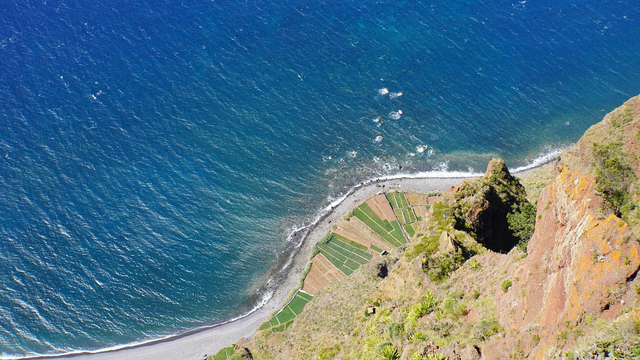
Lost a ring on Madeira's pebble beaches
Lost a ring on a Madeira beach? Why volcanic pebbles hide it, how the Atlantic swell changes things, and when a dive centre is the realistic route.
Azores
Two things decide whether something lost here can be found. The first is what you were standing on, because bathing here happens on dark volcanic sand and off concrete decks. The second is how exactly you can place the spot and the time.
Ring Seekers is a lost ring and jewellery recovery service that works with experienced local metal detectorists to search for a ring, wedding band, watch or phone lost in the Azores. We have arranged a search in Portugal before.
Tell us what happened and where. We choose an experienced detectorist who knows your island and your beach, brief them with your map and photos, and tell you honestly if the odds are poor.
Do two things before you leave the spot. Drop a pin on your phone exactly where you were standing and write down the time. Then take two photographs, one facing the sea and one inland, with something fixed in the frame.
Send us the island, the beach, the time and a photograph of the item on WhatsApp, and keep the pin; the work can carry on after you fly home. We choose an experienced detectorist who knows that island and brief them with your map and photos. Give us the island and the name of the beach as well as the town.
For something lost in deep water or from a boat, a diver is the right answer, and we will say so.
Stretches that behave differently, from city sand on São Miguel to the sheltered bay at Porto Pim on Faial.
Praia das Milícias, also called Praia Grande, is the main beach on São Miguel, in São Roque parish about 4 km from Ponta Delgada, with dark volcanic sand and a Blue Flag. Praia do Pópulo in Livramento is a smaller beach of black sand, also used for surfing and bodyboarding.
On the north coast of São Miguel, the Areal de Santa Bárbara near Ribeira Grande is one of the most extensive beaches in the region, about a kilometre of sand where surfing and bodyboarding are practised.
The Green and Blue lakes of Sete Cidades, on São Miguel, are seen from the Vista do Rei lookout, and the village of Sete Cidades sits beside the water. Tell us whether you were at the lookout, in the village or down on the shore.
Praia de Água d'Alto is one of the most used beaches in Vila Franca do Campo, about 600 metres of sand with a car park, changing rooms and a bar. About a kilometre offshore, the Ilhéu de Vila Franca do Campo is a tuff cone reached by boat.
The central zone of Angra do Heroísmo has been a UNESCO World Heritage site since 1983, and its port is two natural basins sheltered by hills. Prainha is the only sandy bathing area on the bay, and Silveira, about 1.5 km from the historic centre, uses the dock and ramp of a former fishing port. Praia Grande at Praia da Vitória is the longest sand on Terceira.
Porto Pim is the most visited beach on Faial, a sheltered bay inside the city of Horta. Praia do Almoxarife, about 5 km from Horta, is black sand with a view of Pico. Santa Maria has pale sand, at Praia Formosa.
You explain it once, to one person, who stays with it to the end.
Your pin, the time and your photographs go out first, so nobody starts in the wrong place.
A ring lost somewhere along a kilometre of Santa Bárbara sand, or in deep water, may not be worth searching for. If that is your case, we say so.
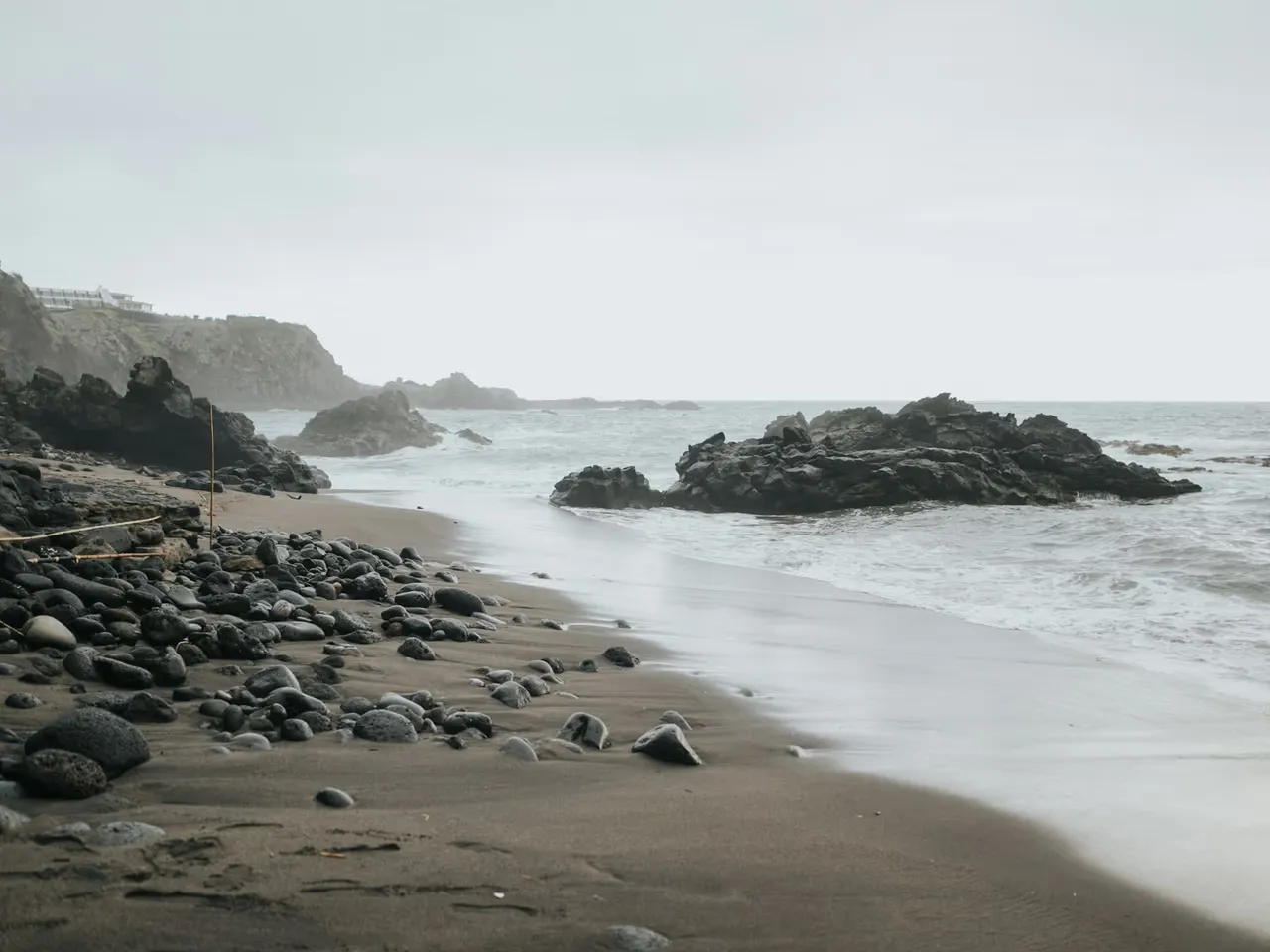
A small dark or gold item is hard to see on dark volcanic sand, and swell like the surf at Santa Bárbara can move a light item. Where you were standing decides how the spot is worked.
We explain the costs before any search is booked.
What the ground is made of and what the ocean does.
Most beaches in the Azores are dark volcanic sand, and the pale sand at Praia Formosa on Santa Maria is the best known exception, because part of its sediment comes from whitish sedimentary rock rather than lava. A small dark or gold item is hard to see on dark sand.
This is the open Atlantic, not the Mediterranean, so there are two high waters and two low waters a day and the water line moves up and down the beach. The Instituto Hidrográfico, the Portuguese navy hydrographic institute, publishes tide tables that cover the ports of the Azores, and those predictions help show where the sea stood when you lost it. Summer sea water here averages about 22 degrees Celsius and peaks near 24 in August. Fingers can shrink a little in cool water, and swell like the surf at Santa Bárbara can move a light item.
Want a first idea of your chances? Try the lost ring recovery calculator.
Both are dark volcanic sand, where a small item can be hard to see once sand covers it. Praia das Milícias, in São Roque parish about 4 km from Ponta Delgada, is the main beach on São Miguel, so a vague memory of the place is not much to go on. Praia do Pópulo in Livramento is smaller and is also used for surfing and bodyboarding. Give us the nearest access and the time.
Mark the spot before you move. Drop a pin where you were standing, write down the time, and take two photographs, one facing the sea and one inland, with something fixed in the frame. Água d'Alto is about 600 metres of sand with a car park, changing rooms and a bar, so note which of those you were nearest. Santa Bárbara is about a kilometre of sand with surf, and swell can move a light item, so the hour matters there. Tell the lifeguard if there is one, then message us with the beach and the time.
The central zone of the town has been on the UNESCO World Heritage list since 1983. Prainha is the only sandy bathing area there, and Silveira, about 1.5 km from the historic centre, uses the dock and ramp of a former fishing port. On the sand at Prainha a detectorist works the spot you have marked. Off the dock at Silveira it would be a diver at a marked spot.
Praia Grande is the longest sand on Terceira, so the name of the beach alone is not much to go on. An Oura ring or a watch gives a detector a clear signal, which helps. Tell us the nearest access, the time, and whether it came off on the sand or in the water.
Tell us which island, because that decides everything. A thin bracelet on sand is hard to find by eye. These are separate islands with their own flights and ferries, so we look for a detectorist who can reach Faial. Porto Pim sits in a sheltered bay reached through the centre of Horta, and Praia do Almoxarife is black sand about 5 km away. Message us with the beach before you fly, and keep your pin.
Azores
The spot has not moved, even if you have. Tell the lifeguard or staff if there are any while you are there, then send us the beach and the time on WhatsApp.
If you need a ring finder nearby, we find you an experienced local detectorist who knows the area and brings a metal detector to the spot you marked.
Lost it just now? Do this first Who to tell where you lost it
From our blog: what to do after losing a ring here, and how a search works.
Lost a ring on a Madeira beach? Why volcanic pebbles hide it, how the Atlantic swell changes things, and when a dive centre is the realistic route.