
Mallorca
Lost a ring in Mallorca?
Palma and S'Arenal, Magaluf, Santa Ponsa, Port de Pollença, Alcúdia, Can Picafort, Cala Millor, Cala d'Or and Es Trenc.
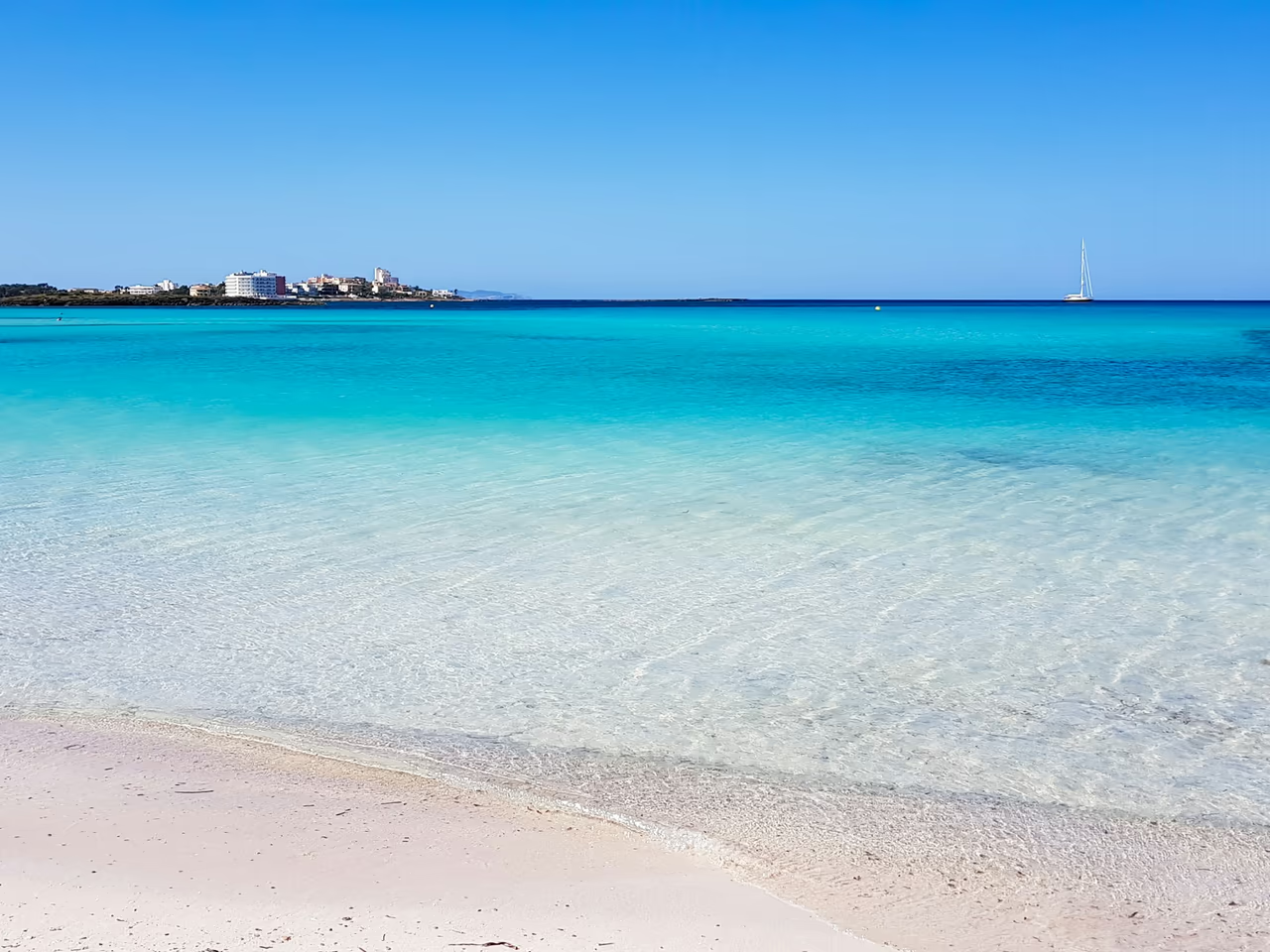
Many of Mallorca's resort beaches are fine sand running into shallow water, and the Mediterranean here has very little tide, so the sea does not cover the spot twice a day. A ring dropped at Magaluf, Playa de Muro or Cala Millor can often still be found. What decides it is how closely you can place the spot.
Ring Seekers is a lost ring and jewellery recovery service that works with experienced local metal detectorists to search for a ring, wedding band, watch or phone lost in Mallorca. We have searched in Spain before.
Tell us what happened and where. We choose an experienced detectorist who knows that part of the island, brief them with your map and photos, and tell you honestly if the odds are poor.
How a search works on Mallorca's beaches and coves
Mark the place before you walk away. Drop a pin on your phone and take two photos, one towards the promenade or the rocks behind you and one towards the sea, with a lifeguard tower, a shower or a beach bar in the frame. Note when it happened and whether it went into dry sand, wet sand or the water. Tell the lifeguards, then send us the pin and a picture of the item on WhatsApp. A search can still go ahead after you have flown home.
We choose an experienced detectorist who knows your beach or cove and pass on your pin and photos before they set out.
Places we cover in Mallorca
- Palma, Can Pere Antoni
- Palma, Ciutat Jardí
- Playa de Palma and S'Arenal
- Magaluf
- Palmanova
- Santa Ponsa (Santa Ponça)
- Paguera (Peguera), Palmira, Torà and Romana beaches
- Port d'Andratx
- Sóller and Port de Sóller
- Port de Pollença
- Cala Sant Vicenç, Cala Barques and Cala Molins
- Alcúdia
- Playa de Muro and Es Comú
- Can Picafort and Son Bauló
- Cala Millor
- Cala d'Or and Cala Gran
- Cala Mondragó natural park, S'Amarador and Sa Font de n'Alis
- Es Trenc and its dunes, Campos
- Colònia de Sant Jordi, Es Dolç
Where rings and jewellery go missing around the island
A city bay, the Calvià resorts, mountain harbours, two long northern bays and the coves and dunes of the east and south.
Palma, Can Pere Antoni, Ciutat Jardí and Playa de Palma
Can Pere Antoni is the city beach. The Balearic tourism site gives it as 750 metres long and 15 metres wide, dark sand held between groynes. Ciutat Jardí, 5 kilometres from the centre, has fine sand and shallow water behind breakwaters. Playa de Palma is the long one, 4.6 kilometres of fine sand with a gentle slope, showers and sunbed hire, and S'Arenal sits at the end furthest from the city, where the last stretch belongs to Llucmajor.
Magaluf, Palmanova, Santa Ponsa and Paguera
All four are in Calvià. Magaluf is 1,600 metres of fine white sand about 60 metres wide. Palmanova is about 500 metres long and 60 metres wide. Santa Ponsa's beach is 1,300 metres long and 100 metres wide. Paguera has three beaches, Palmira, Torà and Romana, and Palmira is 600 metres long. Phones and watches go missing around the sunbeds, and rings slip off in the water with sun cream.
Port d'Andratx, Sóller and Port de Sóller
Andratx itself lies inland, and Port d'Andratx is its harbour, with boat trips to the island of Dragonera. A loss from a quay or a boat there means deeper water, which is work for a diver. Port de Sóller is 4.1 kilometres from Sóller. Its beach is 800 metres of sand and fine pebbles inside a sheltered natural harbour.
Port de Pollença and Cala Sant Vicenç
The beach at Port de Pollença follows the bay, with a promenade partly shaded by old pines. Cala Sant Vicenç, 7.2 kilometres from Pollença, is a group of four coves. Cala Barques is the largest, with fine sand. Cala Molins is 45 metres long and 50 metres wide, with a seabed of sand and rock, and is reached down a staircase.
Alcúdia, Playa de Muro and Can Picafort
Alcúdia's beach is more than 3 kilometres of fine sand with shallow, clear water. Playa de Muro carries on for 5.2 kilometres in four sections, and one of them, Es Comú, is undeveloped. Can Picafort is 6.6 kilometres further round, and next to it Son Bauló is 160 metres of fine sand.
Cala Millor, Cala d'Or, Cala Mondragó, Es Trenc and Colònia de Sant Jordi
Cala Millor is almost 2 kilometres of fine white sand. Cala d'Or is a set of small coves with low rocks and short strips of fine sand, and Cala Gran is the largest. In the Mondragó natural park, S'Amarador is 145 metres of white sand with pines, dunes and a small lagoon behind it and clear, shallow water, five minutes' walk from the car park. Es Trenc is almost 2 kilometres long and more than 20 metres wide, undeveloped, with dunes and a wetland behind it. Colònia de Sant Jordi is 5.1 kilometres away, with its own beach at Es Dolç.
What Ring Seekers does for a loss in Mallorca
One person on WhatsApp
You tell the story once. The same person answers from your first message until the matter is closed.
Your pin and photos reach the detectorist
The detectorist gets your pin, your two photos and a picture of the item before setting out, so the search starts on the right patch of sand.
Plain about poor odds
A thin chain somewhere along the 4.6 kilometres of Playa de Palma, with no pin and no landmark, may not be worth a search. If that is your case, we say so in the first reply.
We know how this sand and sea behave
There is almost no tide here, so a well marked spot stays useful for days. Work in the water waits for a calm morning, and the Posidonia banks on the beach are worked around, not moved.
Costs explained first
We explain the costs before any search is booked.
Sand, sea and seagrass in Mallorca
What the beaches are made of and how the sea behaves.
Fine sand, pebbles and rock
The Balearic tourism site describes Magaluf, Playa de Palma, Alcúdia, Playa de Muro, Cala Millor and Es Trenc as fine sand, and the water at Alcúdia, Playa de Muro and Es Trenc as shallow. Port de Sóller is sand mixed with fine pebbles, where a small item can settle between stones. At Cala Molins and Es Dolç the seabed is partly rock, where a ring is found by eye with a mask.
A sea with almost no tide
The Mediterranean is nearly tideless. There is no low water to wait for, and a well marked spot stays useful for days. Wind matters more. Cala Barques faces the Tramuntana, the north wind, which blows on only a few summer days, and a search in the water anywhere on the island waits for a calm morning.
Posidonia seagrass and dunes
Dead Posidonia leaves pile into banks on the beach, and they are left there because they help to conserve the beach and feed the dunes. On urban beaches they are not cleared between 31 October and 15 March, and on natural beaches with services the period is longer. A search works around them. Es Trenc has a dune system behind it.
Want a first idea of your chances? Try the lost ring recovery calculator.
Questions about Mallorca
I lost my wedding ring on the beach at Magaluf or Palmanova. What can be done?
Pin the spot and tell the lifeguards. Both beaches are fine sand about 60 metres wide, so note how far from the water you were. Then send us the pin and a photo of the lost wedding ring on WhatsApp. We choose an experienced detectorist who knows Calvià, brief them with your map and photos, and tell you honestly if the odds are poor.
My Oura ring or watch came off in the sea at Playa de Palma or S'Arenal. Any chance?
A fair one, if you can place the spot. A lost Oura ring or a watch gives a detector a clear signal, and the tourism site describes Playa de Palma as fine sand with a gentle slope. The beach is 4.6 kilometres long, so the pin and the nearest beach bar matter most. Beyond standing depth it becomes work for a diver.
I lost a ring at Es Trenc or Cala Mondragó. What happens there?
Send us the pin first. Es Trenc is almost 2 kilometres long with dunes behind it, so a photo with a landmark in it matters, and if it came off on the way through the dunes, say which path. At Mondragó, say whether it was S'Amarador or the smaller cove of Sa Font de n'Alis, 400 metres along the coast path.
I lost a bracelet or chain in Alcúdia, on Playa de Muro or in Can Picafort. Is it worth a search?
Often yes. The bay is fine sand with shallow water, which suits a detector, though a thin chain is a harder target than a ring. Alcúdia's beach is more than 3 kilometres long and Playa de Muro 5.2 kilometres, so say which hotel or beach bar you were in front of.
I dropped my phone or sunglasses at Port d'Andratx or Port de Sóller. Can you help?
On the beach at Port de Sóller, a phone or metal-framed sunglasses in sand and fine pebbles is a large target for a detector. Plastic frames are found by eye. Off a quay or a boat in either harbour the water is deeper, and that is work for a diver.
I lost an earring at Cala d'Or or Cala Sant Vicenç. Are small coves easier?
In one way, yes. Cala Molins is only 45 metres long, and the coves at Cala d'Or are short strips of sand, so the search area is small. An earring is still a faint target, and both places have rock close to the sand.
My ring fell into the seagrass piled up on the beach. Can it be moved?
We do not move it, and please do not dig into it yourself. The banks are dead Posidonia leaves, left on the beach because they help to conserve it and feed the dunes. On urban beaches they stay in place between 31 October and 15 March. A detector can be swept over and around a bank without shifting it.
Mallorca
Lost something on a Mallorca beach? Pin the spot, then message us
Which beach or cove, which landmark, what time, dry sand, wet sand or water, and a photo of what you lost.
There is no tide here to move the search window, so a carefully marked spot is still worth searching several days on. Drop the pin, tell the lifeguards or the local police, and send us the details on WhatsApp.