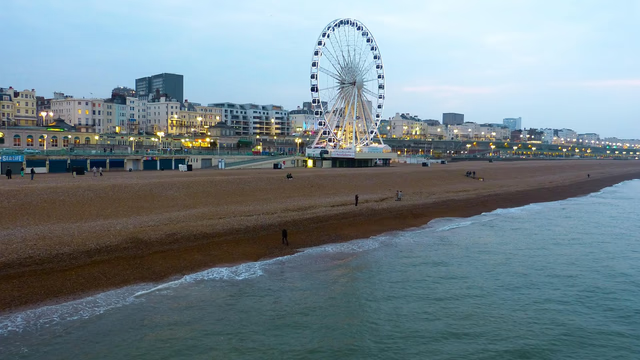
Lost a ring on Bournemouth or Poole beach, and what the tide does to it
Lost a ring at Bournemouth, Boscombe or Sandbanks? How the cold sea and Poole's odd double tide affect a search, and what to do before you leave.

A ring lost on the beach at Bournemouth or Poole usually goes the same way. You were in the sea, the water was colder than you expected, and when you came out and dried your hands the finger was bare. Or it was dry sand, a towel shaken out by the beach huts, a ring that had been taken off for sun cream and set down for a minute.
Both of those are cases worth searching. This stretch of coast is kinder to a lost ring than most of Britain, mainly because of the tide, and a detectorist who knows how it behaves can plan a search around it. What matters most is how quickly you get the details to us and how well you can mark the spot.
Why the cold water takes rings here
The English Channel stays cool even in August. Cold water makes your fingers shrink, and a ring that fits snugly on land can slide off when you push your hand through a wave or pull off a wetsuit glove. We have written about this in more detail in why rings slip off in cold water, and it is the single most common story we hear from the south coast. Swimmers and people who only went in up to their waist lose rings the same way.
The good news is where the ring usually ends up. Bournemouth, Boscombe and Sandbanks are sandy beaches that shelve gently. A ring that comes off while you are standing in the water tends to drop straight down and settle into the sand under your feet, rather than being carried off. In soft wet sand it will usually sink into the top 15 to 25 cm fairly quickly, which sounds bad but is well within reach of a good detector.
A watch or an Oura ring that comes off in the surf behaves in much the same way, and both show up clearly on a detector because they contain metal. Phones dropped over the pier rails at Bournemouth or Boscombe are a different matter. If the phone landed on sand that dries out at low water, a detectorist can look. If it went into deeper water off the end of the pier, that is a job for a diver. Plastic sunglasses do not show on a detector at all, so those are found by eye, and it is worth asking the pier staff whether anything has been handed in.
The tide here is small, and a little strange
People expect big tides on a British beach. At Bournemouth and Poole the range is small, often well under two metres between low and high. Around Poole Harbour the tide is also known for a double high water, where the sea comes up, drops back a little and comes up again, so the water sits near the top of the beach for a long stretch of the day and the low water window is shorter than you might think.
For a lost ring this cuts both ways. A small tide moves less sand, so a ring dropped on the wet sand is not buried or shifted as quickly as it would be on the north Cornish or Devon coast, where the range is much bigger. It can sit in the same patch for days if the weather is calm. The catch is that the best time to search wet sand and shallow water is at low tide, and here that window is short. A detectorist working these beaches plans the search around the tide table, sometimes early in the morning before the beach fills up, sometimes late in the evening.
Weather matters more than the tide. A few days of south westerly wind and swell will move sand along the shore and bury things deeper, especially near the groynes. If a storm is forecast, the sooner the search happens the better.
Busy summer days are the other problem. Sandbanks and the beaches below Bournemouth town centre are packed from late morning, and it is very hard to grid a patch of sand properly around towels and windbreaks. That is another reason a finder often chooses the first hour of daylight.
What to do before you leave the beach
Stand where you think the ring came off and line yourself up with two things that will not move. On this coast that is easy. A beach hut number and a groyne at Sandbanks, or the pier and one of the cliff lifts at Bournemouth. Take a photo looking out to sea and one looking back up the beach. Drop a pin on your phone’s map. Note the time, and whether the tide was coming in or going out if you know.
Then stop searching with your hands and feet. Shuffling around in the shallows or digging at the dry sand pushes a ring deeper and spreads the area a finder has to cover.
Ask at the lifeguard hut and the nearest kiosk or beach café. Jewellery does get handed in, sometimes the same afternoon, and it costs you nothing to leave a phone number.
After that, send us what you have. Use the get help form or message us on WhatsApp with the photos, the pin, the time, whether it was dry sand, wet sand or the water, and a picture of the ring if you have one. Tell us the metal too. Yellow gold gives a clear signal, but platinum, white gold and titanium are quieter and a finder listens differently for them. If there is an engraving inside, mention it, because it helps prove the ring is yours if anyone else finds it first.
We have detectorist contacts on the south coast around Bournemouth, and Britain has a well established ring finding scene, with experienced people who do this because they like handing a wedding band back. Once we have your details we pass them to someone who knows the beaches on the Dorset and Hampshire coast and can work around the tide. We explain the costs before any search is booked, and if the odds look poor we will say so before anyone travels.
Some searches do not end with a ring. If it came off far out in deeper water, or the loss was several stormy days ago, the chances drop, and a straight answer is more useful to you than hope. But a ring lost on a calm day on the sand at Bournemouth or Sandbanks, reported the same day with a good pin and two photos, has a fair chance.
If you were further along the coast when it happened, the same advice applies on the shingle and sand of the Sussex coast and on the bigger tide beaches of Devon. Mark the spot, keep off it, and send us the details today through the get help form or WhatsApp.