Lost a ring in Crete, from Malia to Chania and Elafonisi
Lost a ring on a Crete beach? How Malia, Elounda, Chania and Elafonisi differ for a metal detector search, and what to note before you fly home.
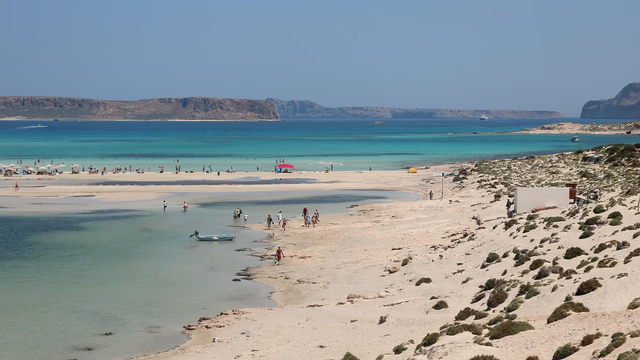
Crete is a big island, and a lost ring there can mean a very different search depending on where it happened. Most of the holiday beaches on the north coast are sand with shallow water and almost no tide, which is good ground for a metal detector. A few of the famous ones are remote lagoons an hour or more from the nearest town, and there the drive and the wind matter as much as the sand.
If you are still on the beach, stop for a moment before you start looking. Take a photo from where you were sitting towards the sea, and another looking back at whatever is behind you, such as a hotel gate or a beach bar sign. Drop a pin on your phone map and note the time. Please do not dig with your hands or kick through the sand. In soft sand that pushes a ring deeper, and in the shallows it stirs up sand that settles over it.
The east coast, from Hersonissos to Elounda
This is the busiest stretch of the island. Malia beach is wide and fine, with shallow water, and in summer the sunbeds stand almost edge to edge. That sounds like a problem, but it helps. A ring that slid off on dry sand usually stays within a metre or two of where it fell, and if you can say which row of sunbeds you had and which bar was nearest, the area to search is small. Photograph along the row before the beds are stacked for the evening.
Hersonissos and Stalis are similar sand, but they face the north wind, and Stalis in particular is often wavy. An Oura ring or a watch lost at waist depth there normally stays close to where it went in, because there is so little tide. A day or two of chop still moves sand over a small item, so the sooner someone sweeps the water the better. Tell us which hotel or bar you were in front of and roughly how far out you were standing.
Closer to Heraklion, Ammoudara and Karteros are long beaches where a pin on its own is not quite enough. Line yourself up with something fixed, like the municipal beach entrance at Karteros, and photograph both ways.
Further east, Agios Nikolaos has two easy beaches and one awkward one. Almyros, just outside the town, and Ammos by the marina are both shallow and calm, so a wedding band dropped in the water usually lies where it landed. Kitroplatia, the small beach by the port, has old stone slabs along the shore, and a ring lost among those is looked for by eye. At Elounda the municipal beach beside the harbour is sand, kept calm by the lagoon behind it, and a bracelet dropped there is a good case. Across at Plaka the beach is large pebbles with deep, clear water. An earring that slipped between the stones there is a slow job, stone by stone, and we would tell you that at the start.
Chania, Rethymno and the west
West of Chania the town beaches run one after another. Nea Chora, Chrissi Akti and Agii Apostoli are sandy and shallow, with a sea that is usually calm, so a phone or a ring dropped in the shallows tends to stay put. Nea Chora has patches of rock, and anything that fell among those is looked for by eye first. Further out, Agia Marina and Platanias are resort sand with sunbeds and beach bars, and the sea along there is more often wavy. The same rule applies as at Malia. Note the sunbed row and the nearest bar before you leave, and photograph the hotel gate behind you.
Rethymno is one long beach. The sand starts by the Venetian harbour and carries on for about 12 or 13 kilometres east, so “Rethymno beach” on its own covers a lot of ground. Give us the hotel you were in front of, or the name on the nearest beach bar. Georgioupoli, between the two towns, is shallow sand too, but there can be currents on windy days. If you lost something in the water there, please do not keep wading back in to look for it.
Elafonisi, in the far south west, is where a lot of honeymoon photos are taken, and a new ring that has not been resized is easy to lose in the lagoon. The good news is that the water at the crossing to the islet is no deeper than a metre. The harder part is the size of the place and the journey, about an hour and a half from Chania by car. Mark the spot against the umbrellas, or against the point where you waded over if you had crossed. We will tell you how the odds look before anyone makes the trip.
Falassarna, on the west coast, has one very wide main beach that faces the open sea, so the waves come in most days and sand soon covers a ring lost in the water. On the dry sand it is a fairer search, provided the pin and the photos are good. Balos is different again. It is a lagoon with a soft, muddy bed, reached by boat or a dirt road and a walk, and a search there takes time to arrange.
Before you fly home
Many people only notice the ring is missing at the hotel, or even at the airport. That is still worth reporting. Go back through your photos from the day and find the last one where the ring or the watch is still on your hand. That narrows the window more than anything else.
Things do get handed in on Crete, so tell your hotel reception and the beach bar or sunbed attendant, and leave a phone number with them. Our who to tell page explains who else is worth contacting after a loss abroad. If your trip also took in a ferry to Santorini, have a look at our Santorini page as well, because the black sand beaches there behave differently to Crete.
Please keep the exact spot to yourself for now. Posting it in a public holiday group can bring people with their own detectors before anyone you have chosen gets there. Save the pin and the photos for a private chat.
Then send us the details through the get help form or on WhatsApp. Start with the beach, the resort and what the item is made of, and say whether it went on the sand or in the sea. We look for an experienced detectorist who knows that part of the island, pass on your pin and photos, and tell you honestly if the chances are poor. You do not need to still be in Greece for a search to go ahead. We explain the costs before any search is booked.
Our pages for east Crete, from Hersonissos to Elounda and west Crete, around Chania and Rethymno go through the beaches one by one. The sooner a search starts, the nearer the surface a ring is likely to be, so if you only have a day or two left on the island, say so in your first message.