What a beach looks like to a metal detector
Why the sunbed rows, the towel line and the first strip of shallow water hold most lost rings, and how a detectorist reads a beach before searching.

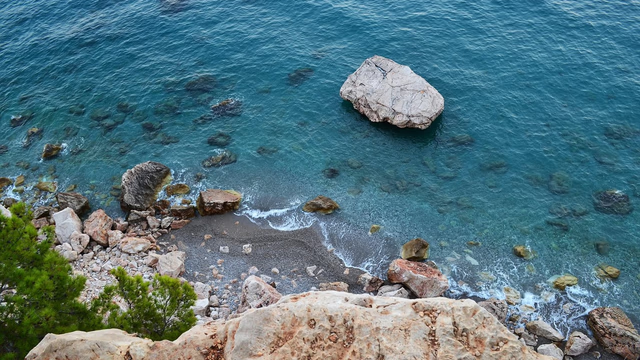
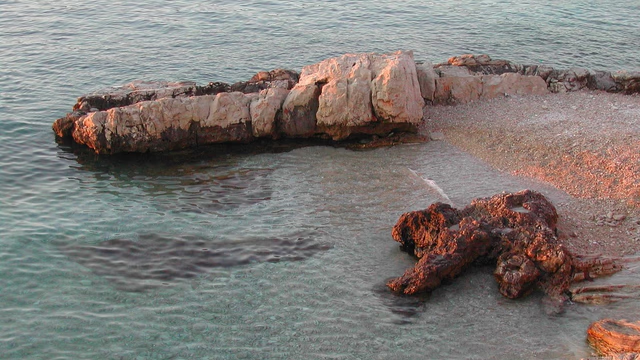
When you look at a beach you see sand and people. A detectorist looking at the same beach sees something closer to a map of where things are likely to be. Some parts of it are full of lost metal. Other parts are almost empty, even though they look exactly the same from the promenade.
If you have just lost a ring, this matters for one simple reason. The place you think it went and the place it actually ended up are usually close, but not always the same. Knowing how a finder reads the beach helps you give them the information that shortens the search.
Why the sunbed row is where the rings are
Ask anyone who searches beaches regularly and they will tell you the same thing. The sunbed rows and the strip where people lay their towels are where most rings and earrings turn up. People spend hours there putting sun cream on and taking rings off so they do not get greasy, and that is where things get dropped.
Sun cream is a big part of it. Hands get slippery, fingers swell a little in the heat, and a ring that fits perfectly in the morning can slide off when someone pulls a hand out of a bag or brushes sand off a leg. Many people also take a ring off deliberately to keep it safe and put it on the towel, in a shoe or in the cup holder of the sunbed. Then the towel gets shaken, and the ring goes into the sand without anyone hearing it.
Dry sand swallows things quickly. A ring dropped from waist height can disappear just under the surface straight away, and every person who walks past pushes it a little deeper. Within a day it can be several centimetres down, which is still well within reach of a detector but far out of reach of fingers.
On a private beach like the ones along La Croisette in Cannes, the sunbeds are set out in the same places every day, so if you know which bed you were on, the search area becomes very small. That is why the row and the bed number are worth noting if there is one. You can see more about how we cover the Côte d’Azur on that page.
The water’s edge and the first few metres of sea
The second place a detectorist looks closely is the band of wet sand at the water’s edge and the shallow water just beyond it. This is where rings go when they slip off during a swim, a splash with the children or a game of catch. Cold water shrinks fingers slightly, and that alone is enough for a loose wedding ring or an Oura ring to slide off.
Wet sand behaves differently from dry sand. Each wave lifts the top layer and drops it again, and anything heavy like a gold ring tends to work its way down rather than wash away. In calm water it often settles in a small area. In rougher water it can move along the beach a bit, usually in the direction the waves are running, and finders look at that before they start.
On beaches with very little tide, like most of Mallorca, the edge of the water barely moves through the day. That helps, because the spot where you were standing in the sea is still roughly the same distance from the shore hours later. On beaches with a big tide the finder will want to know what the tide was doing when you lost it, because the waterline you remember may now be a long way out or under water.
Watches and phones turn up here too, and both show up on a detector. Plastic sunglasses do not, so for those a search is by eye or by a diver rather than with a machine.
What a finder looks at before switching on
A good search starts before the detector is even switched on. The finder walks the area and looks at a few things that tell them where metal is likely to have gathered.
The first is how busy that part of the beach is. A crowded stretch near a beach bar or the main entrance will be full of ring pulls and bottle caps. That is not a problem in itself, but it means the search will be slower because every signal has to be checked. A quiet corner of the same beach might give a much cleaner result.
The second is the ground itself. Fine soft sand, like on many Mediterranean beaches, is easy to work and lets a ring sink evenly. Coarse sand and shingle are different. On a pebble beach like Brighton, a ring can drop between the stones and keep falling as the pebbles shift under people’s feet. The detector still hears it, but digging it out of stones is slower and the ring can be deeper than you would expect. Our page on the Sussex coast says a bit more about those beaches.
The third is any sign of what the sea has been doing. Lines of shells, or little steps cut into the sand, show how the water has been moving. Heavy objects tend to end up in the same places as other heavy things, so a finder who sees a patch of small stones or shells in the shallows will often check that area carefully.
Then they set up a search pattern, usually walking slow, overlapping lines across the area you describe and widening it if nothing turns up. A detector covers a strip roughly the width of its coil with each swing, so it takes patience on a big area.
If you have just lost a ring, you do not need to understand any of this to help. What helps most is simple information given early.
Tell us which beach it was, what time it happened and whether it went in the sand or the sea. If it was the sea, say whether the water was up to your knees or your waist. On tidal beaches the time changes where a finder starts.
For yourself, note the sunbed row and the bed number, and take a photo from your spot with something fixed in the background like a lifeguard tower, a beach bar or a rock. We ask for those later, in private, once you decide to go ahead. And please do not keep digging by hand. It is a natural thing to do, but it spreads sand around and pushes a small ring further down.
Also keep the exact spot to yourself rather than posting it online. A ring under a busy sunbed row is easy to find for anyone with a detector, and you want the person searching to be someone working for you.
The sooner a search starts, the better the odds, especially on a busy beach where hundreds of feet walk over the same sand every day. If you have lost a ring or a bracelet on a beach, send us the details through the get help form or on WhatsApp. We will look at what you have told us, ask a few questions and explain the costs before any search is booked. Ring Seekers is a service that finds experienced metal detectorists to search beaches, gardens and shallow water for lost rings and jewellery.