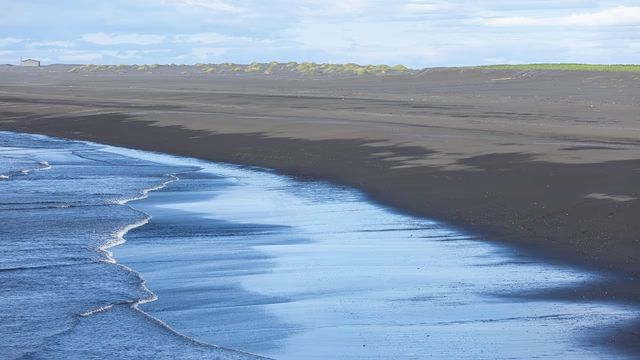
Searching a pebble beach for one lost ring
For detectorists. How to search shingle and pebble beaches for one lost ring, why the holes keep collapsing, and how to recover a gold band.
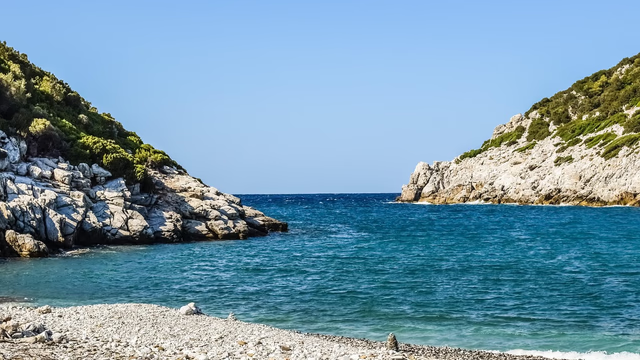
Sand is forgiving. A ring dropped on a sandy beach stays near the surface, the hole you dig holds its shape, and a scoop or a pinpointer gets you to the target quickly. Pebbles are another matter. If you have ever been asked to look for a wedding ring on shingle, you will know the feeling of getting a clean signal, digging, and watching the stones pour back into the hole faster than you can lift them out.
A lot of the beaches people message us about are pebble beaches. The long fronts at Nice and along the Côte d’Azur, the shingle at Brighton and Hove, and most of the beaches on the Makarska Riviera in Croatia are all stones rather than sand. Rings get lost there for the same reasons as anywhere else (cold water or a towel shaken out), but they behave differently once they land. This post is for detectorists who want to take on those searches and do them well.
How a ring moves down through the stones
The first thing to understand is that a ring on pebbles rarely stays where it fell. There are gaps between the stones, and a ring is small and dense enough to drop into them. People walking over the spot let it sink a little further, and so does every handful of stones the owner turned over looking for it. By the time you arrive it can be well below the surface on a beach that looks hard and solid.
The size of the stones changes how far it goes. On fine shingle, where the pebbles are no bigger than a fingertip, a ring tends to stay fairly shallow because the gaps are small. On a beach of larger, rounded stones like the ones at Nice, the gaps are wide and a band can slip a long way down. Where there is a layer of sand or grit under the stones, the ring usually stops when it reaches it. That layer is worth knowing about, because it is often where the target is sitting.
The sea sorts pebbles by size too. You will often find coarse stones at the top of a steep bank and finer material lower down, or the other way round after a storm. Ask the owner exactly where they were sitting or standing, then look at the stones in that spot before you switch on. It tells you what kind of dig you are in for.
Detectors handle pebbles reasonably well. Dry stones are usually quiet, and most machines cope with the beach once ground balanced. Wet shingle near the water can be noisier, especially on beaches with dark, mineralised stones or a lot of salt spray, so balance again when you move down the beach. Run low discrimination in the search area for the same reason you would on sand. Thin gold and white gold can read close to foil, and on a ring search you would rather dig rubbish than skip the ring.
Recovering the target without burying it again
This is where most pebble searches go wrong. You get a good signal, you push the stones aside with your hand, and the stones from the edges slide into the hole and take the ring down with them. Do that a few times and the target can end up deeper than it started.
Work from the downhill side. On a sloping bank, start your dig a short distance below the signal and pull stones towards you and away from the target, so the slope works for you. If you dig from above, every stone you move rolls straight back into the hole.
A long handled scoop with large holes is the best tool most of us have for this. The holes let the pebbles fall back out while the ring stays in the basket. Push the tip in just short of the pinpointed spot, go under the target and lift in one movement. Before you look in the basket, sweep the hole. If the signal has moved or gone, it is probably in the scoop. If it is still there and weaker, it has dropped further and you need a deeper bite.
On big stones, a scoop can struggle, and lifting pebbles out by hand into a pile beside you is sometimes quicker. Keep the pile well away from the hole and check it with the coil before you put the stones back. A pinpointer helps a great deal here, because you can follow the target down as you remove each layer instead of guessing.
At the water’s edge on a pebble beach, timing matters as much as technique. Each wave that comes up the bank moves the top layer of stones and can drag a target down the slope. Work between waves, keep your scoop low, and if the sea is rough enough to be shifting stones on every surge, it is usually better to stop and come back at a calmer time than to keep losing your hole.
Being honest with the owner about pebbles
People who lose a ring on a pebble beach have often spent an hour turning stones over before they get in touch. It is worth explaining, kindly, why that made things harder and why you would like them to keep off the spot from now on. It also helps to ask them for a photo looking up the beach and one looking out to sea, and a pin from their phone. On a pebble beach with no landmarks close by, that is often what narrows the search down most.
Be straight about the odds too. A ring lost high on dry shingle, where waves do not reach in summer, is usually still close to where it fell, even if it has worked its way down. A ring lost at the water’s edge on a steep pebble bank is a harder search, because the stones there move with every tide and storm. On the Sussex coast a big low tide sometimes uncovers sand below the shingle, and a ring that slid down the bank can end up there, so plan around the tide table. On the Mediterranean beaches the tide is small, and the waves and the weather matter more.
It is also fair to say when a search should stop. If you have covered the area properly, dug every signal and the owner’s description is good, a blank search is useful information for them. It means the ring has most likely moved off the spot or gone into the water, and that is a different job.
Ring Seekers arranges searches for people who have lost a ring, and when someone sends their details through our get help form, we look for an experienced detectorist who knows that kind of beach. If you already work pebble beaches with a detector and a scoop, on the Riviera or the English south coast, and you would like to help people find rings they have lost, we would be glad to hear from you through our page for detectorists.