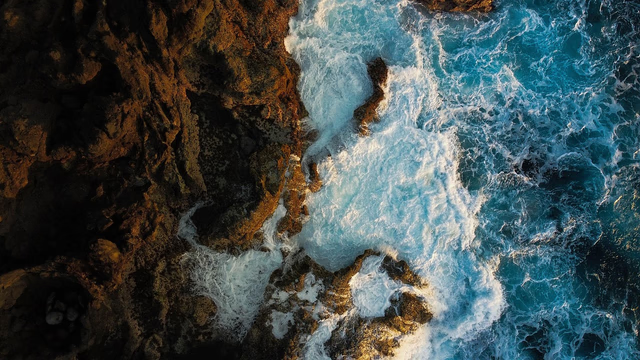
Losing a ring at Saint-Tropez, off a boat or off the beach
A ring lost over the side of a boat in the gulf, under a Pampelonne sunbed or in the shallows at Sainte-Maxime gives you three very different searches.
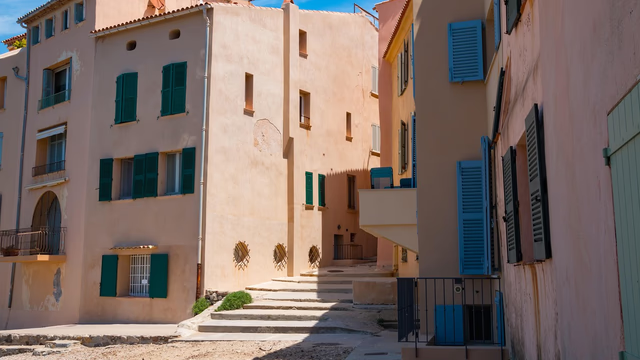
The Gulf of Saint-Tropez holds a lot of very different ground in a small space. There is the town and the old port, Pampelonne running down the seaward side of the peninsula, Sainte-Maxime looking back across the water, and Fréjus and the red rock of the Estérel further round. Rings go missing in all of it, in about three ways, and those three are nowhere near equally recoverable. If you have just lost one here, the first useful thing is knowing which situation you are in.
A ring that went over the side of a boat
This is the hard one, and it is worth saying so plainly before anything else.
Depth is part of the problem, and the bigger part is that a boat has no fixed position. You anchor, the chain pays out, and the boat swings through a wide arc as the wind and the swell change through the afternoon. So “we were just off the point” covers a circle that might be fifty metres across, and everybody on board remembers a slightly different part of it. On the sea floor, an area that size is enormous.
The bottom matters as much as the size of it. Much of this gulf is seagrass, the dark meadows you can see from the surface as patches under the water. A ring that lands on sand sits on sand. A ring that lands in seagrass drops down between the roots, and a detector coil cannot get close enough to the metal to hear it. The sandy channels and clearings between the meadows are the realistic ground.
So a boat loss is worth a search when a few things line up. Somebody dropped a pin at the moment it happened, on a chartplotter or just on a phone. The water is shallow, the kind of anchorage where you can see the bottom rather than twenty metres of blue. The bottom under that pin is sand. And you go back soon, on a calm morning, before a week of boats swinging over the same patch churns it about. When that is the picture, a diver we work with can grid a small marked area properly and there is a real chance.
When it is not the picture, you deserve to hear that. A ring that went over the rail in deep water, over seagrass, with no mark taken and a fortnight gone, is usually not coming back. We will tell you so rather than sell you a day of diving.
Pampelonne, the beach clubs and the dry sand
The good case on this coast happens on land, and most of it happens on a sunbed.
Pampelonne is five kilometres of open sand with clubs laid along it, mattresses and parasols set out in rows each morning and cleared each evening. The sand is fine and soft. Somebody slips a ring off for sun cream or drops it reaching into a bag, it goes into the surface of dry sand and it stops there, usually in the first few centimetres. Nothing washes it away. Nothing buries it any deeper. It will still be in the same place tomorrow, and the day after that.
The search is planned for an hour when the beach is clear, so early morning before the loungers go out or evening after they come in. A coil cannot read through a bed of mattresses and decking. Note the name of the club and roughly which row you were on for yourself, because when the search is planned later, that is most of the job done before anyone arrives.
Ask at the club’s own desk first, and at the local lost property office. Staff who set out and pack up a beach every day find jewellery in the sand, and on a club beach the odds that it was picked up and handed in are better than on an open stretch. It is always worth asking.
And do not dig. Pushing your hands through dry sand to feel for a ring is the single most common way people turn an easy search into a hard one. Mark the spot, photograph the row, and leave the sand alone.
Shallow water off Sainte-Maxime and Fréjus
The third situation sits between the other two, and it is more hopeful than most people expect.
Sainte-Maxime faces into the gulf, which means the Plage du Centre and La Nartelle get very little swell for most of the summer. The bottom shelves gently, it is sand, and the Mediterranean has almost no tide, so the water line barely moves. Fréjus along at Fréjus-Plage is much the same, a long shallow sandy beach in a sheltered bay.
Lose a ring standing in waist-deep water there and it goes more or less straight down. It does not travel far. On calm sand in shallow water a ring tends to stay within a few metres of where it came off and works down slowly rather than vanishing, so a detectorist with a waterproof machine can cover the area methodically and know they have covered it. The things that change the odds are time and weather. A week of onshore wind stirs sand and moves the top layer around, which is why the searches that go well are the ones booked in the first days.
If you were swimming rather than standing, think about where you turned around, where you last remember feeling it, and how deep the water was at that point. Depth matters more than distance along the beach when somebody is planning the grid.
When you get in touch, start with the beach, the day and roughly the time, whether it happened on dry sand or in the water, and the depth if you were in it. Take a photograph from where you stood, looking back at the beach, and keep it. If you were on a boat, save the pin or a screenshot of the chart on your own phone. We ask for the exact spot later, in private, once you decide to go ahead. Tell us what the ring is made of as well, because platinum and white gold read weakly on a detector and a thin band with stones reads weaker still, and a finder who knows what they are listening for will dig signals they would otherwise walk past. If there is an engraving inside it, tell us what it says.
Send all of that through the get help form or on WhatsApp. The page for Saint-Tropez explains how our coverage works along this part of the Var. Tell us the awkward version of the story rather than the tidy one, because the details you think are unhelpful are usually the ones that decide whether a search is worth doing. Ring Seekers arranges searches for lost rings with experienced local metal detectorists, and with a diver when the ring went off a boat.