Lost a ring in Languedoc, from La Grande-Motte to Gruissan
Lost a ring on the Languedoc coast? How La Grande-Motte, Palavas, Sète, Cap d'Agde and Gruissan differ, and what to note before you leave the beach.
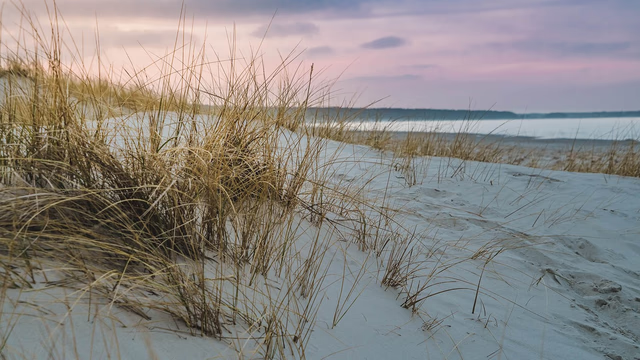
The hard part of losing a ring on the Languedoc coast is the length of the beaches. La Grande-Motte has 7 km of fine sand and Palavas has another 7 km, and from the water one stretch looks much like the next. The sand itself is kind to a search. The tide here barely moves, so a ring that drops on a calm day tends to stay near where it fell. What decides how the search goes is how closely you can place yourself.
If you are still on the beach, stay where you are for a minute. Look for the nearest fixed marker, take a photo of the buildings behind you and drop a pin on your phone. Please do not dig with your hands or sweep the sand with your feet, because in fine sand that pushes a ring deeper. Then check the beach bag, the car and every pocket before you decide the sand has it.
La Grande-Motte, Carnon and Palavas
The beach accesses at La Grande-Motte are numbered, and that number is the most useful thing you can remember. It turns a long beach into a short stretch. Four lifeguard posts are spread along the town’s beaches as well, so if you could see one, say which. The pyramid buildings behind the sand all look alike from the water, but a photo from your towel usually shows which ones you were facing.
Carnon has six lifeguard posts along its beaches in summer, and the street you walked down works just as well. Its sand is cleaned by hand and by machine every day in summer, so a ring lost in the dry sand should be reported the same evening if you can manage it. If you only noticed at home in Montpellier, write anyway and tell us where you parked and how you walked onto the sand.
Palavas is split into the rive gauche and the rive droite, and it is easy to forget which side you were on. A saved location settles it. The lifeguard posts carry beach names, with Sarrail and the Hôtel de Ville on one side and Saint-Pierre on the other.
The wilder sand is harder to place. The Grand Travers and the Petit Travers are backed by dunes and pines, and L’Espiguette, on the far side of Le Grau-du-Roi, is ten kilometres of open sand and white dunes with a walk in from the car park. There are few markers out there, so a phone pin matters more. If you took photos that day, look through them, because one with the dunes or the lighthouse behind you can do the job of a pin.
The sea along all of this is shallow for a long way out, which is why so many wedding bands go here. You wade out, your fingers are cold or slippery with sun cream, and the ring slides off while you are still standing. Gold is heavy and drops almost straight down, then settles into the sand as the small waves turn it over. Tell us how deep the water was and whether you could still touch the bottom. A loss in water over your head, well offshore, is a long shot, and we would rather tell you that at the start.
Sète and Cap d’Agde
Sète sits between the Étang de Thau and the sea, and its beaches run out of town towards Marseillan. The Lazaret is the first one after the Corniche, and La Fontaine comes a little farther on. Past the town, La Baleine, the 3 Digues and Le Castellas follow one another along the lido. If you only remember where you parked, tell us that.
Cap d’Agde is a different kind of coast. Most of its beaches are fine sand, but some are pebbles, volcanic rock or crushed shell, and dark cliffs stand along parts of the shore. That changes the job. On sand a detectorist can work in lines and recover a ring with a scoop. Among rock a ring falls into the gaps, and a search there is slower and less certain. So tell us what was under your towel, as well as the beach.
Placing yourself is easy here. Every lifeguard post at Agde is named after its beach, so La Roquille, Le Môle, La Plagette and Richelieu can all be told apart from the post you could see. The small sculptures the town stands on the sand work the same way, and one of them in the background of a photo is as good as a pin. Agde’s sand is cleaned by machine every other day in the season, which gives you a little longer than Carnon but not much.
Gruissan and inland
The Plage des Chalets at Gruissan runs for almost 1.8 km in front of rows of houses on stilts, and the row you were facing is the marker. The sea is often calm here and people paddle for hours, which is how an Oura ring or a loose band goes. An Oura ring has metal in it and shows up on a detector, as do watches and most jewellery. Plastic sunglasses do not, so those are a search by eye or by a diver. If you walked out on the jetty as well, mention it, because anything dropped there is a different search from one in the shallows.
The Ayguades is a long beach with campsites behind it, so give us the name of yours. South of there, the Vieille Nouvelle is wide and windy and full of kitesurfers. Rings and watches come off during falls, so say roughly how far out you were and which way the wind was taking you.
We also search parks and lakes around Montpellier. Parc Montcalm has open grass in the middle and wooded edges where people picnic, so tell us which you were on.
Once you have the basics, get in touch through the get help form or on WhatsApp. Start with the town, the day and what the ring is made of, and we will ask for the finer detail when a search is being planned. Please keep the exact spot out of public groups and save it for that private chat.
We have worked with a local detectorist on this coast before, and we explain the costs before any search is booked. The Languedoc coast page goes through the beaches one by one. If the ring went missing further along the same trip, we also have pages for the Côte d’Azur and for Barcelona and the Costa Brava, just over the border.
The sooner a search starts, the better the odds. If you are driving home or flying out of Montpellier in the next day or two, say so in your first message. Ring Seekers arranges ring searches with experienced metal detectorists along the Languedoc coast, on its long sandy beaches and in the parks inland.