
Lost a ring at Barceloneta or Bogatell in Barcelona
Lost a ring on a Barcelona beach? Why the nightly cleaning machines make speed matter, where rings settle in the sand, and what to send us.
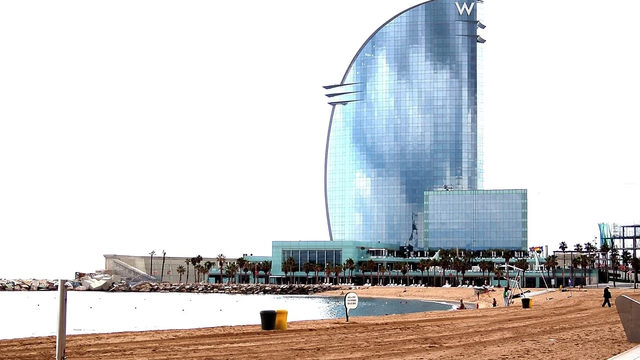
Barcelona’s beaches are city beaches, and that changes everything about losing a ring on one. They run in a line from Sant Sebastià and Barceloneta up past Bogatell to Mar Bella, they are cleaned by machine every night, and on a hot weekend there are thousands of people on the sand. Rings come off there in the ordinary ways. Sun cream on wet hands. A towel pulled out of a bag. A swim in water that is cooler than the air, with a ring that was already a little loose.
If that has just happened to you, the useful part is at the end of this paragraph. Stop walking, put something heavy down where you were sitting or standing, photograph the spot with a landmark behind it, and get the details to someone with a detector today rather than at the end of your trip. Barcelona is the one stretch of coast where a delay of a couple of days really does change the job.
The cleaning machines are the clock
Every night, tractors pull rakes through the top layer of sand on the city beaches to lift out cigarette ends, bottle tops and broken glass. It is why the beach looks clean at eight in the morning. It is also the reason a lost ring in Barcelona is on a much shorter clock than one lost in a quiet cove.
Two things can happen when the rake goes through. A ring lying near the surface can be lifted with the rubbish and carried away, in which case it is gone from the beach and no detector will find it. Or it can be turned over and dropped back deeper, and often a good distance from where it fell, because the rake drags material along as it goes. Neither is certain. Plenty of rings sit low enough to be missed by the rake entirely, and those are still very much findable. But the odds shift with every pass, and the first night is the one that matters most.
That is the honest reason we push people in Barcelona to act the same day. A search the following week can still work, but the search area grows and the chance of the ring still being on the beach at all drops.
Where a ring ends up on a city beach
The sand here is brought in and topped up rather than natural, and it is coarse and drains quickly. A ring dropped on dry sand works its way down fast once people start walking over it. The busiest spots are the obvious ones: the dry sand around the beach bars, the volleyball courts, and the strip where everyone lays their towels a few metres back from the water.
In the wet sand near the waterline a ring usually stays close to the surface, which is good, but this is the zone the sea works on. It will not carry a ring far along a beach like Barceloneta, where the water is shallow and the slope is gentle, but it will bury it and re-sort the sand around it.
In the water, the ground off the city beaches is mostly clean sand, and that is good detecting ground. A ring that comes off while you are standing chest deep drops more or less straight down. What limits the search is depth rather than the bottom. Our detectorist in Barcelona works the sand and the shallow water on foot, wading out as far as the conditions allow. Past the point where you can stand comfortably, a search needs a diver, and with the boat traffic and the harbour so close that is not always straightforward here. We will tell you plainly which side of that line your loss falls on.
The groynes and rock breakwaters between the beaches are the other hard case. A ring that goes in among those blocks can drop well down between them, and getting it out is slow work that does not always end with the ring.
What to send us, and what else is worth doing
These beaches are long, so make a note for yourself of the nearest fixed thing to where you were: a particular beach bar, a lifeguard tower, the metal sculpture at the top of Barceloneta, or one of the towers behind the Port Olímpic. Stand where you think you were, take one photo towards the sea and one towards the buildings, and keep them. We ask for the exact spot later, in private, once you decide to go ahead.
In your first message, tell us which beach it was, the time you lost it, whether you were on dry sand, wet sand or in the water, how deep the water was if you were swimming, and what the ring is made of. Gold, platinum, silver and titanium all read differently on a detector, and a finder wants to know before they start. The get help form or a WhatsApp message with those details is enough for us to work out what kind of search it is, and the Barcelona page explains how our coverage in the city works.
Two things not to do while you wait. Do not rake or dig at the sand with your hands or feet, because on a beach this busy the ring is probably shallow and that pushes it down. And do not organise a line of friends to walk the area, which is the most reliable way to lose a shallow ring completely.
One thing that is worth doing, and that people forget in a city: ask. Rings picked up by someone else on a Barcelona beach often end up handed in at the nearest beach bar, with the lifeguards, or at the municipal lost property office. It is always worth checking while a search is being arranged.
If you lost your ring further north, on the coves between Blanes and Cadaqués, the ground is completely different and so is the timing, because those beaches are not raked the way the city ones are. The Costa Brava page covers that stretch.
For Barcelona itself, the short version stays the same. The ring is almost certainly within a few metres of where you last had it, and the thing working against you is the machine that comes through at night, more than the sea. Send us the details while the beach still looks the way it did when you lost it. Ring Seekers is a ring search service, and on Barcelona’s city beaches the searching is done by experienced local metal detectorists.