Lost a ring paddleboarding or kayaking? What still helps
Lost a ring off a paddleboard or kayak? How to mark the spot from the water, when a detector or diver can help, and what to send us the same day.
A ring lost off a paddleboard or a kayak feels like the worst version of losing a ring in the sea. You were out on the water, maybe a long way from the beach, and it slipped off while you were paddling or climbing back on after a swim. There is no sand to mark and no sunbed to stand next to. Most people assume that is the end of it.
Sometimes it is. Often it is not, and what decides it is how deep the water was and what the seabed is made of. A ring that went in over clean sand in water you could stand up in is a very different job from one that dropped over rock or seagrass a few hundred metres out. The useful thing you can do right now is work out which of those it was, and save as much about the spot as you can before you leave the water.
Marking the spot from the board
Stop paddling as soon as you realise. Every stroke takes you further from where it fell, and on a breezy day a board drifts faster than you think. If you are with someone, ask them to stay put while you look around.
Then line things up. Find two fixed points on the shore that sit one behind the other from where you are, a church tower in front of a hilltop, a beach bar in line with a gap in the pines. Do the same in a different direction. Where those two lines cross is your spot, and a finder can stand on the beach later and work back to it. Sailors and divers have marked places this way for a long time because it works.
If your phone is with you in a dry bag, drop a pin on the map now. If you were tracking the paddle on a sports app, the route will show where you stopped, and that helps more than you might expect. Take a photo from the board towards the shore so the view can be matched later.
Look down too. If the water is clear, notice what is under you. From a board, pale sand looks very different from dark patches of seagrass or rock, and that one detail changes the whole search. Notice the depth if you can. Being able to see the bottom clearly, or roughly whether you could have stood up, is enough.
Resist the urge to dive for it straight away unless you can actually see it. Kicking around on a sandy bottom stirs up the water and can move a ring further from where it landed, and a tired swimmer a long way out is a risk nobody needs.
What can be searched, and what usually cannot
In shallow water over sand, a detectorist can wade or snorkel with a waterproof metal detector and grid the area properly. A gold wedding ring gives a clear signal in wet sand, and if it went in where you could stand, this is a real search with a real chance. You can read more about how deep metal detectors work underwater if you want the detail.
Once the water gets deeper than a person can comfortably work in, it becomes a job for a diver with an underwater detector. That can still be done in calm, clear water with a good mark, but it depends on finding someone with the right kit who can get there, and on the sea being kind enough to let them work.
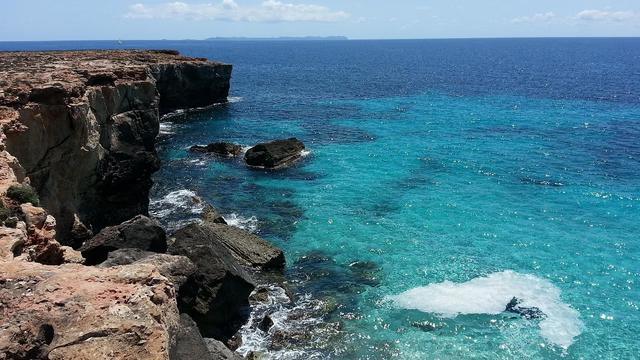
Rock and seagrass are the honest problem. On the Mediterranean, a lot of the calmest paddling bays have meadows of posidonia seagrass on the bottom, especially around Mallorca and the Balearics. A ring that drops into thick seagrass sinks down among the roots and is very hard to reach, even with a detector right above it. Gaps between rocks can swallow a ring in the same way. We would rather tell you that plainly than arrange a search that has very little chance.
Distance matters as well. A ring lost close to the beach is in water that finders know and can return to. One lost far out, in open water with no good marks, is usually not recoverable, and we will say so if that is where it looks like yours went.
Rings are not the only thing that goes over the side. A watch or an Oura ring is the same detector search as a ring. Phones and car keys usually end up with a diver once the water is deep. Plastic sunglasses do not show up on a detector at all, so those are a search by eye on a calm day, which is easier than it sounds in very clear water such as the bays of Malta or the west coast of Curaçao.
What to send us, and what to do next time
Send us what you have the same day, through the get help form or on WhatsApp. Tell us which beach or bay you launched from, roughly what time it happened, what you could see on the bottom and how deep you think it was. Tell us what the ring is made of and whether there is an engraving inside. Keep your shore marks, your photos and the pin on your phone. We ask for the exact spot later, privately, once you decide to go ahead.
If you hired the board or kayak, tell the rental shop as well. The people who work those beaches every day know the bay, and now and then something turns up with them.
Then we look for an experienced local detectorist, or a diver we work with, who can reach that water and tell you honestly whether a search makes sense. If the sea is rough we wait for it to settle rather than send someone into poor visibility. We explain the costs before any search is booked, and we never promise a ring will be found.
For next time, the simplest fix is to leave the ring in the car or in a zipped pocket of a buoyancy aid. Cold water shrinks fingers, which is why rings slip off in cold water more than people expect, and gripping a paddle for an hour does the same thing to a loose band. A cheap silicone ring for the water is a lot easier to lose without a second thought.
If it has already happened, stay calm and get your marks saved before you paddle in. Then send us the details while the morning is still fresh in your head, and we will tell you straight what can be done.