Lost a ring at L'Escala, Blanes or Lloret de Mar
The Costa Brava is sand in one cove and pebbles in the next. What that means for a lost ring at L'Escala, Blanes and Lloret, and when to search.
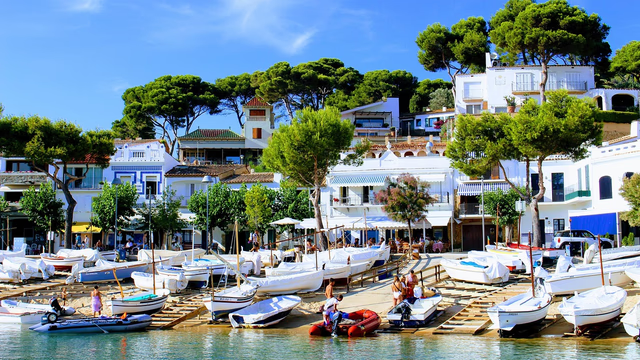
The Costa Brava is not one beach, and that is the whole problem when a ring goes missing on it. In the space of an hour’s drive you can stand on a wide sandy bay, a cove floored with pebbles the size of eggs, and a rock shelf where people jump in and swim off the side. A ring behaves completely differently in each of them, and so does the search.
People ask us for the odds before they ask for anything else, which is fair. The most useful answer we can give is a description of the ground you were standing on.
Sand, pebbles and the drop-off
Around L’Escala, on the sheltered side of the Bay of Roses, a lot of the swimming is off sandy beaches with shallow water that stays shallow for a long way out. Riells is the obvious one. That is the easiest kind of loss we deal with here. A ring in that sand drops in, stays put, and sits in ground a detector reads cleanly. Wind from the north can push a short chop onto those beaches and stir the top layer, but it does not carry a ring off down the coast.
Blanes is a mix, and which half of it you were on matters. S’Abanell is a long open beach of coarse sand and fine gravel that runs south towards the river mouth, and the sea there has more push behind it than in a cove. A ring can work down into that coarse material faster than it would in soft sand. Around Sa Palomera and in the smaller coves to the north, such as Cala Sant Francesc, you get rock, weed and pockets of sand between boulders, which is slower and less certain ground.
Lloret sees a great many losses, simply because of the number of people. The main beach is coarse sand and small pebbles, and it shelves more steeply than the beaches further north. That slope is the thing to understand. In a shallow bay you can wade out a long way and a finder can cover that ground on foot. On a steeply shelving beach you are out of your depth within a few metres of the waterline, and the search ends where the finder can no longer stand and sweep properly. The quieter coves near Lloret, such as Sa Boadella and Cala Canyelles, are sandier in the middle and rocky at the edges, so the same beach can be a good case or a hard one depending on where you were standing.
Pebbles are the part people underestimate. On a pebble or gravel beach a ring does not sit on the surface the way it does on sand. It slips down between the stones, sometimes a good way down, and the stones shift every time a wave breaks. A detector will still pick it up, but only if it is within range, and getting it out means moving material by hand without pushing it deeper. Those searches take longer and they are more likely to end with nothing. We would rather say that at the start than after you have waited a week for good weather.
The sea here is calmer than it looks, until it is not
The Mediterranean has almost no tide, so unlike a beach on the Atlantic coast there is no twice-daily cycle burying your ring deeper. Most of the time a ring stays close to where it fell.
What changes things on this coast is wind. An easterly blow pushes swell straight into these coves, and a couple of rough days will move sand, move pebbles and bury whatever is in them. The same wind stirs up the water and makes a shallow search almost pointless for a day or two afterwards. It is why we ask what the weather has done since you lost it, and why a search is sometimes better done on the first calm morning rather than immediately.
The other local factor is the seagrass. Many coves here have beds of posidonia just offshore, and dead leaves wash up in banks along the waterline. A ring that ends up in that matting is not gone, but it needs careful work to find, and the weed can mask a weak signal from a thin silver band.
What to send us, and where a search stops
Tell us the cove, not just the town. There are dozens of small beaches between Blanes and Cadaqués and they are not interchangeable. The name of the cove is enough to start. Note the nearest set of steps and drop a pin on your own phone, because that is exactly what a finder needs later on.
Then the usual details: the time, whether you were on dry sand, wet sand or in the water, how deep the water was, and what the ring is made of. Take a photo standing where you think you lost it, towards the shore and then out to sea, and keep it, because we ask for the exact spot later, in private, once you decide to go ahead. Send the first details through the get help form or on WhatsApp. The Costa Brava page explains how our coverage along this coast works, and there is a separate page for Lloret de Mar if that is where you were.
Two things to avoid while you wait. Do not start lifting pebbles and feeling underneath, because every stone you move can drop the ring further into the bed. And do not have a group of people walk the wet sand looking for a glint, which is the quickest way to press a shallow ring out of reach.
We are honest about the limits. A wading search covers the beach and the shallow water. If your ring went off a rock ledge into deep water, or slipped off while you were swimming well out from a steep cove, that is a job for a diver rather than a detectorist, and we will tell you so rather than sending someone to look at water they cannot work in.
Inland from the coast the ground changes again. If you lost a ring in a garden, a park or a riverside picnic spot around Girona, that is a different kind of search, usually slower because of the amount of buried metal in old soil, but with no sea to worry about.
The one thing that is true everywhere on this coast is that a ring in sand stays findable for a long time, and a ring in pebbles gets harder with every storm. Send the details while the beach is still the shape it was when you lost it. For the coves and beaches of the Costa Brava, Ring Seekers can arrange a search with an experienced local metal detectorist.