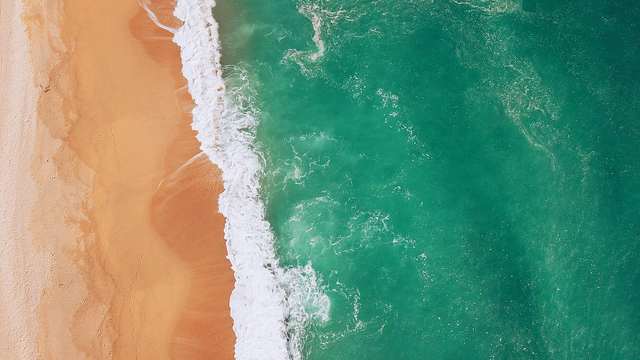
Lost a ring in the surf at Bondi, Manly or Byron Bay
Lost a ring in the surf at Bondi, Manly or Byron Bay? How surf beaches move sand, where a ring ends up, and what to do in the first few hours.
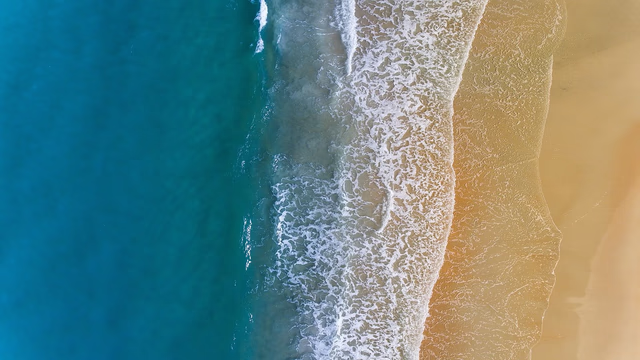
If a ring has just come off in the surf at Bondi, Manly or Byron Bay, the most useful thing you can do is stop, look at where you are, and fix that spot in your memory before you leave the water. Surf beaches move sand quickly, so the first few hours matter more here than on a calm bay.
That sounds discouraging, and it is meant to be honest rather than gloomy. Rings do get found on Australian surf beaches. A ring is small and heavy, and in moving water it tends to work its way down through the sand instead of being carried far along the beach. The problem is that it can be covered fast, and the beach you see tomorrow may not be the shape it is today.
What to do before you leave the beach
Stay safe first. These are surf beaches with rips, and a lost ring is never worth swimming outside the flags or going back out in conditions you are not sure about. If the lifeguards have closed part of the beach, leave it.
Then, from where you are standing, pick two fixed things on land that line up. At Bondi that might be a particular lifeguard tower and a building on Campbell Parade behind it. At Manly the Norfolk pines along the Corso end of the beach make good markers, and so does the surf club. At Byron, Main Beach has the surf club and the line of the headland at Cape Byron, while Belongil and Wategos each have their own landmarks. Two points that line up give a searcher a line to work along, which is far better than “somewhere near the middle”.
Take a photo facing the sea and another facing the land from the spot. Write down the time, and how deep the water was against your body. If you can, look up the tide for that afternoon later on. Whether it was coming in or going out changes where a searcher starts.
If the ring came off on the dry sand, mark it with a towel or a bag and ask your friends to stop walking around. Please do not dig. A patch of sand that a dozen people have kicked over is much harder to search than sand nobody has touched.
What the surf does to a lost ring
On a calm Mediterranean beach a ring often stays close to where it fell and sits not far below the surface. A surf beach is busier. Each wave stirs up the sand on the bottom, and a heavy gold or platinum ring tends to sink through that loose layer until it reaches firmer sand underneath. So it is usually still in the area where you lost it, but it can be deeper than on a quiet beach, and the sand over it changes from day to day.
Big swell can work in either direction. A run of heavy surf sometimes strips sand off a beach and leaves rings and coins sitting on the harder layer, where a detector picks them up easily. A long spell of small, gentle waves does the opposite and builds sand back up over everything. Local detectorists on surf coasts watch for those stripped days, because they are when old losses come back within reach.
Rips matter too. The channels where rips run are usually a little deeper, and heavy things collect in the low spots and gutters on the bottom. If you were standing in a gutter between a sandbank and the beach when the ring came off, mention it. That is useful detail, and it is the kind of thing people forget to say.
Byron is worth a separate word. The beaches there face different ways around the cape, so on the same day Main Beach can be small and Belongil can be rough. A ring lost at Wategos, which is more sheltered, behaves more like a calm cove than an open surf beach. Further down the coast, the bay beaches around Melbourne and the Mornington Peninsula are a different story again, with little or no surf on the bay side, so a ring there usually stays put.
Rings are the main story, but surf takes plenty else. Wedding bands come off when fingers get cold after a long session in the water, and that is common in Sydney outside high summer. Smart rings such as an Oura go the same way, and they show up on a detector because they are metal. Watches, chains and earrings get torn off by a dumping wave. Car keys and phones go missing in the dry sand near the towels.
Metal framed sunglasses read on a detector. Plastic ones do not, so those are a search by eye, or by a diver on a clear and calm day.
Getting someone to search
Australia has a good number of experienced beach detectorists, and surf beaches like Bondi and Manly get searched by people who know how they behave. We do not have a confirmed finder of our own on this coast yet, so we will not promise that someone will be on the beach tomorrow. What we can do is look for a detectorist who can reach you, and tell you honestly what we think the chances are before anything is arranged.
There is more about the beaches we cover on our pages for Sydney, from Bondi and Manly down the south coast and for the Gold Coast and Byron Bay.
If you are flying out soon, say so when you get in touch. A searcher can work from your photos and your two landmarks without you being there, and if the ring turns up it can be posted home to you.
Send us the details through the get help form or on WhatsApp. Tell us the beach and roughly where on it, the time, whether you were in the water or on the sand, how deep the water was, and what the ring is made of. Mention anything engraved inside it, and add your photos of the spot. We explain the costs before any search is booked.