Lost a ring in Florida, from Miami Beach to Key West
Lost a ring at Miami Beach, Fort Lauderdale or Key West? How warm, shallow Florida water treats a lost ring, and what to do before you leave the beach.

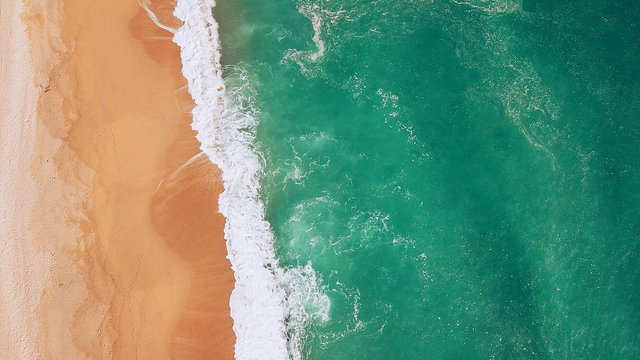
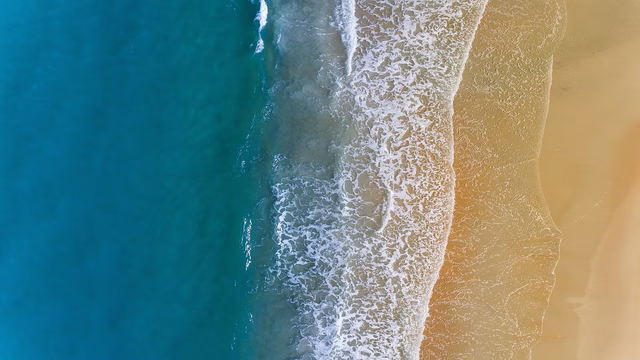
If a ring has slipped off in the water at Miami Beach, Fort Lauderdale or Key West, the good news is that Florida is one of the kinder places in the world to lose one. The water is warm and usually shallow for a long way out, and the waves on most days are small. A ring that goes down here tends to stay fairly close to where it fell.
It will probably not be sitting on top of the sand waiting for you, though. A careful search has a reasonable place to start as long as you can say where you were.
What to do before you leave the beach
Stay where you are for a minute and fix the spot. On Miami Beach the lifeguard towers are painted in different colours and shapes, so note which one was nearest and roughly how far along the beach you were from it. The hotels and condo towers behind the dunes help as well. Stand where the ring went, face the land, and remember which building is straight in front of you. In Fort Lauderdale the long strip of hotels and bars along the beach road does the same job. In Key West the beaches are small, so the pier, the jetty or the nearest beach bar is usually enough.
Take two photos from the spot, one out to sea and one back towards the land. Write down the time and how deep the water came up on you. Later, look up whether the tide was coming in or going out. Florida tides are small compared with Europe or Australia, but even a modest drop can bring a ring lost in waist deep water into easier reach a few hours later.
If it came off on the dry sand by your towels, leave a bag on the place and keep people off it. Please do not dig or sift with your hands. Turning the sand over pushes a small ring down and spreads it around, and that makes a detector search harder.
Florida summer afternoons often bring thunderstorms. If there is lightning about, get off the beach and come back later. The ring will not go far in an hour.
How warm, shallow water treats a lost ring
People expect rings to come off in cold water, when fingers shrink. In Florida it happens for other reasons. Sunscreen and suntan oil make a ring slide off easily, and in the heat people take rings off to put lotion on and then lose them in a towel or a beach bag. A wedding band or engagement ring can also be pulled off by a wave, or when you grab the edge of a paddleboard. Oura rings and other smart rings go the same way, and because they are metal, a detector reads them.
On the long sandy beaches of Miami Beach and Fort Lauderdale, the small waves move the top layer of sand back and forth. A gold or platinum ring is heavy for its size and sinks through that loose layer towards firmer sand underneath. It rarely travels far along the shore. What changes is how deep it lies. After calm spells the sand builds up and covers it. After a storm or a strong onshore wind, sand is often stripped away and things lost earlier can come back within reach. Much of the sand on these beaches has been pumped in to rebuild them, and it can be soft and deep near the waterline, so a ring dropped there can disappear quickly.
There are often shallow sandbars a little way out, with a deeper trough between the bar and the beach. If you were standing on a bar or in the dip before it when the ring went, say so. That detail narrows a search down more than almost anything else.
Key West is a different picture. Its beaches are small, and some of them sit on rock and coral with patches of seagrass in the shallows. A ring lost on sand there behaves much like one on Miami Beach. A ring lost among rocks or seagrass can drop into a gap and is harder to reach, and in those places a search sometimes needs a snorkeller or a diver as well as a detector. The water around the Keys is often very clear, which helps anyone looking by eye.
In summer, piles of seaweed can wash up along the whole coast. A ring that falls into a mat of it on the waterline can be carried up the beach with it, so mention seaweed if there was any where you were.
Rings are not the only things lost here. Watches and chains get pulled off by waves, and phones and car keys go missing in the soft sand by the bags. Off boats and piers in the Keys, sunglasses and phones are common losses. Metal framed sunglasses show up on a detector. Plastic ones do not, so those are a search by eye or by a diver when the water is clear.
Getting help in Florida
The United States has a large and experienced community of beach detectorists, and the Florida coast is one of the most searched stretches of sand in the country. Many of those people help with lost jewelry as well as hunting for themselves. We do not have a confirmed finder of our own in Florida yet, so we will not tell you that someone will be on the beach tomorrow. What we can do is look for a local detectorist who can reach you, and give you an honest view of the chances before anything is arranged.
You can read more about the area on our pages for Miami, Fort Lauderdale and Key West.
If you are on holiday and flying home soon, tell us. A searcher can work from your photos and your landmarks without you standing next to them, and if the ring is found it can be posted to you.
Send the details through the get help form or on WhatsApp. Tell us the beach and the nearest lifeguard tower or building, the time, whether you were in the water or on the sand, and how deep it was. Say what the ring is made of and whether anything is engraved inside, and add your photos of the spot. We explain the costs before any search is booked.