Lost a ring in the California surf at Malibu or Huntington
Lost a ring in the surf at Malibu, Santa Monica or Huntington Beach? How California waves bury a ring, and what to do before you leave the sand.

If a ring has come off in the waves at Malibu, Santa Monica or Huntington Beach, it has almost certainly gone down into the sand rather than out to sea. Gold and platinum are heavy for their size, and the churning water in the surf zone lets a ring sink quickly until it reaches firmer sand underneath. That is why it vanishes so fast, and also why a careful search has somewhere real to start.
The difficulty on this coast is depth. California surf moves a lot of sand, so the ring may be buried well below the surface within a few hours.
What to do before you leave the beach
Fix the spot while you are still standing on it. California beaches make this easier than most, because the lifeguard towers are numbered. Note the number of the nearest tower and roughly how far you were from it, and whether you were towards the pier or away from it. At Huntington and Santa Monica the pier itself is a good landmark. At Malibu, use the pier or the house fronts along the road behind the beach.
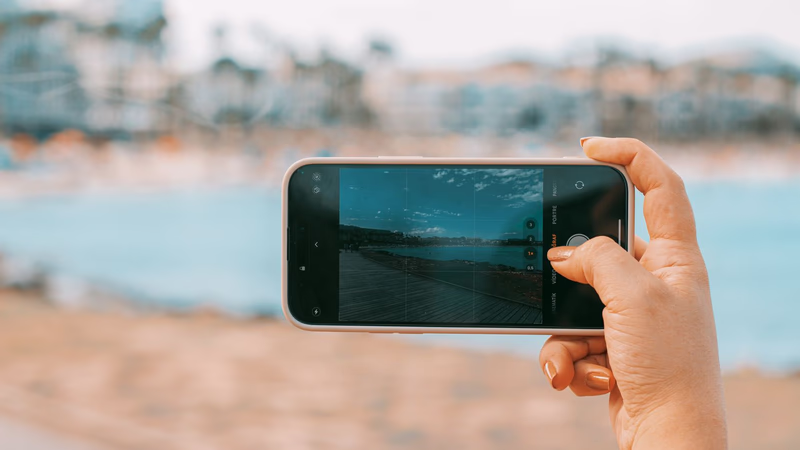
Stand where the ring went, face the land, and remember what is straight in front of you. Take one photo out to sea and one back towards the land from that spot. Write down the time and how deep the water was on you.
Then look up the tide. Pacific tides here are moderate, but a ring lost in waist deep water at high tide can be in much easier reach at low tide later the same day. If it came off on the dry sand near your towels, leave something on the place and keep people from walking over it.
Please do not dig with your hands or a spade, and do not let friends kick the sand around looking for a glint. Turning the sand over pushes a small ring deeper and spreads it about. Borrowing a cheap detector rarely helps either. In the wet sand near the water those machines mostly pick up bottle caps and foil, and working the same patch again and again does the same damage as digging.
If there is a rip current where the ring went in, do not go back out after it. Lifeguards on these beaches see a lot of people get into trouble. The ring will not go far in an hour.
Why the California surf buries a ring so quickly
Cold water is one reason rings come off here at all. Even in summer the Pacific feels cool, and fingers shrink in it, so a wedding band or engagement ring that fits on land can slide off when a wave hits or when you push up on a surfboard. Sunscreen makes it worse. Oura rings and other smart rings go the same way, and because they are metal a detector will read them.
On the long sandy beaches at Huntington and Santa Monica the waves break over a wide, flat stretch and keep moving the top layer of sand back and forth. A ring drops through that loose layer and settles where the sand is firmer. It rarely travels far along the beach, but it can end up deep. Where the beach is steeper and the waves dump hard on the shore, as they often do at Zuma and parts of Malibu, the sand is stirred even more violently and a ring can be buried faster still.
The seasons matter a great deal on this coast. In summer, gentler swell tends to build the beaches up, so sand piles on top of anything lost. In winter, bigger storms and swells often strip sand away and leave the beach lower, sometimes down to cobbles. Things lost months earlier can come back within reach after a winter storm. A ring lost in August may therefore be deeper a week later, not shallower.
Surfrider Beach at Malibu is different again. It is a point break with rocks and cobbles in the water, and a ring that falls among stones can drop into a gap between them. In clear, calm conditions a snorkeller can sometimes look by eye there, but in rocks a detector search is slower and more careful work.
Many beaches here also have a sandbar a little way out, with a deeper trough between the bar and the shore. If you were standing on the bar when the ring went, or wading in the dip before it, say so. It narrows a search more than almost any other detail.
Rings are not the only thing the surf takes. Watches get pulled off by waves, and phones and car keys go missing in the soft sand beside the bags. Off the piers at Santa Monica and Huntington, phones and sunglasses are common losses. Metal framed sunglasses show up on a detector and plastic ones do not, so those are a search by eye or by a diver. Earrings and other jewelry (jewellery, if you are visiting from Britain) lost on the dry sand are usually shallower and easier to reach than anything lost in the waves.
Getting help in California
Southern California has a long tradition of beach detecting, and many experienced detectorists there help people with lost jewelry as well as searching for themselves. We do not have a confirmed finder of our own in California yet, so we will not promise that someone will be on the beach tomorrow. What we can do is look for a local detectorist who can reach you, and give you an honest view of the chances before anything is arranged.
You can read more about the area on our pages for Malibu and Santa Monica, Orange County, which covers Huntington and Newport, and Los Angeles.
If you are visiting and flying home soon, tell us. A searcher can work from your photos and landmarks without you standing beside them, and if the ring is found it can be posted to you.
Send the details through the get help form or on WhatsApp. Tell us the beach, the nearest lifeguard tower number or the pier, the time, whether you were in the water or on the sand, and how deep it was. Say what the ring is made of and whether anything is engraved inside, and add your photos of the spot. We explain the costs before any search is booked.