Lost a ring in the Algarve at Albufeira, Quinta do Lago or Lagos
Lost a ring on an Algarve beach? How the Atlantic tide moves it at Albufeira, Quinta do Lago and Lagos, and what to do before you leave the sand.
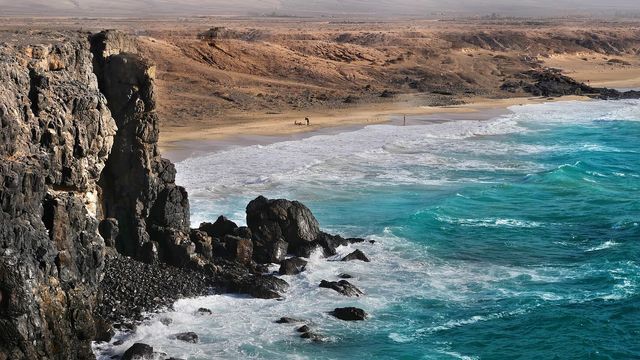
The Algarve catches people out. It feels like the Mediterranean, warm and bright with calm water on a good day. The sea here is the Atlantic, though. The tide comes in and goes out twice a day, and on the bigger tides the sea covers a lot more sand than you expect. A ring dropped at the water’s edge in the morning can be under a metre of moving water by lunchtime.
So the short version first. If you have just lost a ring, a wedding band or a watch on an Algarve beach, stop digging with your hands. Mark where you are and note the time. Then work out whether that spot is about to be covered by the sea, because that decides almost everything that follows.
Why the tide matters so much here
On most Algarve beaches the tide rises and falls by around two metres, and more on spring tides around the full and new moon. That does not sound like much until you watch it happen on a gently sloping beach. The water line can move tens of metres up the sand in a few hours.
For a lost ring this cuts both ways. A ring that went in the shallows at low tide is now under water, and every wave is working sand over it. Gold is heavy, so it tends to sink rather than wash away, but the longer it sits in the surf zone the deeper it goes. On the other hand, a ring lost high on the beach at high tide may be sitting in dry sand that the sea never reaches, which is the easiest case there is.
The low tide is when the lower beach gets searched. If your ring went into the water, the best window is usually the next low tide or the one after it, while the ring is still close to where it fell. Look up the tide times for the nearest port (Lagos, Portimão or Faro) and send them to us with your details. It saves a step.
Albufeira, Quinta do Lago and Lagos are three different beaches
The Algarve coast changes a lot over a short distance, and where you were matters more than the region.
Around Albufeira the town beaches, Praia dos Pescadores and Praia do Peneco, are busy stretches of sand with cliffs at the back. They fill up with sunbeds in summer, and a ring lost near the beds or under a towel usually stays close to where it fell. The trouble is the amount of dropped metal in the sand, coins and ring pulls, which slows any search down. Further east, Praia da Falésia runs for kilometres under red and white cliffs. It is beautiful, but it is a long, open beach where one stretch looks much like the next, so a good marker is everything. Note the nearest wooden staircase, beach bar or hotel path down the cliff.
Quinta do Lago sits on the Ria Formosa, and it gives you two kinds of water. On one side is the lagoon, shallow and sheltered, with soft sand and mud flats that are exposed at low tide. On the other, across the long wooden bridge, is the open sea beach. A ring lost in the lagoon is often in calm, shallow water, which sounds good, but the bottom is soft and silty in places, and a ring can settle into it quickly. If you were swimming or paddling in the lagoon, tell us roughly how far from the bridge you were and how deep the water was.
Lagos has both extremes. Meia Praia is a long, flat beach that runs east towards Alvor, with plenty of room and a gentle slope. The small coves to the south, Dona Ana and Camilo and the others tucked under the cliffs, are very different. At high tide the sea covers most of the sand in some of them, and the waves break against rock. A ring lost near the rocks or in the water at the foot of a cliff may need a diver or a snorkeller more than a detectorist, and the timing has to be right to reach the spot on foot at all.
The same goes for other things people drop here. Watches and Oura rings slip off in the surf, and phones and sunglasses go over the side of boat trips out to the caves at Benagil. Metal shows up on a detector, including phones, watches and metal frames. Plastic sunglasses do not, so those are a search by eye or by someone in the water.
What to do before you leave the beach
Do not keep digging. It feels like the right thing, but hand digging in wet sand pushes a ring deeper and spreads it over a wider area. Step back and do these things instead.
- Line yourself up with two fixed points, a lifeguard tower and a rock stack, or a beach bar and the cliff path. Take one photo looking out to sea and one looking back up the beach.
- Drop a pin on your phone’s map where you think it happened, and write down the time.
- Tell us whether you were on dry sand, at the water’s edge or in the water, and roughly how deep.
- Ask the lifeguards and the beach bar staff. Jewellery does get handed in, and leaving a phone number costs nothing.
Then take a photo of a matching ring if you have one, or find a picture of it, and note what it is made of. Yellow gold gives a clear signal. White gold, platinum and titanium are quieter on a detector. If there is an engraving, say so, because it helps show the ring is yours if someone else finds it first.
If you are staying further along the coast, the same advice works on the long Atlantic beaches near Lisbon and Cascais, where the swell is often bigger and the sand moves faster. On the rocky and black pebble shores of Madeira the picture is different again, and the water gets deep very close to shore.
One more thing, and we would rather say it plainly. We do not have a finder on the ground in the Algarve yet, so we cannot promise that someone will come out to your beach. What we can do is take your details and try to find a detectorist or a diver who works that part of the coast. Portugal has people who detect in their own time, and sometimes the right person is only a few towns away. We explain the costs before any search is booked, and if the odds look poor we will tell you that too.
What gives a search its best chance is information, sent quickly. The pin, the photos, the time and what the tide was doing. A ring dropped on dry sand on a calm day and reported the same afternoon is a fair case. A ring lost in the surf at Falésia three days ago, with no marker, is a much harder one, and we will say so.
If your ring went missing on the Algarve, send us the details through the get help form or on WhatsApp today, and we will start looking for someone who can search there.